

You've just landed at Heathrow after a long flight. You're tired, your bags feel heavier than they did at departure, and now you're standing there deciding whether to collect a hire car or make your life easier and let someone else handle the ground transport.
That decision looks simple online. In real life, it often isn't. A rental booking can promise freedom, but Heathrow adds friction fast: shuttle buses, insurance questions, left-side driving, unfamiliar road signs, and the small matter of getting out of one of the busiest airport areas in the UK without clipping a kerb or joining the wrong lane at a roundabout.
For some trips, car hire at Heathrow is absolutely the right move. If you're heading into the countryside for several days, stopping in villages, and you're comfortable driving in the UK, it can make sense. For others, especially cruise connections, hotel transfers, family arrivals, and first-time UK visits, a private transfer is often the calmer and smarter option. If you're weighing those choices, this guide on London airport transfer options will help frame the bigger picture.
Table of Contents
- Arriving at Heathrow Your Transport Dilemma
- Navigating Paperwork Age and UK Driving Rules
- Decoding Car Hire Pricing and Hidden Fees
- Understanding UK Car Hire Insurance and Excess
- Heathrow Pickup and Dropoff Logistics Explained
- Car Hire vs Private Transfer The Smart Choice for You
- Final Checklist for Booking Your Heathrow Transport
Arriving at Heathrow Your Transport Dilemma
A lot of first-time visitors arrive with the same plan. Pick up a car, toss the luggage in the boot, and drive off into England. On paper, that sounds ideal.
Then reality shows up. Immigration takes time. Bags take time. Walking through arrivals takes time. Then the car hire process starts, and it's not the relaxing start many travellers expect. If you're travelling with children, an older parent, or cruise luggage, every extra step feels bigger.
The idea of freedom versus the reality of Heathrow
The attraction of car hire UK Heathrow is obvious. You control your own route, you can stop where you want, and you're not tied to rail schedules. If your trip is built around the Cotswolds, Cornwall, or rural stays, that flexibility matters.
But Heathrow isn't where most visitors imagine their road trip beginning. It's where they're most jet-lagged, least familiar with the roads, and most likely to make avoidable mistakes. That matters more than the marketing language about “freedom”.
Practical rule: Don't choose a rental car because it sounds adventurous. Choose it because your actual itinerary needs one.
The questions that matter most
Before you book anything, ask yourself these questions:
- Are you driving straight into London or to a cruise port? A rental is usually more hassle than help for a direct transfer.
- Are you confident driving on the left after a long-haul flight? If the answer is “probably”, that means no.
- Do you have multiple large cases? Handling them through desks, lifts, shuttle stops, and car parks gets old quickly.
- Will you use the car every day? If not, you may be paying for convenience you won't use.
- Is this a road trip or just an airport transfer? Those are two completely different use cases.
That's the dilemma. Not car versus no car. It's whether a Heathrow rental fits the trip you're taking.
Navigating Paperwork Age and UK Driving Rules
The first trap with car hire UK Heathrow is assuming the booking confirmation means you're ready to drive. It doesn't. The desk agent will still want the right documents, and if anything is missing or doesn't match, your “easy pickup” can stop there.
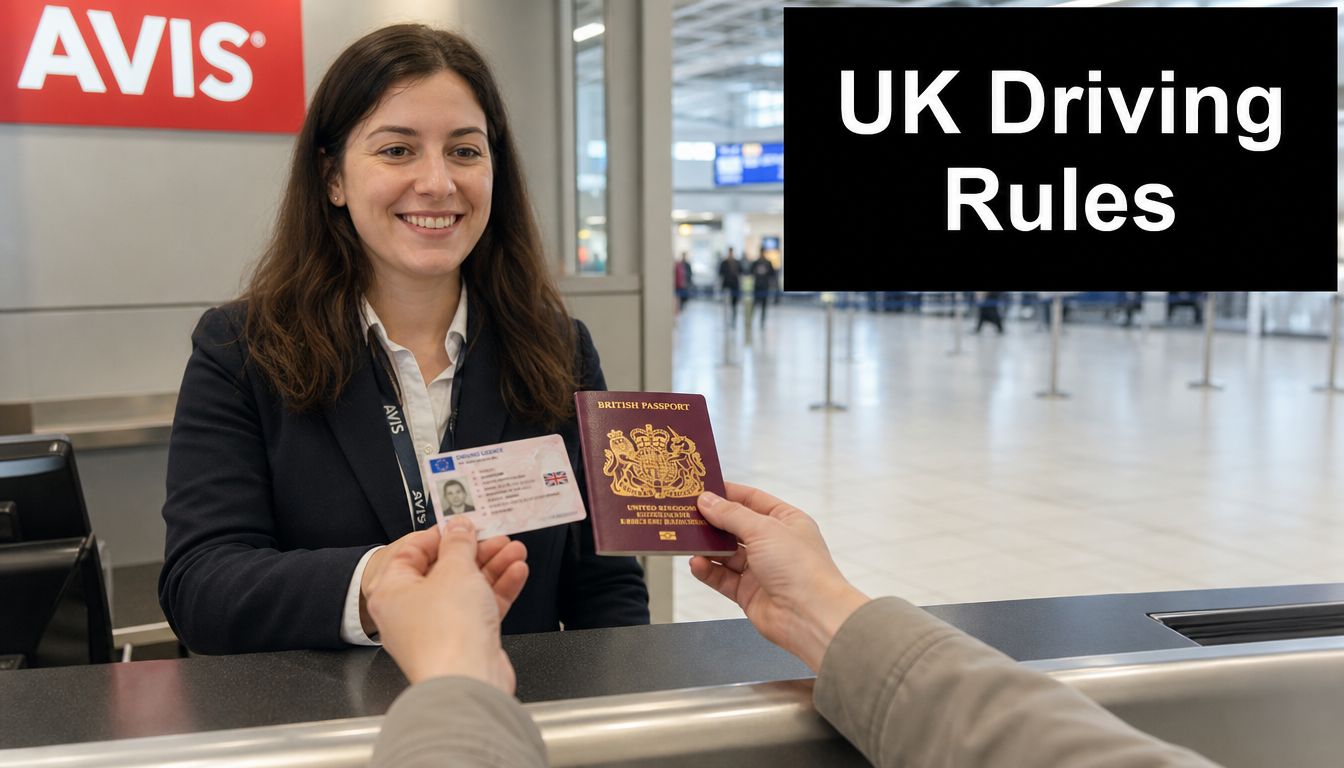
Bring the documents that actually matter
At minimum, international visitors should expect to show:
- Your passport. This confirms identity.
- Your home driving licence. It must be valid and match the booking details.
- An International Driving Permit if required. This matters especially if your licence isn't in English or if the rental company asks for one under its own policy.
Don't leave this to guesswork. Check the hire company's terms before you travel and read the document requirements carefully. The rental desk won't care that another company might have accepted less.
Age rules can narrow your options
Age restrictions vary by company and vehicle class. Younger drivers often face stricter limits and extra charges. Older drivers can also face extra checks depending on the provider and vehicle type.
That doesn't mean you can't rent. It means you should verify eligibility before you choose a vehicle, especially if you're booking anything larger, premium, or automatic. The worst time to discover an age restriction is after a long flight with luggage stacked beside you.
UK driving rules that catch visitors out
Most North American travellers don't struggle with the steering wheel for long. The primary problems are the patterns of the road.
A few essentials:
- You drive on the left. The dangerous moments are not on open roads. They're when pulling out, turning at junctions, or leaving service stations.
- Roundabouts need concentration. You give way to traffic already on the roundabout, and you'll be reading lanes quickly.
- Road signs may feel familiar but not identical. Lane markings, bus lanes, no-entry restrictions, and camera enforcement can all catch first-time visitors.
- Manual cars are common. If you don't regularly drive manual, don't “learn” after landing at Heathrow. Book an automatic.
Driving on the left is manageable. Driving on the left while tired, rushed, and trying to decode airport roads is where people get flustered.
My blunt advice for first-timers
If your first drive in Britain would begin at Heathrow, in traffic, with family in the car and a schedule to keep, think hard before booking a rental. If you still want one, reduce the strain wherever you can:
- Book an automatic
- Save the depot number and booking reference
- Use phone navigation from the moment you leave
- Avoid planning a complicated first stop
This isn't about being dramatic. It's about recognising that legal readiness and driving confidence are not the same thing.
Decoding Car Hire Pricing and Hidden Fees
The biggest mistake travellers make is believing the headline day rate tells them what the rental will cost. It doesn't. Heathrow pricing is full of layers, and the cheap number you see first is often the least useful one.
The season matters straight away. According to Heathrow car rental pricing data from KAYAK, January averages $36 per day, while December averages $72 per day. The same source says travellers should book about 16 days before the trip to secure below-average pricing. That gives you a planning benchmark, but it still doesn't reveal the full spend.
The advertised rate is only the start
A Heathrow rental quote usually begins with the base hire charge. After that, the actual total can climb through extras and conditions that many travellers skim past.
Common budget-breakers include:
- Additional driver fees. Sharing the driving often costs extra.
- Child seats. Families need them, and they're rarely cheap.
- Automatic transmission premiums. If you need an automatic, expect fewer low-end bargains.
- Fuel policy traps. Full-to-full is usually the cleanest option. Anything else deserves scrutiny.
- One-way return charges. Dropping the car in another city can change the maths quickly.
These aren't “surprises” in the legal sense. They're usually buried in terms and upsells. That's what frustrates people.
A cheap booking can become an expensive one
Here's where travellers get caught. They compare two rentals by daily rate alone, then only discover later that one includes less, requires more effort, or pushes extras at collection.
A useful way to compare quotes is this simple checklist:
| Cost area | What to check |
|---|---|
| Base rate | Is it actually for the car type you need? |
| Transmission | Is it manual or automatic? |
| Drivers | Is a second driver included? |
| Family extras | Are child seats or boosters needed? |
| Fuel | Is the return policy clear and reasonable? |
| Return plan | Are you bringing it back to the same location? |
Vehicle choice affects both price and practicality
The same KAYAK source notes that SUVs are the most popular hire category at Heathrow, averaging $51 per day, and names vehicles such as the Peugeot 2008 in that class. That sounds sensible for luggage and comfort, but don't assume bigger is always better.
If your trip includes village lanes, tight hotel car parks, or urban parking, a large vehicle can become irritating very quickly. Hire the smallest car that comfortably fits your passengers and bags. Not the car that looks nicest in the booking flow.
If a quote seems unusually cheap, assume something important isn't included and go looking for it.
My recommendation on pricing
Don't shop for the lowest daily price. Shop for the lowest real cost for your actual trip. That means reading the fuel policy, driver rules, extras, and return terms before you click pay.
If you're only trying to get from Heathrow to a hotel or cruise terminal, a rental often loses on value once you add the non-obvious costs and effort. If you're heading straight into a longer self-drive holiday, then the numbers can still work. Just price the whole trip, not the teaser rate.
Understanding UK Car Hire Insurance and Excess
Insurance is where many Heathrow rentals go from mildly annoying to financially risky. The terms look familiar, so travellers assume they understand them. Then they reach the counter, hear about “excess”, tyres, glass, and exclusions, and realise they don't.
That confusion is common with international visitors, especially from the US and Canada. As noted in this Tripadvisor discussion on London car rental insurance, UK rental policies often carry high excess amounts and specific exclusions for tyres and windshields, and many travellers wrongly assume their home insurance or credit card provides complete cover.
Know the basic terms before you fly
You don't need to memorise insurance jargon, but you do need the basics:
- Collision Damage Waiver (CDW) usually limits what you owe if the car is damaged, but it doesn't wipe out all liability.
- Theft Protection (TP) relates to loss from theft, again subject to conditions.
- Third-party liability covers damage or injury you cause to others, according to the rental terms and local legal requirements.
- Excess is the amount you still pay before coverage protects the rest.
That final point is the one people miss. You can be “insured” and still be on the hook for a painful bill.
The counter pressure is real
After a flight, with people waiting behind you and a car park shuttle to catch, the insurance conversation can feel like a test you haven't revised for. That's when renters agree to expensive add-ons purely to end the discussion.
Sometimes that extra cover is worth it. Sometimes it overlaps with a policy you already have. What matters is that you decide before you arrive, not while standing under fluorescent lights with a queue building.
Ask these questions clearly:
- What is the excess?
- Are tyres, wheels, windscreen, mirrors, and underbody included?
- What documents are needed if I decline extra cover?
- If I use third-party excess insurance or card coverage, how does the claims process work?
Why left-side driving increases the risk
Minor damage is more likely when drivers are adjusting to a different road layout. Kerbed wheels, scraped mirrors, and small parking knocks are exactly the sort of incidents that can become insurance disputes.
That doesn't mean the UK is uniquely dangerous. It means the combination of unfamiliar roads and unfamiliar policy wording can be expensive.
Don't buy or refuse insurance out of pride. Buy or refuse it because you understand what you'd personally have to pay if something small goes wrong.
My recommendation on cover
If you're an experienced international driver and you've checked your coverage properly, fine. Proceed with confidence.
If you're not completely sure, slow down and read the terms before the trip. Don't assume your credit card “probably covers it”. “Probably” is not a strategy when you're liable for damage on a hired vehicle in another country.
For many first-time visitors, especially those only needing a direct airport transfer, this is one more reason a private car service is simpler. No excess. No inspection anxiety. No liability debate over a scraped alloy wheel you didn't even notice.
Heathrow Pickup and Dropoff Logistics Explained
This is the part many travellers underestimate. They think the hard bit is choosing the car online. It isn't. The hard bit is the airport choreography after landing.
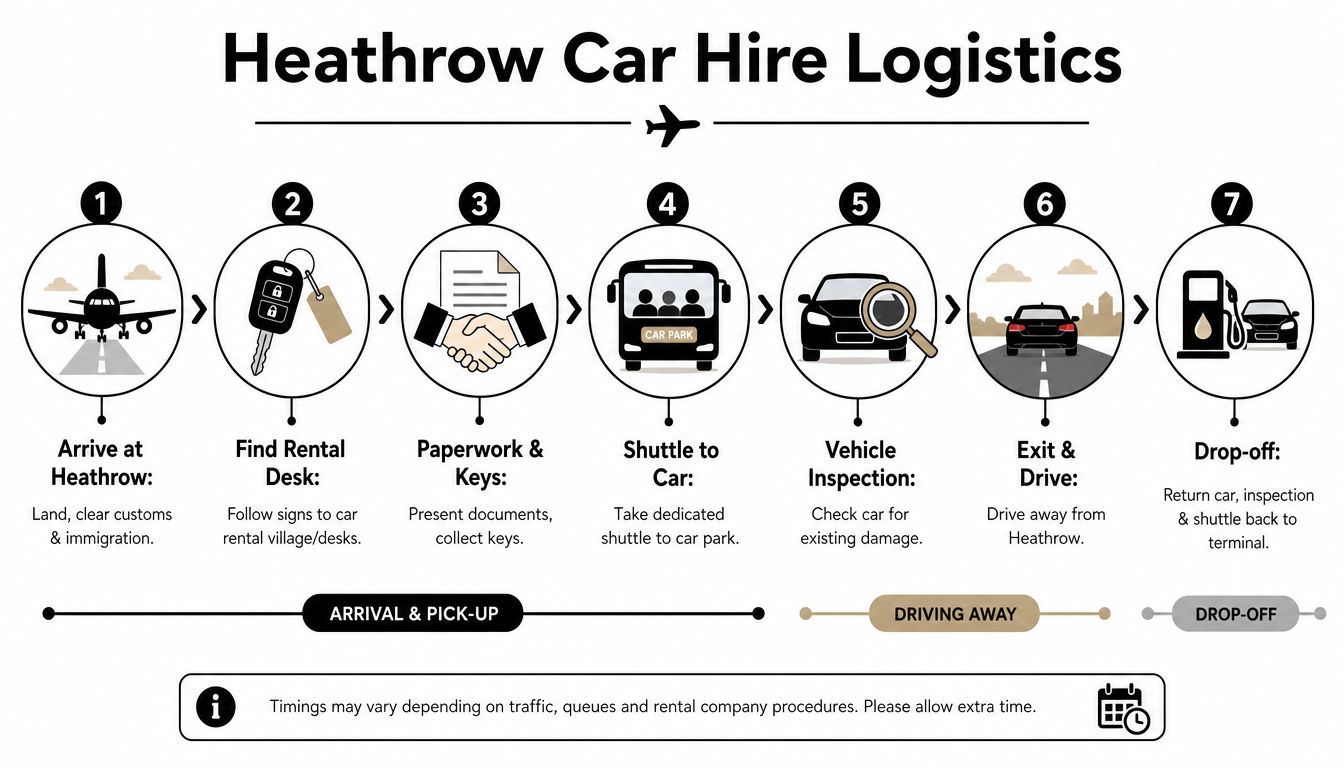
At Heathrow, you're not always walking straight from arrivals to a car. According to Heathrow rental location guidance from Road Genius, collecting a rental car can take 20–30 minutes during off-peak times, but 45–60 minutes during the busy 10am–2pm window, and most providers, including brands such as Hertz and Avis, are off-airport and require a shuttle bus to depots on the Northern Perimeter Road.
What pickup often looks like in practice
A realistic sequence goes like this:
- Arrive and clear formalities
- Find the desk or shuttle instructions
- Queue for documents and payment checks
- Wait for the shuttle
- Ride to the depot
- Inspect the vehicle
- Load luggage and work out the controls
- Join Heathrow road traffic
That's a lot of small tasks before your actual journey begins.
If you want a sense of how meet-and-greet style airport service differs from this process, compare it with a typical Heathrow meet and greet service, where the handoff is built around arrival rather than depot logistics.
Here's the process visually:
Return logistics matter just as much
Pickup gets all the attention, but return day is where people get flustered. Heathrow returns are often standardised around central rental bases rather than your terminal frontage, so you need enough time to find the correct road, hand over the vehicle, complete checks, and get yourself back to the terminal.
That's easy enough if you're calm, early, and familiar with the area. It's much harder if you're catching a flight, refuelling late, or trying to decode airport signage in rain and traffic.
A few practical habits make a big difference:
- Photograph the car at pickup and return
- Save the depot address in your phone
- Allow much more time than your instinct says
- Refuel earlier than necessary, not at the last minute
Why this matters for cruise and family travel
If you're heading to Southampton, Dover, Portsmouth, or Tilbury, Heathrow car hire can feel like starting a transfer by adding chores. That's the issue. It's not impossible. It's just inefficient for the wrong sort of trip.
Families notice this quickly. So do travellers with multiple cases and those arriving after overnight flights. The logistics aren't catastrophic. They're just tiring, and they hit at exactly the moment you have the least patience for them.
Car Hire vs Private Transfer The Smart Choice for You
The decision gets clearer. A Heathrow rental and a private transfer solve different problems. Too many travellers compare them as if they're interchangeable. They're not.
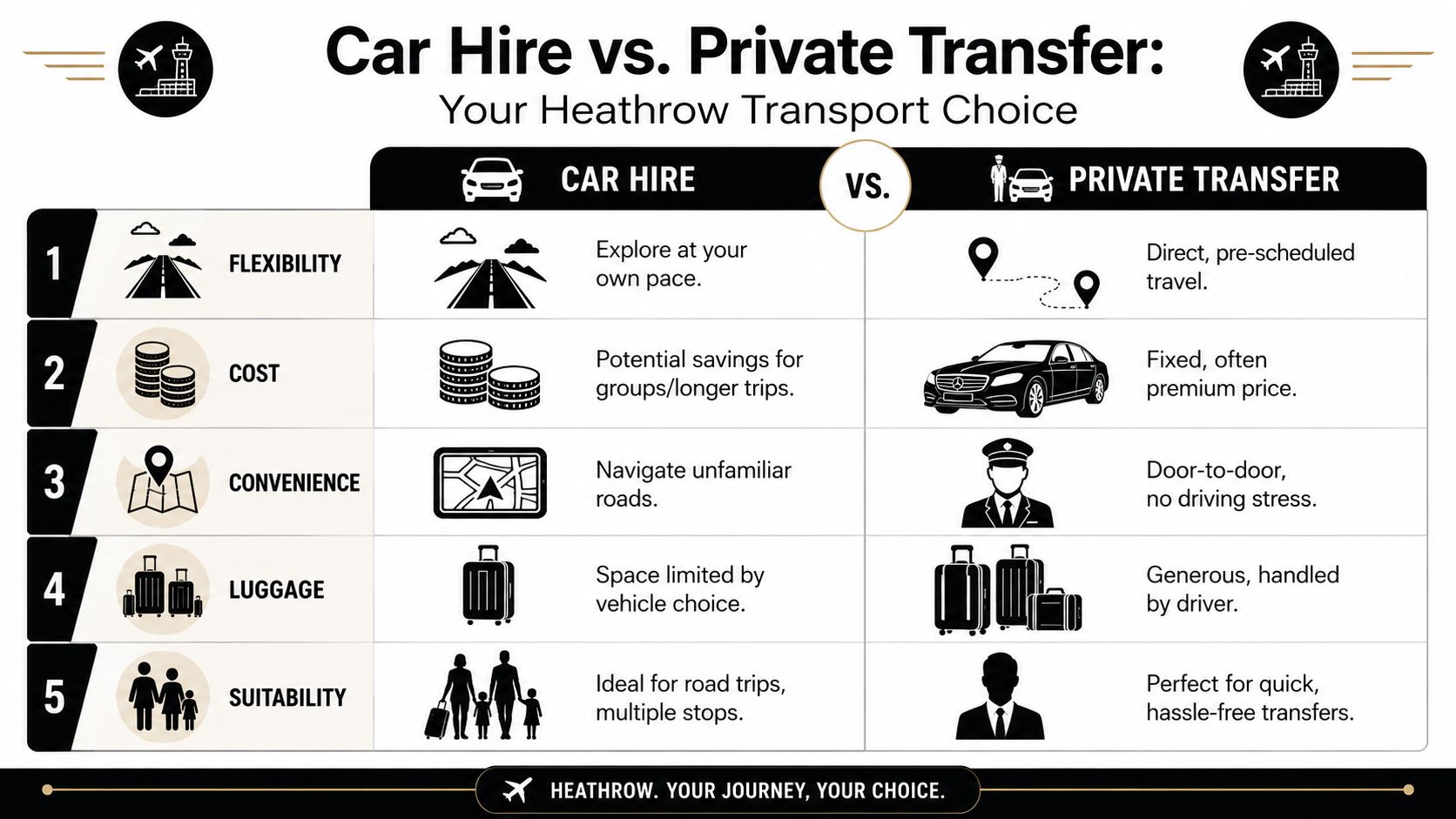
If your trip is a proper self-drive holiday, car hire has a strong case. If your need is to get from Heathrow to a hotel, rail hub, or cruise terminal without hassle, a pre-booked transfer is usually the more sensible choice.
Where car hire wins
Car hire makes sense when:
- You're leaving Heathrow and touring multiple places over several days
- You're staying in rural areas with weak public transport
- You're comfortable driving on the left
- You're willing to handle parking, navigation, and vehicle responsibility
That's the right context for car hire UK Heathrow. It gives autonomy. It can also be good value when the vehicle is being used properly throughout the trip.
Where private transfer wins
A private transfer is usually stronger when:
- You're heading directly to Central London
- You're connecting to a cruise port
- You're travelling with children or older relatives
- You have substantial luggage
- You don't want to drive after a long flight
The hidden friction at Heathrow matters here. As described in this Rick Steves forum discussion about Heathrow car rental shuttles, the “shuttle penalty” adds 25–40 minutes to pickup time and can increase total costs by an estimated 15–20% through delay-related pressure and upgrades. That's exactly the kind of friction a private transfer avoids.
A straight comparison
| Journey type | Car hire | Private transfer |
|---|---|---|
| Rural road trip | Strong fit | Usually unnecessary |
| Heathrow to cruise port | More effort than needed | Better fit |
| Heathrow to London hotel | Parking and driving add stress | Better fit |
| Family arrival with luggage | Manageable, but fiddly | Easier |
| Nervous first-time UK visitor | Risk of a rough start | Much calmer |
The option I'd recommend for direct transfers
For straight airport-to-destination journeys, a service such as private car hire with driver is often the cleaner solution. In that category, EC Minibus is one example. It offers pre-booked Heathrow transfers with driver, meet and greet, fixed pricing, and luggage assistance for routes such as Central London hotels and major cruise ports.
That's not “better” in every situation. It's better in the situations where you do not need a car all week and only need to get somewhere smoothly.
If your first day in Britain is just about getting from Heathrow to one destination, don't turn it into a driving test.
Final Checklist for Booking Your Heathrow Transport
By this point, the choice should be practical, not emotional. If you need a car for a broader UK trip, hire one with your eyes open. If you only need a direct connection, don't create stress you can avoid.
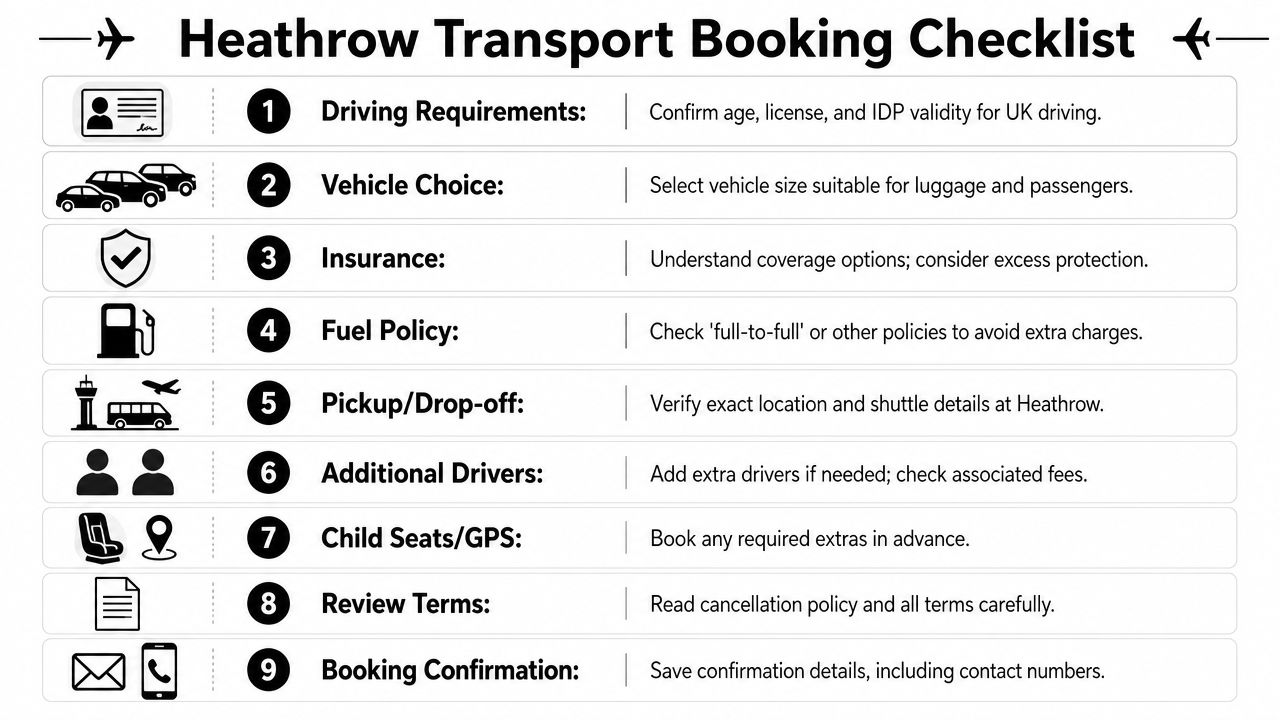
Before you book
- Match the transport to the trip. Road trip means rental. Direct transfer usually means driver.
- Check your documents early. Passport, licence, and any permit requirement need to line up.
- Price the full journey. Don't compare on day rate alone.
- Think about your arrival condition. Jet lag changes what feels “easy”.
If you choose car hire
- Book the right size vehicle. Enough room for people and luggage, but not larger than necessary.
- Read the insurance terms. Especially excess and exclusions.
- Confirm pickup and return details. Know exactly where you're going.
- Inspect the vehicle carefully. Photos protect you.
- Keep return day simple. Leave extra time and don't rely on luck.
If you choose a private transfer
- Confirm flight details and destination carefully
- Check luggage capacity before booking
- Make sure the service includes terminal pickup instructions
- Keep the confirmation and contact details handy
The least stressful option is usually the one that removes unnecessary decisions on arrival. Heathrow gives you enough to think about already.
If your trip is a direct journey from Heathrow to a London hotel, St Pancras, or a cruise port such as Southampton, Dover, Portsmouth, or Tilbury, EC Minibus is a practical option to consider. The service focuses on pre-booked door-to-door transfers with meet and greet, fixed pricing, and luggage assistance, which suits international travellers who'd rather skip depot queues, shuttle buses, and first-day UK driving stress.