

You've just stepped off a cruise ship or ferry in Dover. You're thinking about London next, but the important question isn't “How do I get to London?” It's “How do I get to my hotel, airport, or station in London without turning the day into a luggage-hauling slog?”
That's the part most guides miss. They tell you the fastest train or the cheapest coach, then leave you standing at St Pancras or Victoria with bags, tired legs, and one more transfer to solve. For international visitors, especially cruise passengers, that final stretch matters as much as the Dover departure itself.
Table of Contents
- Your Journey from Dover's Port to London's Heart
- Comparing Your Dover to London Travel Options
- By Rail The High-Speed Route into Central London
- By Coach and Car Navigating the Road Journey
- Private Transfers The Ultimate in Door-to-Door Convenience
- Choosing Your Best Route Recommended Itineraries for 2026
-
Dover to London Travel Frequently Asked Questions
- What's the fastest way from Dover to London?
- Is there a direct train from Dover to Heathrow or Gatwick?
- Is coach worth it?
- Should I hire a car in Dover and drive to London?
- Can I use Uber or another ride app from Dover to London?
- What if I'm travelling with mobility concerns?
- What's the best option for a London hotel stay after a cruise?
Your Journey from Dover's Port to London's Heart
A common mistake is treating Dover to London as a simple city-to-city hop. It isn't. It's usually the handover between one long journey and another. Cruise passengers come off the ship with suitcases, hand luggage, maybe a child who's had enough, and often a hotel check-in time or flight hanging over the day.
That's why the right question is practical. Where exactly do you need to end up? If it's near a major London terminal, rail might fit well. If it's a hotel in a neighbourhood far from your arrival station, the “fastest” option on paper can quickly become the most annoying one in real life.
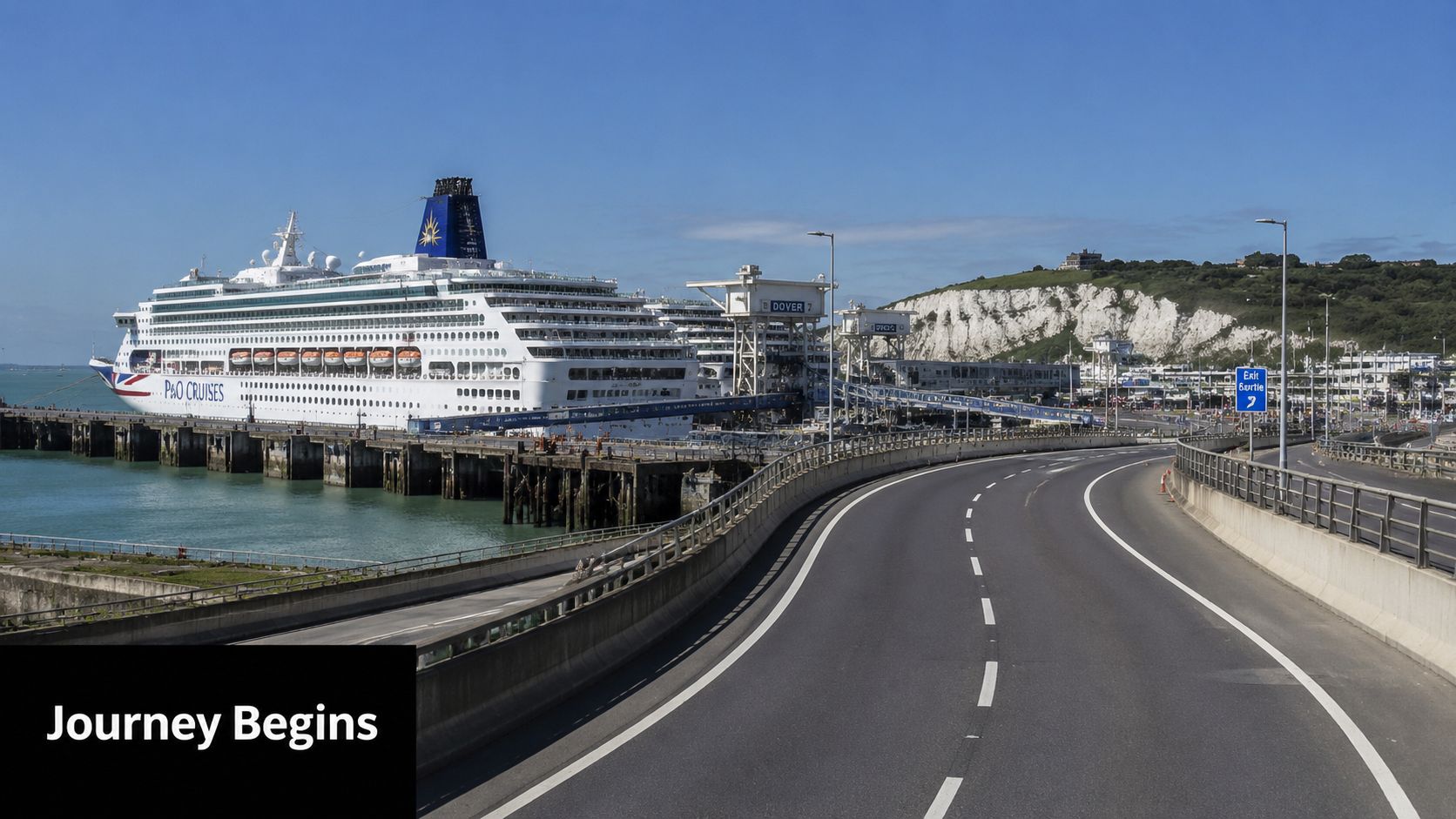
Dover isn't some minor coastal stop. Britannica's overview of Dover describes it as the foremost passenger port in the United Kingdom and the principal cross-Channel ferry port, with a harbour of more than 600 acres (240 hectares). It also sits only 33 kilometres (21 miles) from France. That geography made Dover a gateway long before modern tourism, and it still shapes how travellers move into London now.
Why this route feels bigger than the map suggests
Dover's link to London is old, strategic, and firmly built-in. People have been moving inland from this point for centuries. That helps explain why there are multiple onward choices today, but it doesn't make those choices equally good for every traveller.
Practical rule: Choose your Dover to London option by final destination, luggage load, and stress tolerance. Don't choose by headline journey time alone.
If you're arriving by ship and want a straight hotel transfer, start with Dover cruise port transfer options that are built around terminal pickup and London drop-off. If you're travelling light and your hotel is close to a London terminal, public transport may be perfectly sensible.
The route itself is famous. Your day doesn't need to be dramatic.
Comparing Your Dover to London Travel Options
The cleanest way to compare Dover to London is to stop thinking in one dimension. Speed matters. So does cost. But luggage handling, number of changes, and where you finish matter just as much.
Dover to London Travel Options At a Glance
| Travel Mode | Avg. Journey Time | Typical Cost (per person) | Best For |
|---|---|---|---|
| Train | 1h 48m average | Advance fares can start from £12 | Travellers going to a central London station and comfortable handling their own bags |
| Coach | Longer than rail | Usually budget-focused | Solo travellers who care most about cost and don't mind a slower trip |
| Private transfer | Varies by road conditions | Higher than public transport | Families, cruise passengers, airport transfers, heavy luggage |
| Car | Varies by road conditions | Variable | Travellers who specifically want to drive themselves |
Rail is the scheduled option with the strongest case if your destination lines up with the station you'll arrive at. It's fast, frequent, and simple on paper.
Coach is the budget play. You trade speed and flexibility for a lower headline fare and a straightforward seat-based journey.
What each option feels like in practice
Train works well when you're mobile, organised, and happy to manage the final London leg yourself. It becomes less appealing when you've got several bags or an airport connection.
Coach is fine if you're not in a rush. It's usually the option for travellers who want to spend less and can accept a longer ride and a less flexible arrival point.
Private transfer solves the last-mile problem. You get picked up where you arrive and dropped where you need to be. That matters more than people expect.
Driving yourself sounds liberating until you remember you'll be driving into London, dealing with navigation, traffic, and parking after a travel day. For most international visitors, it's more hassle than freedom.
If your real destination is a hotel lobby or an airport terminal, not a London station, compare the complete journey, not just the first leg.
By Rail The High-Speed Route into Central London
Rail is the strongest public transport option for Dover to London if your day suits it. The service pattern is dense, the route is established, and for many travellers it's the quickest scheduled way into central London.
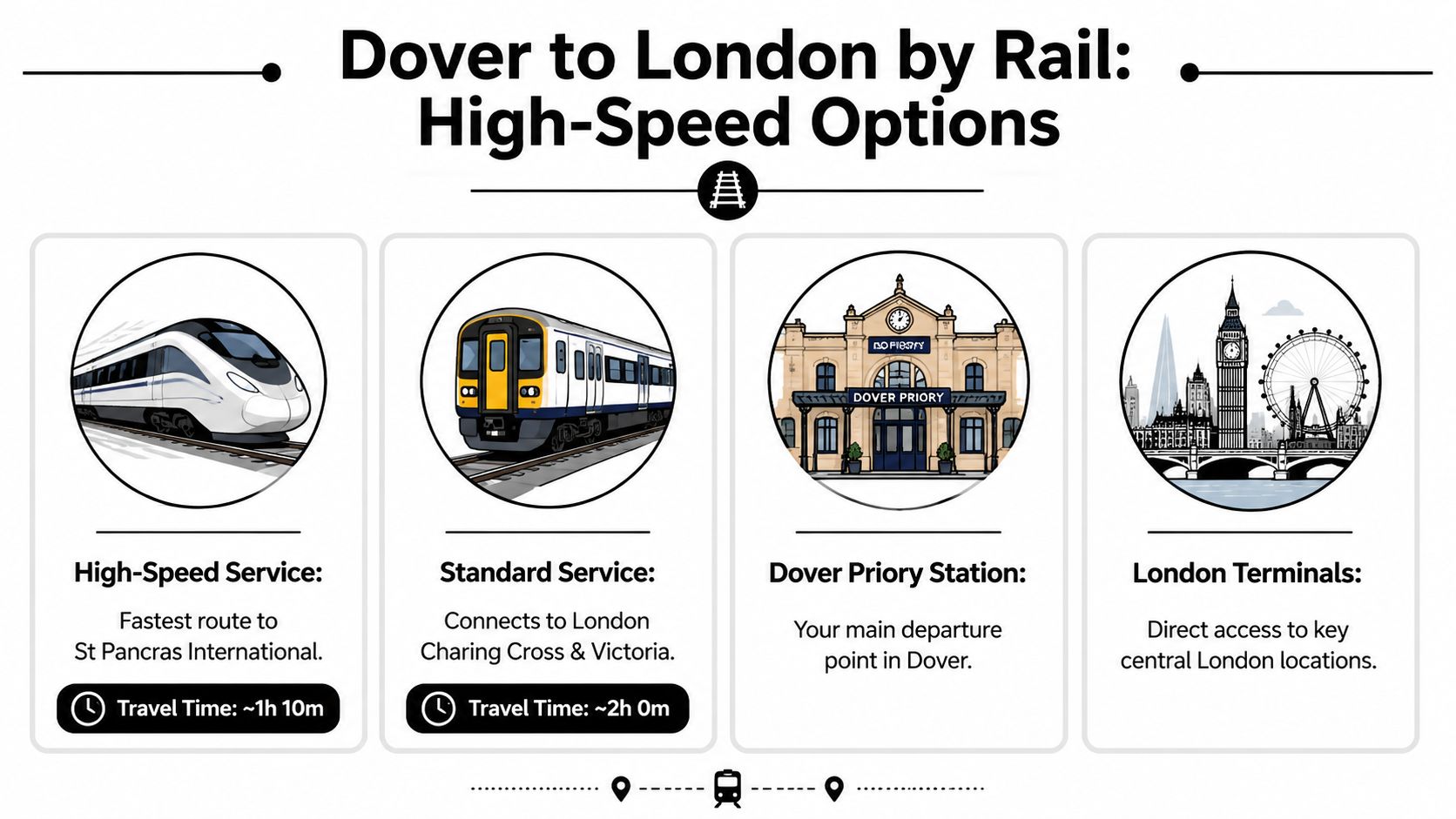
Trainline's Dover Priory to London guide lists the journey at 67 miles (108 km) with an average journey time of 1h 48m, about 190 trains per day, and the fastest services at 1h 6m. It also notes that advance fares can start from £12.
Choose your London station before you book
This is the decision that matters. Many travellers obsess over the fastest train and ignore where it leaves them. That's backwards.
Some Dover services get you quickly to St Pancras International. Others reach different central London stations more slowly. If your hotel is easier from Victoria or Charing Cross, a slightly slower direct arrival can be smarter than landing fast at St Pancras and then dragging bags across London.
A good rail booking decision usually looks like this:
- Going near St Pancras or King's Cross: take the faster service.
- Staying closer to another terminal area: consider the train that reduces your onward transfer.
- Travelling with large luggage: factor in station stairs, lifts, queues, and the taxi rank after arrival.
When rail is the right call
Rail suits travellers who want structure. You know your departure point. You know your arrival station. If you book ahead, you can keep cost under control.
It's especially sensible for:
- Business travellers: quick into central London, minimal guesswork.
- Couples travelling light: manageable bags, flexible with taxis or the Tube on arrival.
- Visitors staying near a terminal station: less friction after arrival.
Booking advice: If your timing is fixed, book early. Waiting until the day of travel gives you less choice and usually less comfort in the planning.
The problem rail does not solve
Rail gets you to London. It doesn't get you to your door.
That distinction matters most for airport connections and cruise passengers. If you're heading onward to a specific hotel, apartment, or airport, rail often becomes a two-part journey. First the train, then a taxi, Tube, or another rail connection. With luggage, that second part can feel longer than the first.
If you're comfortable with that, the train is excellent. If you're not, don't force yourself into a rail plan just because it wins on pure station-to-station time.
By Coach and Car Navigating the Road Journey
Coach is the budget road option. It's not glamorous, and it's rarely the fastest answer, but it can be perfectly adequate if saving money matters more than shaving off time.
The key is being honest about what kind of day you want. If you've just left a cruise and you're carrying more than a small bag, coach can feel like the right price and the wrong experience.
Coach works when budget comes first
Coach is best for travellers who pack lightly, don't have a tight schedule, and are happy arriving at a fixed London coach point rather than their final address.
What you're really buying is simplicity at a lower entry cost:
- One seat, one ride: no station changes during the journey itself.
- Budget-first planning: useful for solo travellers or backpack-style trips.
- Less ideal for cruise baggage: bags are manageable, but not effortless.
Road travel is also more exposed to variability than rail. That matters if you're trying to make a check-in, theatre booking, or flight.
If you're considering a booked road option that takes you directly into the city, this Dover cruise terminal to Central London transfer route shows the kind of point-to-point planning many cruise passengers require.
Why self-driving is usually a bad idea
Hiring a car sounds flexible until the practical details land. You'll need to collect the vehicle, understand the route, drive on unfamiliar roads if you're visiting from abroad, and then deal with London arrival stress.
That's before parking. Central London is not a place where self-driving becomes easier at the end.
A standard long-distance taxi can also be awkward. You may be able to find one, but for most visitors this isn't the cleanest or most predictable way to handle Dover to London.
Coach is the cheap answer. It isn't the low-stress answer.
If your plans are loose, coach can do the job. If your plans are precise, road travel only makes sense when someone else is handling the driving and the drop-off is exactly where you need it.
Private Transfers The Ultimate in Door-to-Door Convenience
If your real goal is not “reach London” but “arrive properly”, private transfer is the clearest answer. It removes the awkward middle bit that public transport leaves for you to solve.
The biggest reason is simple. London Toolkit's Dover rail transfer guide notes that there are no direct train services from Dover to Heathrow or Gatwick, so airport-bound travellers must route through central London. That's exactly where public transport stops being elegant and starts becoming work.
Why door-to-door changes the whole day
A private transfer is less about speed than about continuity. You get in once, your luggage gets loaded once, and you arrive at the address that matters. For cruise passengers, families, older travellers, and anyone connecting to a flight, that's often the difference between a smooth day and an exhausting one.
This matters most in four situations:
- Airport transfers: Heathrow and Gatwick connections are awkward by rail because the London crossing sits in the middle.
- Heavy luggage: large suitcases are manageable in a vehicle. They're annoying on platforms, escalators, and pavements.
- Family travel: children rarely enjoy station changes.
- Hotel arrival: being left at reception is better than being left near a transport hub.
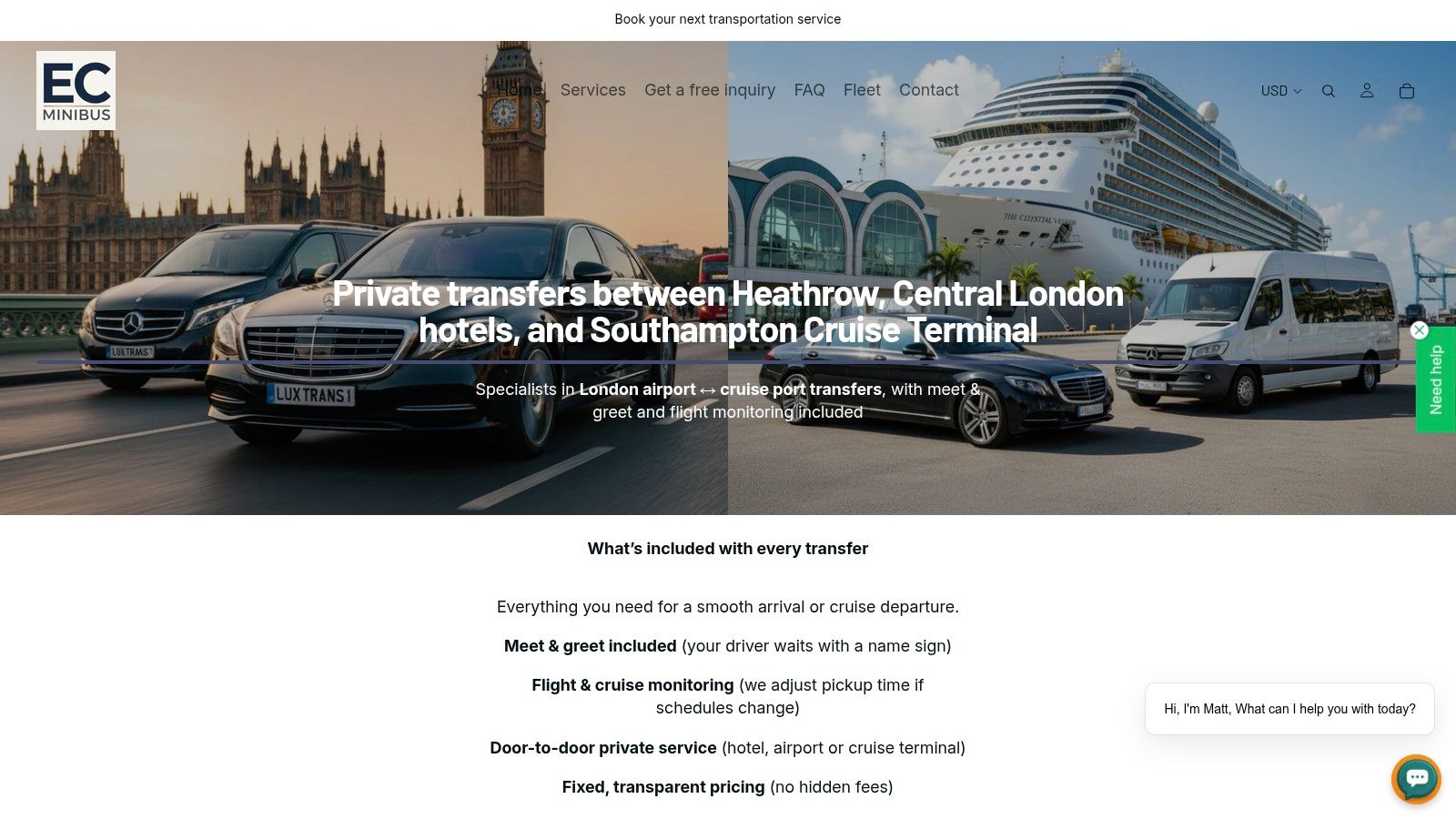
One provider in this category is EC Minibus private car hire in London, which offers pre-booked road transfers rather than station-based arrival. That kind of service is built around pickup point, drop-off address, luggage assistance, and fixed planning instead of improvisation.
What you're paying for
You're not only paying for a vehicle. You're paying to remove decisions on the day.
That includes:
- Pickup clarity: someone knows where you're arriving.
- Luggage help: no hunting for lifts or trolleys after disembarkation.
- Direct routing: no cross-London change to reach a hotel or airport.
- Less uncertainty: useful when you're already tired from a cruise or long-haul flight.
A quick visual helps show what this kind of transfer feels like in practice.
For airport runs, private transfer isn't a luxury add-on. It's often the only option that keeps the journey genuinely single-stage.
If you're young, travelling light, and staying near a station, you may not need this. If you've got real bags and a fixed destination, you probably do.
Choosing Your Best Route Recommended Itineraries for 2026
Most travellers don't need more options. They need a recommendation that fits the day they're having.
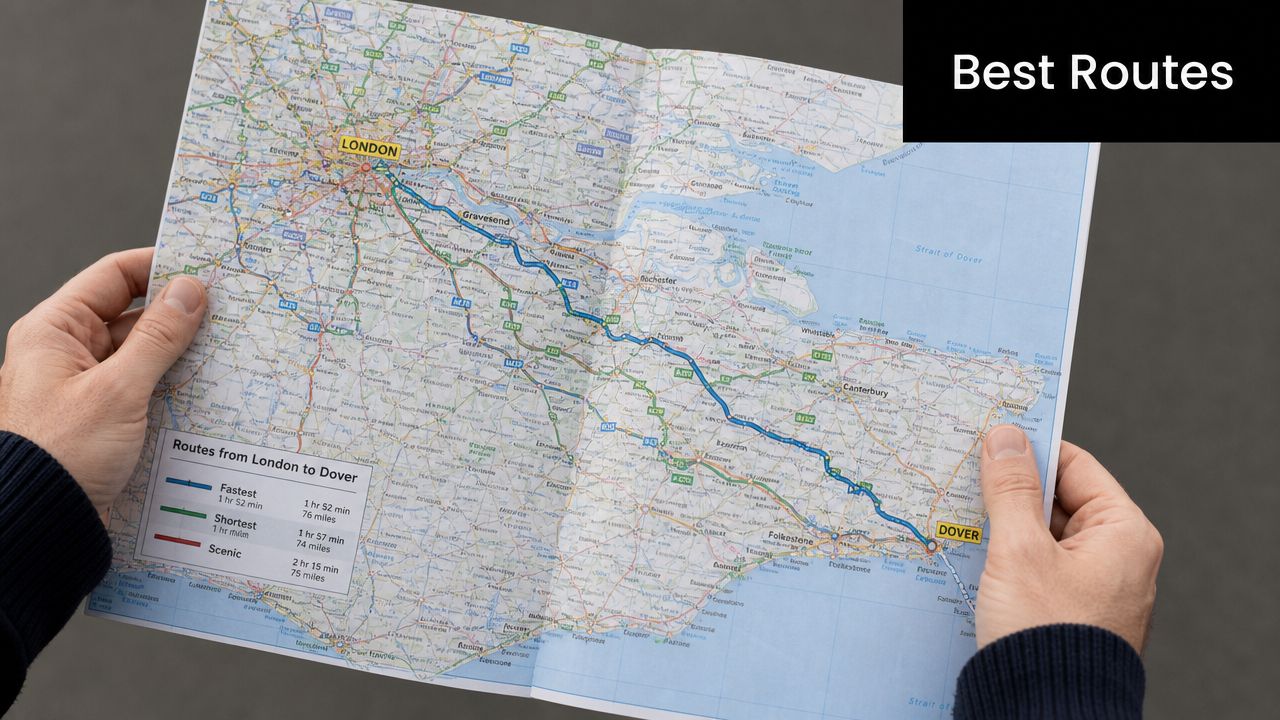
One important planning point comes from Omio's Dover to London travel overview. It notes that published journey times can be misleading. The fastest train is just over an hour, but average times are closer to 1h 48m, road journeys vary significantly, and last-minute booking often means higher prices and less availability. That matters most when your day includes a flight, cruise check-in, or fixed hotel plan.
The cruise passenger with multiple bags
Book a private transfer.
That's the blunt answer because it's the practical one. You've already done the ship part. Don't finish the day by turning luggage into a public transport project. This is especially true if you're going to Heathrow, Gatwick, or a hotel outside walking distance of a terminal station.
The budget-conscious solo traveller
Take the coach if time is flexible. Take the train if you find a good advance fare and your hotel is easy from the arrival station.
This traveller should focus on total spend, but not to the point of creating hassle for the sake of a small saving. If the train gets you close to where you're staying, it can be the better value even when the coach looks cheaper first.
The time-sensitive business traveller
Use the train, and choose the station based on your meeting point, not instinct.
If the fastest service lands you in the right part of London, take it. If a direct arrival at another terminal saves you a taxi crawl or a cross-city transfer, make that trade. Business travel rewards clean routing, not just raw speed.
Smart rule for tight schedules: Build your plan around average conditions, not the fastest published run.
The family with young children
Choose a private transfer unless the family is travelling very light and staying close to a rail terminal.
Parents already know this, but it's worth saying plainly. Every extra transfer feels bigger with children. Seats, bags, snacks, toilet timing, tiredness, and queues all stack up. Door-to-door travel reduces friction that adults can absorb but children usually can't.
The traveller staying near St Pancras
This is the clearest case for rail. If your hotel is near the station or a short taxi ride away, train becomes efficient in real terms, not just timetable terms.
Booking advice that actually matters
- Book early when timing is fixed: this matters for both price and choice.
- Don't trust fastest-case timings: use average travel assumptions.
- Match the mode to the final address: station arrival is not door arrival.
- Protect airport days: if missing the flight would be expensive or stressful, choose the option with the fewest moving parts.
That's the 2026 recommendation. Pick the mode that removes the most risk from your specific day.
Dover to London Travel Frequently Asked Questions
What's the fastest way from Dover to London?
For scheduled public transport, rail is the strongest option. It's usually the quickest way into central London. But if your real destination is an airport or a specific hotel, the fastest overall journey may be a direct road transfer because it avoids the extra London leg.
Is there a direct train from Dover to Heathrow or Gatwick?
No. You'll need to go via central London and connect onward. If you're carrying luggage or travelling on a deadline, that's where private transfer becomes much more attractive.
Is coach worth it?
Yes, if your priority is budget and you can tolerate a slower, less flexible trip. No, if you've got multiple bags, children, or any sort of time pressure.
Should I hire a car in Dover and drive to London?
Usually, no. It adds stress at the point in the day when most international visitors want less of it. Driving into London, then dealing with parking and unfamiliar road conditions, is rarely a smart trade.
Can I use Uber or another ride app from Dover to London?
You may find app-based options, but for a long-distance route this isn't the most dependable planning method. For a journey this important, pre-booked transport is the safer choice because you know the pickup and drop-off arrangement in advance.
What if I'm travelling with mobility concerns?
Choose the mode with the fewest changes. Rail can work, but station navigation may still be tiring. Coach involves waiting and a fixed arrival point. A direct transfer is usually the easiest format because it cuts out station movement and extra handling.
What's the best option for a London hotel stay after a cruise?
If your hotel is close to the right station and you pack light, rail is reasonable. If you want a calmer arrival and direct drop-off at reception, pre-booked transfer is the better call.
If you want the simplest Dover to London plan, book transport that matches your actual destination, not just the city name. EC Minibus handles door-to-door transfers between Dover, London hotels, airports, and other key points, which is often the most practical fit for cruise passengers and international visitors travelling with luggage.