

Arriving in Harwich for a cruise with a few hours to spare changes the shape of your day. Instead of treating embarkation as dead time, you can use that window well if you stay realistic about distances, weather, and check-in pressure. Harwich is compact enough to reward a short visit, but only if you pick stops that fit your luggage situation and your sailing time.
That matters more here than in bigger port cities. A rushed half-day with poor transport can leave you stuck between a seafront walk and a terminal deadline. A well-planned half-day can give you maritime history, sea air, and a decent meal before you board.
This guide focuses on practical things to do in Harwich for short-stay visitors, especially cruise passengers coming from Heathrow or Central London. The emphasis is simple: low-friction stops, sensible timing, and transport choices that don't eat the day. If you're using a private transfer such as EC Minibus, the biggest advantage isn't just comfort. It's being dropped where the visit starts making sense, rather than where a timetable happens to leave you.
Table of Contents
- 1. Harwich International Port & Cruise Terminal
- 2. The Low Lighthouse & Ha'penny Pier
- 3. Harwich Maritime Museum
- 4. Harwich Redoubt & Military Heritage
- 5. Dovercourt Beach & Seafront Promenade
- 6. Harwich Green & Town Centre Shopping
- 7. Essex Coast Walks & Nature Reserves
- 8. Parkeston Quay Heritage & Working Port Tours
- Top 8 Harwich Attractions Comparison
- Your Seamless Harwich Departure
1. Harwich International Port & Cruise Terminal
If your priority is staying calm on departure day, start by treating the terminal area as part of the experience, not just a checkpoint. Harwich works best for short-stay travellers when you build your plan around luggage, arrival time, and the handoff from road transfer to embarkation. The biggest mistake I see is trying to squeeze in a full sightseeing loop before passengers have sorted bags and boarding documents.
That doesn't mean you need to sit inside for hours. It means you need a base plan. If you're arriving from Heathrow or a London hotel, a private transfer is often the cleanest option because it removes the usual chain of train changes, platform lifts, and local taxi decisions that can eat into your buffer.
What works on a cruise day
A simple approach works best. Ask your driver for a direct drop at the terminal first if you're carrying larger cases or travelling as a couple with cruise luggage, then decide whether you still have time for a short outing nearby.
- Book transport early: Reserve your car or minibus in advance so your departure day doesn't depend on last-minute availability.
- Stay realistic with timing: International cruise departures usually reward a generous buffer rather than a tightly packed schedule.
- Use the terminal as your decision point: Once you've arrived, you can judge the weather, the queue, and your own energy level properly.
Practical rule: On a port day, certainty beats ambition.
Harwich suits travellers who'd rather have a smoother embarkation than a dramatic final sprint. If you're overnighting in London beforehand, choosing accommodation with an easy collection point can make the morning much simpler, especially for visitors unfamiliar with rail travel in Britain.
For a sense of the port environment before you travel, this terminal view helps set expectations:
Best use of spare time
If you've got only a short window, don't overbuild the day. Harwich's strength is that several worthwhile things to do in Harwich sit close enough to combine without turning the morning into a logistical puzzle. A waterfront stop, a fort visit, or a short town walk is usually enough before check-in.
2. The Low Lighthouse & Ha'penny Pier
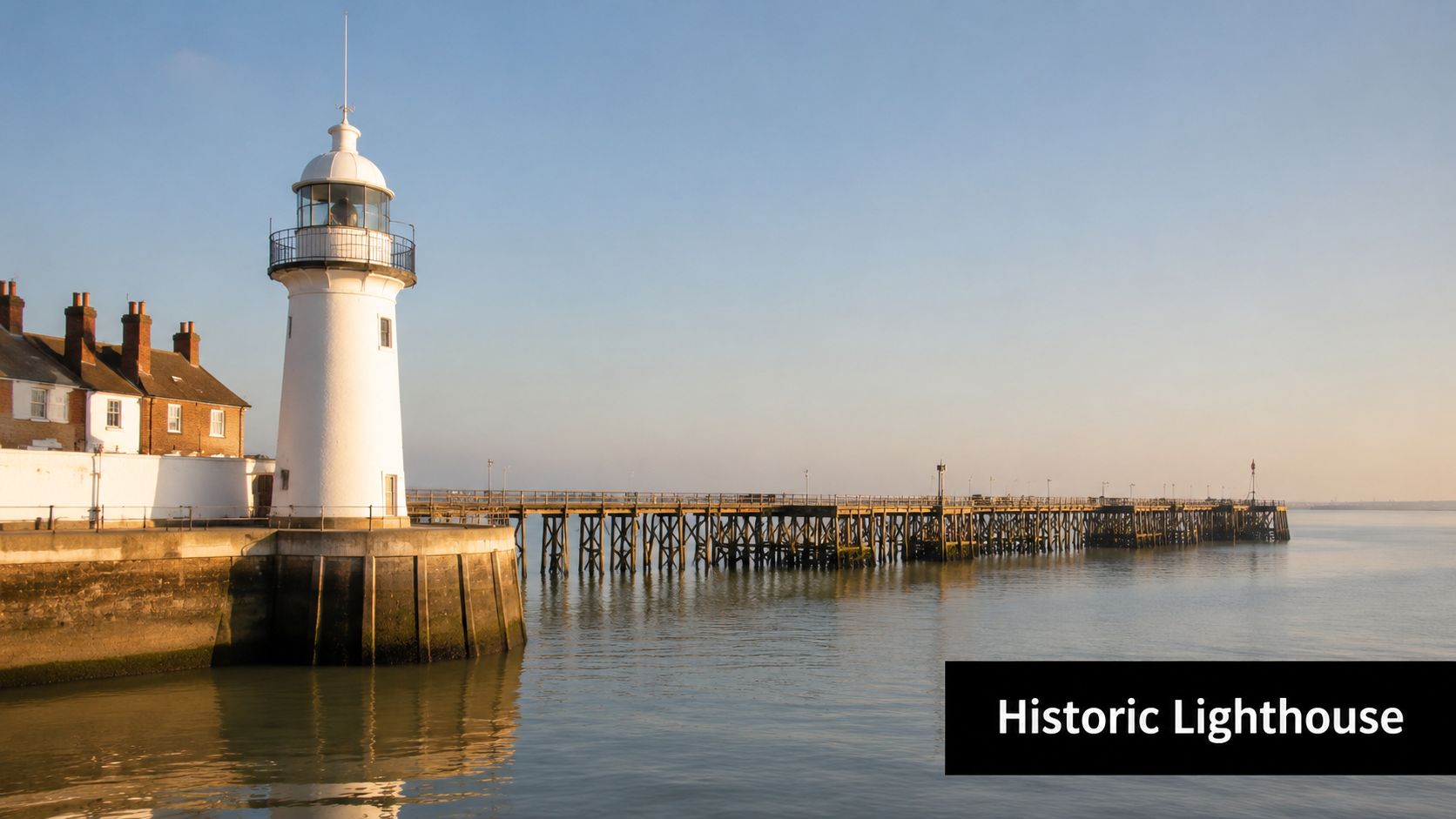
For many short-stay visitors, this is the easiest first stop because it delivers the Harwich atmosphere fast. You get water views, old maritime architecture, and a sense of place without committing to a long visit. If you've got limited time before boarding, that's exactly what you want.
The Low Lighthouse area pairs well with Ha'penny Pier because the visit doesn't need much explaining. Walk, look, take photos, breathe. That's a better pre-cruise use of time than trying to cram in multiple indoor attractions when the weather is decent.
A quick look at the setting helps most travellers decide whether this should be their first stop.
Why it works for short stays
Practical considerations are important. You don't need specialist planning, and you don't need to be especially fit. You do need outerwear. The waterfront can feel exposed even on a day that looks mild when you leave London.
- Go early if you can: Morning light is usually better for photos, and the area feels calmer before embarkation pressure builds.
- Wear proper shoes: The stroll is easy, but cruise-day footwear should still cope with uneven surfaces and sea air.
- Keep luggage out of the equation: This stop is much better before check-in only if you aren't dragging heavy cases around.
The best short port visits are the ones that don't leave you checking your watch every five minutes.
One practical point often missed in online guides is that Harwich content is frequently muddled with the Massachusetts destination rather than Essex. That confusion shows up repeatedly in search results, which is why many cruise passengers arrive with a fuzzy picture of what UK Harwich offers. This gap is noted in a review of search confusion around Harwich travel content by Platinum Pebble's Harwich results analysis.
Trade-off to know
If the wind is up and you're tired from travel, this stop can feel brisk rather than relaxing. In that case, shorten the pier walk, take your photos, and move on to a café or indoor stop. Harwich rewards flexibility more than stubborn itinerary loyalty.
3. Harwich Maritime Museum
If you want one visit that gives context to the town before you sail, the maritime museum is the strongest choice. It turns Harwich from a departure point into a place with a working story behind it. That's useful for cruise passengers because you're already in a port mindset, and the exhibits connect well with that.
The museum sits in the Low Lighthouse building, which makes it especially efficient if you've already planned time around the waterfront. That pairing is one of the better ways to handle things to do in Harwich without adding unnecessary transport steps.
When to choose the museum
Choose this over a longer outdoor stop if the weather is poor, you're travelling with someone who prefers a seated or slower-paced visit, or you want more substance than a quick walk can give you. Short-stay travellers often do better with one focused heritage visit than with three scattered photo stops.
You should still check opening details before building the whole day around it. Seasonal operation is common in coastal towns, and Harwich is no exception.
- Build in reading time: Heritage displays take longer than people expect, especially if you enjoy ship models, local history, and volunteer insight.
- Ask before taking photos: Policies can vary, and it's easier to check than to assume.
- Use this as a weather backup: If the coast turns cold, this visit often becomes the smarter allocation of your pre-boarding time.
A better approach than rushing
I wouldn't pair this with too many other indoor stops. Museum fatigue is real, and cruise day isn't the moment for over-education. One museum plus one outdoor walk is usually the stronger combination.
If you're arriving several hours ahead with a private transfer, this is one of the best places to start because it grounds the town quickly. You leave with a clearer sense of Harwich's seafaring role, and that makes the rest of the waterfront feel less like scenery and more like continuity.
Harbour towns make more sense once you've spent an hour with their history.
4. Harwich Redoubt & Military Heritage
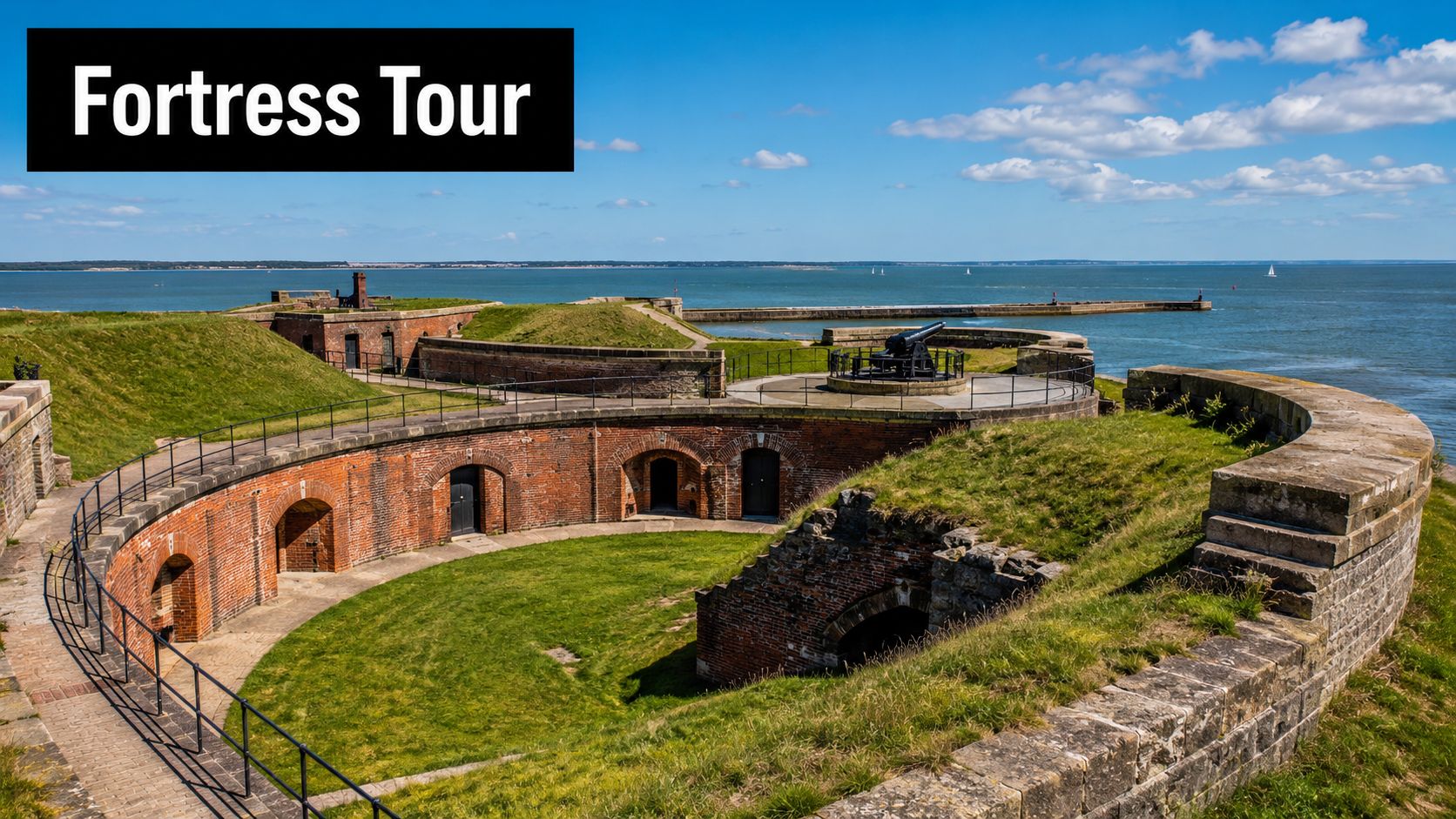
If you only pick one major heritage site, the Redoubt is the one that feels most distinct. It isn't just another old building. It's a proper fortification with enough physical presence to make even a short visit memorable. For cruise passengers who like military history, this is often the stop that justifies leaving the terminal area.
Harwich's Redoubt Fort is managed by The Harwich Society and operates seasonally from 1st May to 31st August between 10am and 4pm, plus every Sunday throughout the year, with a small entry fee while children and Society members are admitted free, according to Harwich Town Council's places to visit guide.
What to expect on site
This isn't a polished city museum experience. That's part of the appeal. Expect a more tactile, locally rooted visit where the structure itself does much of the work. You notice the thickness of the place, the exposed position, and the defensive logic as soon as you start walking it.
That also creates trade-offs. If weather conditions are rough, the exposed areas can feel hard going. If you're unsteady on uneven surfaces, you need to pace yourself and wear proper shoes.
- Choose this when you want depth: The fort gives you a stronger sense of Harwich's defensive past than a quick harbour look can.
- Check the day carefully: Sunday access can make this a good off-peak option, but don't assume full seasonal opening outside summer.
- Bring a layer: Sea-facing heritage sites nearly always feel colder than expected.
Why it stands out
Many coastal towns have a pleasant promenade. Fewer have a fort that gives shape to the port's strategic history. That's why I usually recommend the Redoubt to visitors who say they only have time for one serious attraction.
Its operating pattern matters, too. Some existing Harwich guides leave visitors unclear on low-cost and off-peak options, especially for families and shoulder-season trips. The lack of a single practical guide to those choices is reflected in discussion around family-friendly off-peak Harwich planning gaps.
5. Dovercourt Beach & Seafront Promenade
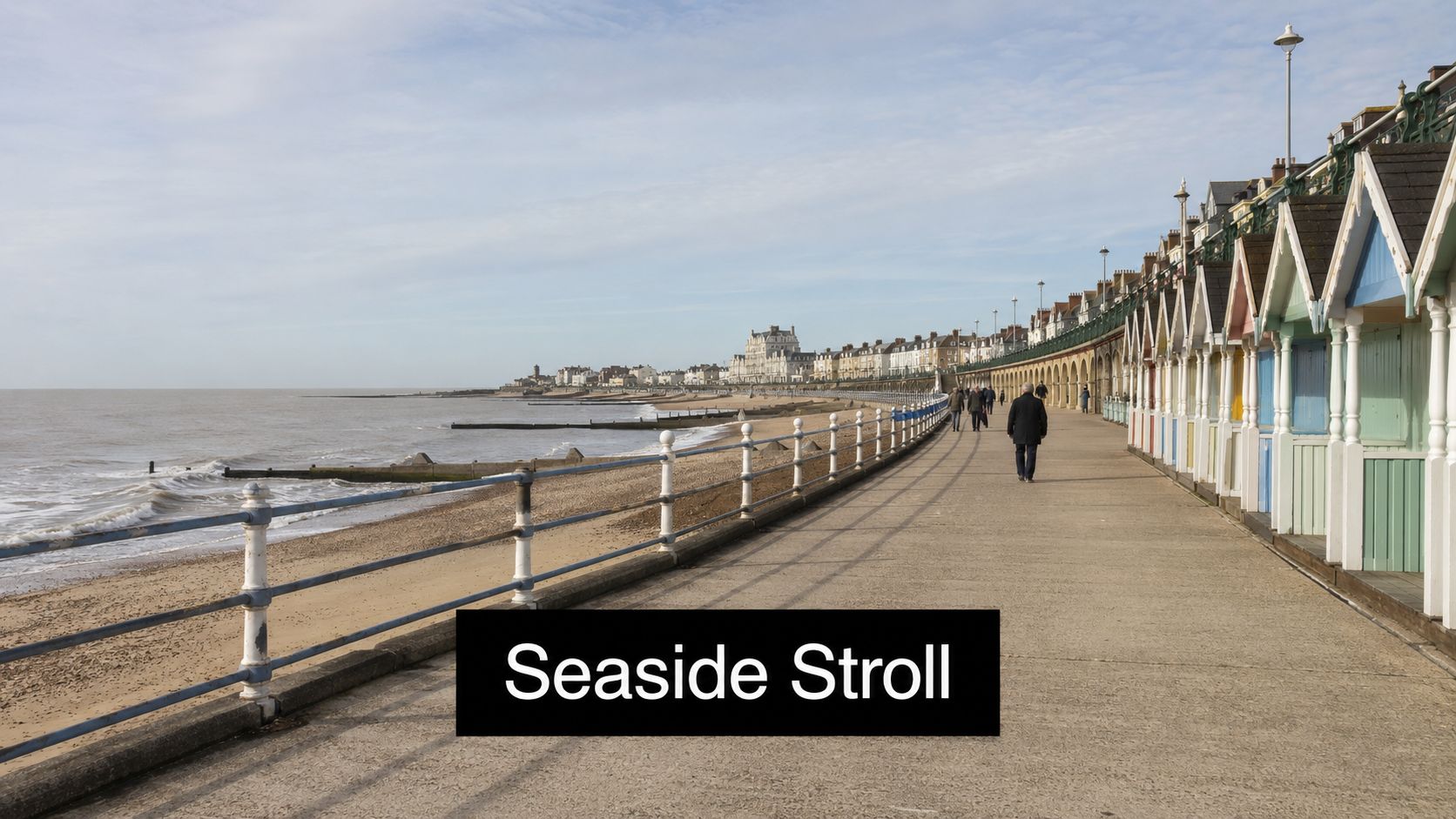
Not every pre-cruise stop needs interpretation boards and opening hours. Sometimes the right move is a clean seafront walk, a bench, and a decent look at the water before you spend days on a ship. Dovercourt Beach works well for that because it asks very little of you.
For visitors arriving after a long flight, this can be the most restorative option on the list. It doesn't require concentration, and it doesn't punish a bit of jet lag. You walk as far as you like, then stop when you've had enough.
Best for fresh air and reset time
This is one of the better things to do in Harwich if your schedule is too tight for a full attraction but too loose to sit idle. A promenade walk gives structure without commitment. That's ideal when you're waiting for the right time to head to the terminal.
The trade-off is obvious. If the weather turns, the charm drops quickly. Windproof clothing matters more than stylish cruise-day layers here.
- Use it as a buffer activity: Good when you've got spare time but don't want to risk a timed visit.
- Check conditions on the day: Grey skies aren't the problem. Strong wind usually is.
- Keep expectations simple: Come for the walk, the sea view, and the mental reset.
Who should prioritise this
I recommend Dovercourt Beach most often to couples, solo travellers, and anyone who prefers an unhurried arrival day. Families can enjoy it too, but younger children often want a clearer focal point than a promenade stroll.
If you're looking for value, this sort of open-air stop is useful because not every worthwhile part of Harwich needs a ticket. That's especially relevant in a town where visitors often struggle to find one reliable guide covering free or lower-cost off-peak ideas in one place. Dovercourt's seafront fits the kind of simple, practical outing many cruise passengers need.
6. Harwich Green & Town Centre Shopping
Town-centre time before a cruise can go very well or very badly. It works when you're browsing lightly, having a tea, and picking up something small. It doesn't work when you're hauling shopping bags, watching the clock, and trying to turn a modest high street into a full excursion.
Harwich Green and the surrounding centre are best treated as a short cultural pause. Here, you get the everyday town feel. A café stop, a bakery purchase, a quick look in independent shops. For many visitors, that's a better memory than trying to force one more major attraction into the day.
How to use the area well
The trick is to define the purpose before you arrive. If you're going in for souvenirs, refreshments, or a short wander, you'll enjoy it. If you're expecting a major retail session, you'll probably be underwhelmed.
I usually advise cruise passengers to keep this visit compact and practical.
- Buy small, not bulky: Anything awkward becomes a nuisance on embarkation day.
- Check Sunday patterns: Smaller towns can have slower opening rhythms than visitors expect.
- Pick one café and one browse street: A focused hour is better than drifting for two.
Don't make shopping the backbone of your Harwich plan unless shopping is the reason you travel.
A useful stop between transport stages
This area becomes especially useful if your transfer gets you in comfortably ahead of check-in and you want a low-pressure stop before heading on. It's also a good fallback when weather makes the coast less appealing but you don't want another museum-style visit.
For short stays, what works here is moderation. Tea room, local shop, brief walk, done. That's enough. On a cruise departure day, good restraint usually beats trying to squeeze out one last "must-see".
7. Essex Coast Walks & Nature Reserves
If you want Harwich at its quietest, go natural rather than built-up. Coastal paths and reserve areas around the Essex shoreline suit travellers who prefer movement, birds, salt marsh views, and a less curated experience. These aren't the easiest options for every cruise passenger, but for the right visitor they're often the most rewarding.
You need to be honest about pace. A nature walk sounds relaxing until luggage, wind, muddy ground, and sailing deadlines enter the picture. For a short-stay visitor, the right version is usually a modest stretch of coast rather than an ambitious outing.
Good idea or bad idea
Choose this if you're travelling light, enjoy walking, and don't mind changing plans around weather. Skip it if you're already tired, carrying bags, or hoping for a tidy attraction with facilities close at hand.
The Harwich area also supports wildlife-focused outings. Visit Essex's Harwich and Dovercourt page highlights seal watching tours as a standardised 2-hour boat experience, with direct booking by telephone for visitors who want a structured nature option rather than an informal walk.
Practical walking advice
A lot of visitors underestimate how exposed Essex coast walking can feel. It isn't mountain hiking, but it does demand common sense.
- Wear layers you can move in: Coastal air can shift quickly.
- Keep the route short on embarkation day: This isn't the moment to test your stamina.
- Prefer defined paths: Simple, obvious walks reduce the chance of timing mistakes.
The best version of this stop is often a purposeful hour outdoors rather than a half-day ramble. That's enough to clear your head and still arrive at the port feeling organised.
8. Parkeston Quay Heritage & Working Port Tours
Some travellers enjoy seeing how a port functions, not just how it looks from the postcard angle. If that's you, Parkeston Quay and the wider working-port setting add a different layer to Harwich. You get freight movement, operational infrastructure, and a clearer sense that this is a real transport hub, not only a cruise departure point.
That said, this isn't the easiest item on the list to recommend casually. Working-port visits depend on access, security, and scheduling. They can be excellent when available, but they require confirmation and shouldn't be treated as a spontaneous add-on.
When this makes sense
This option suits repeat cruisers, transport enthusiasts, and travellers who've already done the classic waterfront walk and want something less polished. It can also appeal to visitors who enjoy the industrial side of maritime Britain as much as the heritage side.
Harwich's broader visitor appeal isn't only industrial, of course. The town also has a cultural calendar. Visit Harwich's things to do guide notes that the Harwich Festival is an annual event rated in the top 10 by The Sunday Times and includes concerts and events across music, spoken word, and visual art. The same guide lists the Harwich Mayflower Heritage Centre at Main Road, Dovercourt, with contact details for visitors who want another heritage-focused stop.
Worth the effort
If tours or access are running on your date, this can be one of the more distinctive things to do in Harwich because it shows the town's present tense, not only its past. You see how the port still matters in everyday terms.
A working port visit is best for travellers who like context more than polish.
If access isn't available, don't force it. Swap to the waterfront, the Redoubt, or a town-centre stop and keep the day smooth. In Harwich, the best itinerary is usually the one that adapts fastest.
Top 8 Harwich Attractions Comparison
| Attraction | 🔄 Implementation complexity | ⚡ Resource requirements | ⭐ Expected outcomes | 📊 Ideal use cases | 💡 Key advantages |
|---|---|---|---|---|---|
| Harwich International Port & Cruise Terminal | Moderate, port operations, customs procedures | High, staffed terminal, baggage systems, parking | ⭐⭐⭐ Smooth embarkation, efficient connections to Northern Europe | Regional cruise departures; London transfer point | Modern facilities, competitive parking, direct routes |
| The Low Lighthouse & Ha'penny Pier | Low, short walk and basic access | Low, no special resources needed | ⭐⭐ Scenic views and short leisure visit | Quick pre-embarkation stroll; photography stop | Historic charm, free/low-cost access |
| Harwich Maritime Museum | Low–Moderate, timed entry & small-site flow control | Low, volunteer staff, compact exhibit space | ⭐⭐ Educational enrichment about local maritime history | 1–2 hour cultural visit before sailing | Affordable, compact, knowledgeable guides |
| Harwich Redoubt & Military Heritage | Moderate, uneven terrain, some access limitations | Moderate, site staff, restored exhibits | ⭐⭐ Immersive military history and panoramic views | History enthusiasts; short guided tours | Unique 18th‑century fortress, photographic ramparts |
| Dovercourt Beach & Seafront Promenade | Low, open public space, weather dependent | Low, cafes and basic facilities nearby | ⭐⭐ Relaxation, light exercise, coastal scenery | Pre-cruise walk; family-friendly relaxation | Free beach access, peaceful atmosphere |
| Harwich Green & Town Centre Shopping | Low, walkable town centre logistics | Low, independent shops and cafes | ⭐⭐ Practical shopping and local experience | Last-minute purchases; refreshments before embarkation | Authentic local shopping, compact and walkable |
| Essex Coast Walks & Nature Reserves | Moderate, route planning and guided options | Moderate, guided leaders, proper outdoor gear | ⭐⭐ Nature observation, birdwatching, gentle exercise | Wildlife enthusiasts; active passengers pre-cruise | Guided expertise, rich bird and flora viewing |
| Parkeston Quay Heritage & Working Port Tours | High, security, restricted access, scheduling | High, port staff, safety protocols, ID checks | ⭐⭐ Insight into commercial shipping operations | Industry-focused tours; educational groups | Unique working-port perspective; guided industrial access |
Your Seamless Harwich Departure
A short Harwich stop works best when the day is planned around your boarding time, your luggage, and your energy level. Cruise passengers usually get the most from one main stop and one easy add-on, not a long checklist that leaves no margin for traffic, weather, or delayed arrivals.
The practical pairings are straightforward. The Low Lighthouse and Ha'penny Pier fit well with the Maritime Museum if you want a compact heritage visit near the waterfront. The Redoubt works better with a brief seafront walk than with extra town-centre stops, because the site itself takes more effort. If you have bags and only a narrow window before embarkation, a café stop and light browsing in town is often the smarter call.
I usually advise visitors to choose the day by condition, not ambition. After an early flight into Heathrow or a transfer from Central London, Harwich is far more enjoyable when the plan stays tight. One well-timed visit can feel like a proper start to the holiday. Three rushed stops usually feel like admin.
That is the trade-off in Harwich. Every extra stop adds another point where the day can slip. Museum hours vary, the coast is weather-sensitive, and embarkation deadlines do not move for anyone.
Transport often decides whether you enjoy those few hours or spend them watching the clock. For short-stay visitors, especially cruise passengers with luggage, direct door-to-door travel removes the awkward part of the plan. EC Minibus is a practical option for transfers from Heathrow and Central London to the port because it avoids station changes and helps you arrive with enough time to see a little of Harwich before boarding.
Used well, Harwich is more than a departure point. It is your first useful, manageable stop on the trip.
If you want your cruise day to run smoothly from the first pickup, book with EC Minibus. Their door-to-door transfers from Heathrow and Central London to UK cruise ports make it easier to reach Harwich with time to enjoy the town instead of heading straight for the terminal.