

Discover the Eternal City: Your Ultimate 3-Day Rome Plan
Landing in Rome with just 72 hours can feel like walking into a city-sized museum with no map and no margin for error. You've got ancient ruins on one side, Vatican queues on the other, a hotel check-in to manage, and probably a transfer, train, or cruise connection sitting in the back of your mind the whole time. That's why most first-time visitors lose time in the wrong places. They drift, double back, and burn energy on logistics instead of sights.
Rome rewards structure. Standard three-day itineraries consistently centre on the Colosseum, Roman Forum, Palatine Hill, the Vatican, Trastevere, and the historic centre because that mix gives you both classical and Christian Rome in one short trip, and it reflects how most travellers use a limited stay (Rome itinerary planning reference). A short break here is realistic, but it's tight. One Rome guide notes that the Vatican area alone can take a full half-day, which tells you everything about how disciplined your timing needs to be on a three-day visit (local Rome itinerary guidance).
This guide is built for international travellers, especially anyone arriving on a flight connection, passing through London, or pairing Rome with a cruise. So the itinerary doesn't just tell you what to see. It folds in arrival timing, pre-booked entry, district-based planning, and when private transfers save more time than they cost.
If you want 3 days in Rome to feel full rather than frantic, use the city in zones, protect your mornings, and treat transport as part of the itinerary, not an afterthought.
Table of Contents
- 1. Colosseum (Flavian Amphitheatre)
- 2. Vatican Museums & Sistine Chapel
- 3. Roman Forum & Palatine Hill
- 4. Trevi Fountain (Fontana di Trevi)
- 5. Pantheon & Piazza della Rotonda
- 5. Pantheon & Piazza della Rotonda
- 6. Spanish Steps (Scalinata di Trinità dei Monti) & Surrounding District
- 7. St. Peter's Basilica, Castel Sant'Angelo & Ponte Sant'Angelo
- 8. Trastevere District & Roman Nightlife
- 9. Day Trips & Extended Experiences (Pompeii, Amalfi Coast, Villa d'Este)
- 3-Day Rome: 9 Highlights Comparison
- Making Your Rome Trip Seamless from Start to Finish
1. Colosseum (Flavian Amphitheatre)
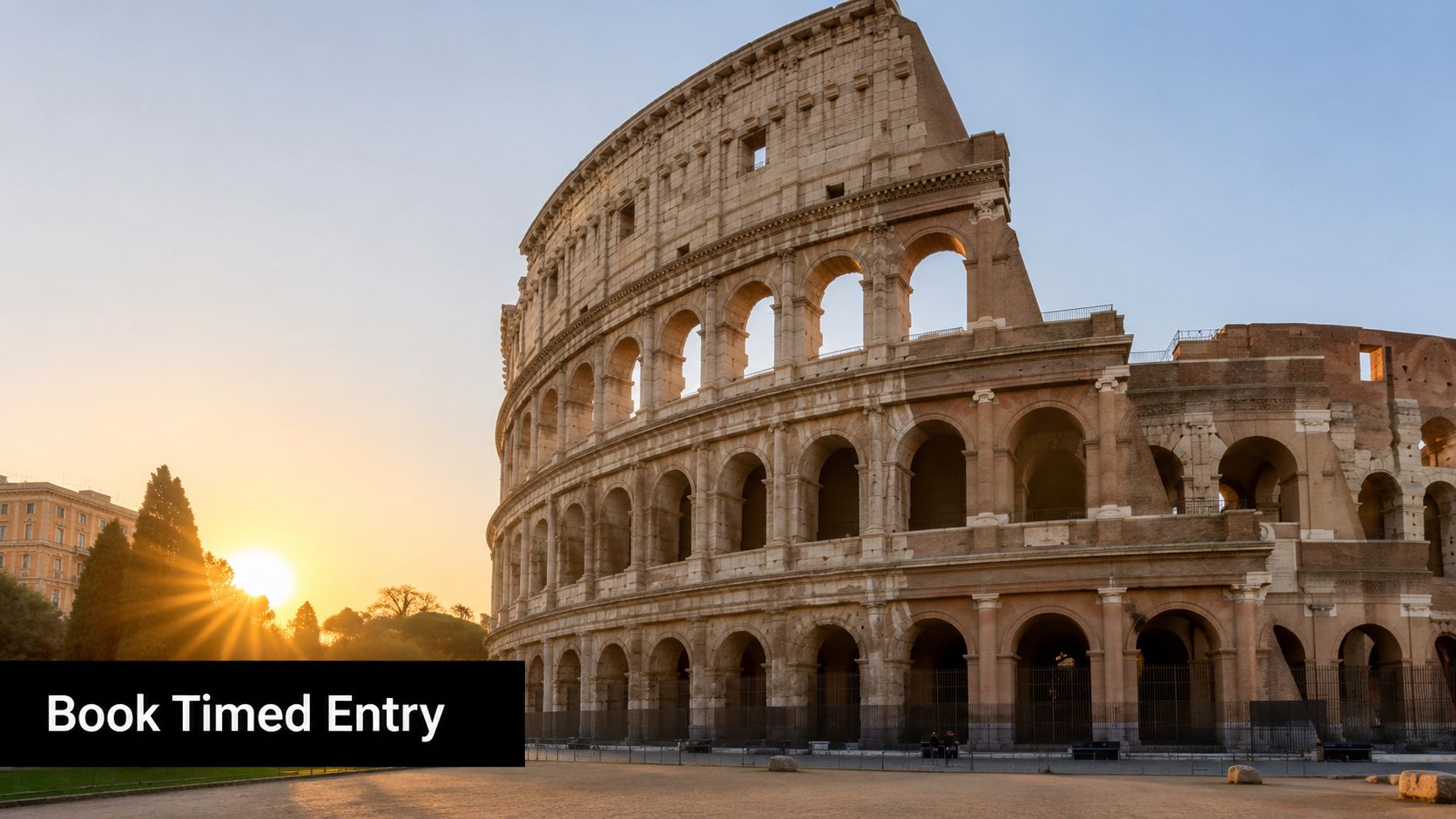
Start here if you landed in Rome late the night before, came in on an overnight flight, or need a day that stays geographically tight. The Colosseum works well as your first major stop because it gives you Rome's headline sight without wasting time on cross-city transfers. You can stay in the same archaeological zone for hours and keep transport decisions simple.
The amphitheatre opened in AD 80 and still does its job as an orientation point for the city. Once you have stood inside it, Ancient Rome stops feeling abstract. The scale, the sightlines, and the position beside the Forum make the rest of this part of the itinerary easier to understand.
For a short trip, the decision is not whether to visit. It is how much friction you want to accept. Buy a timed ticket before arrival through the official Colosseum ticketing portal. Good morning slots go first, and the difference between a reserved entry and an on-the-day scramble is often the difference between seeing one major site before lunch or losing your best hours in a queue.
Morning usually gives the best return on energy. You avoid the harsher midday heat for the most exposed parts of the site, and you leave room later in the day for a slower lunch or hotel reset.
For international travellers, I usually recommend treating this as a logistics anchor as much as a sightseeing stop. If you are coming straight from Fiumicino with bags at a hotel near the centre, arranging your Rome airport transfer before sightseeing can save enough time and hassle to protect an early entry slot. That matters more on a three-day trip than shaving a few euros off the journey.
A practical rule. Do not book the Colosseum for the same hour your flight lands, and do not assume immigration, baggage claim, traffic, and hotel drop-off will run perfectly. Leave a buffer if this is your arrival day. If your schedule is tight or you are arriving from a cruise port transfer, a late morning or early afternoon slot is safer than trying to force an ambitious first-hour plan.
You also need to choose the right ticket type. Standard entry is enough for many travellers, especially if your priority is seeing the amphitheatre itself and keeping the day efficient. Special access options such as the arena floor or underground can be worthwhile, but they add cost, reduce flexibility, and make timing less forgiving. On a three-day first visit, I would only pay extra if Ancient Rome is your main reason for coming.
Dress for exposure, not for postcards. There is limited shade, surfaces are uneven, and summer heat inside the archaeological area can drain you faster than expected. Water, decent shoes, and a realistic pace matter more here than in the compact historic centre.
If you want context without turning the visit into a long guided commitment, read the site map and basic visitor guidance from Parco archeologico del Colosseo, then use the saved time in the Forum and Palatine. That trade-off works well for travellers balancing sightseeing with check-in times, train departures, or evening reservations.
2. Vatican Museums & Sistine Chapel
Your Vatican morning can go two ways. You step off a long-haul flight or cruise transfer, arrive late, join a slow security line, shuffle through packed galleries, and hit the Sistine Chapel already tired. Or you treat it like a timed operation, book early, travel light, and finish before the worst congestion builds. On a three-day Rome trip, the second approach saves hours and leaves you with enough energy for the rest of the day.
The Vatican Museums work best as a fixed morning block, not as something to squeeze in around other plans. The route is long, indoor, and crowded even on well-run days. Once you are inside, you are committing to sustained walking, controlled visitor flow, and a lot of visual input in a short span.
Pre-book a timed ticket before you leave home. For international travellers, this matters more here than at many other Rome sights because Vatican timing has to fit around airport arrivals, hotel check-in windows, jet lag, and sometimes port transfers from Civitavecchia. The official Vatican Museums ticket page is the right place to check entry options, calendar availability, and current visitor rules (Musei Vaticani tickets and visiting information).
Early entry is usually the best use of your time and patience. Mid-morning sounds reasonable, but it often means heavier internal crowding once tour groups are fully moving through the route. If you cannot get one of the first slots, I would shift the Vatican to another day rather than force a poor entry time into a tight itinerary.
A few practical choices make this visit easier:
- Arrive with your ticket ready and as little bag weight as possible: Security is unavoidable. Extra items slow you down.
- Dress for church rules, not just museum comfort: Covered shoulders and appropriate clothing prevent problems if you plan to continue to St. Peter's Basilica later.
- Choose a short target list before you enter: Raphael Rooms, major classical sculpture galleries, and the Sistine Chapel are enough for many first-time visitors.
- Keep food plans outside the immediate exit zone: Prices are worse and quality is often lower right by the busiest tourist flow.
The biggest mistake here is treating the museums and St. Peter's as one automatic package. They are close, but they draw on the same energy budget. If your museum visit runs long, split the area in two and save the basilica for an early start on another day. That trade-off usually works better than pushing through both and losing the rest of the afternoon.
One more logistics point matters for international visitors. Do not schedule the Vatican for the morning you land unless your arrival is unusually early and you have a private transfer arranged with plenty of buffer. Immigration delays, baggage claim, road traffic, and hotel bag drop can wreck a timed reservation. In a short Rome stay, missed-entry stress is a poor bargain.
3. Roman Forum & Palatine Hill
You leave the Colosseum with the big image. The Forum and Palatine explain how the city worked.
For a three-day Rome trip, treat these sites as one Ancient Rome block unless ticket availability forces a split. That saves time on transit, keeps your walking focused in one district, and makes more sense for international travellers who are already managing jet lag, hotel check-in timing, or a same-day transfer from Civitavecchia.
Start on Palatine Hill if your entry point allows it. The higher ground gives you orientation first, then the Forum reads more clearly once you descend into it. That order also helps with heat and fatigue, because the site is larger and more exposed than many first-time visitors expect.
A practical warning matters here. The Forum is not a quick add-on after a rushed Colosseum slot. Paths are uneven, shade is limited, and signage can feel fragmented if you arrive tired or without a plan.
The best visit usually comes from choosing your route before you enter. Official site information from the archaeological park helps with current access points, opening details, and temporary closures (Parco archeologico del Colosseo visitor information). Check that before the day itself, especially if you are building the morning around a timed Colosseum reservation.
A few habits make this area easier to handle:
- Download an offline map before you arrive: Mobile signal can be unreliable inside the archaeological area.
- Carry water and wear shoes with grip: Stone surfaces are uneven and can be slippery.
- Visit early or late in the day if possible: Midday sun drains energy fast, especially in warmer months.
- Pick a focus before you start: Imperial palaces, republican politics, photography, or broad orientation all lead to different pacing.
- Leave buffer after the visit: International travellers often underestimate how tiring this section is, particularly after a flight day or port transfer.
If you enjoy ruins but do not want to read every sign, give yourself enough time to absorb the setting rather than trying to identify every structure. If Roman history is a priority, a guide or well-reviewed audio guide is often worth the extra cost here more than at simpler monuments. The site has layers, and context changes it from a hot walk among stones into one of the most rewarding parts of Rome.
The trade-off is straightforward. Pairing the Forum and Palatine with the Colosseum is efficient. Pairing them with too many extra stops on the same day usually leads to tired, blurry sightseeing and a weaker afternoon.
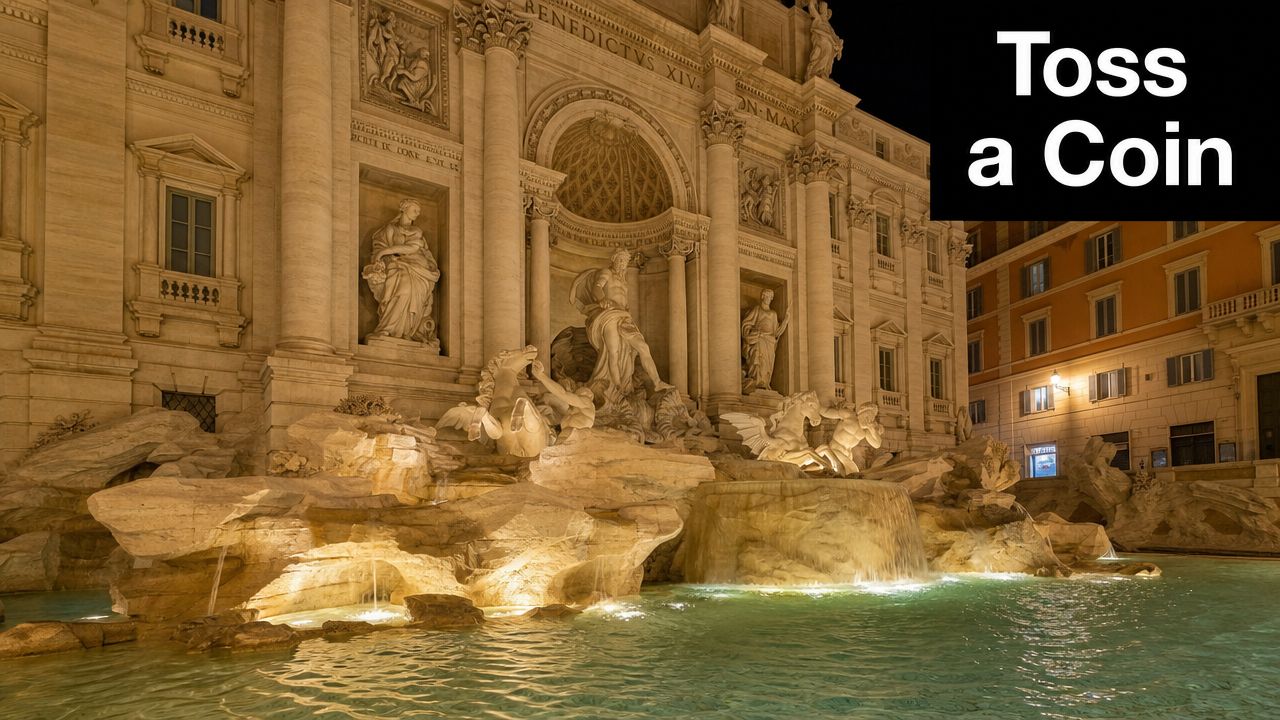
4. Trevi Fountain (Fontana di Trevi)
You arrive in the historic centre at 2 pm after a late flight or a cruise transfer, walk into the Trevi area with everyone else, and spend more energy getting into position than seeing the fountain. That is the mistake to avoid. Trevi works best as a short, well-timed stop folded into your route, not as a major block of the day.
It remains one of Rome's signature sights for a reason. The scale is dramatic, the sculpture reads well even from the edges of the piazza, and the sound of the water cuts through the surrounding noise. The problem is not the monument. The problem is timing, crowd density, and the way many short-stay visitors build too much around it.
Best way to fit Trevi into a short trip
For a three-day Rome plan, especially for international travellers managing jet lag, fixed entry times, and hotel check-in windows, Trevi should sit between other historic-centre stops. Early morning is the best option for cleaner photos and lower stress. Late evening is a good second choice if you want atmosphere and can accept that the area will still be busy.
Midday is the weak trade-off. You get the same fountain with more crowd pressure, harsher light, and a higher chance of wasting time in the surrounding lanes.
A practical approach works better than a romantic one:
- Treat it as a 15 to 25 minute stop: That is usually enough unless photography is a priority.
- Go before breakfast or later at night: Those windows are easier on both energy and crowd levels.
- Keep bags zipped and phones secure: The area is dense and distracted visitors are easy targets.
- Skip restaurants directly facing the busiest approach routes: The location is prime. The value often is not.
- Use it on a walking line between major sights: That keeps transit efficient and stops Trevi from eating into museum or church time.
If you want one reliable source for the fountain's background and current restoration or conservation context, use the official Rome tourism page for the Trevi Fountain.
What visitors often get wrong
Trevi looks simple on a map. On the ground, access streets bottleneck quickly, and the crowd can turn a short visit into a tiring shuffle. Travellers arriving straight from Fiumicino or Civitavecchia often underestimate that friction. If your luggage drop ran late or your transfer took longer than planned, do not force Trevi into the hottest and busiest part of the day just to tick it off.
The better call is to move it. See it early the next morning on the way to coffee, or return after dinner when your timed reservations are behind you.
Another common mistake is building a meal around the fountain view. A better use of money is to see Trevi, take your photos, then walk a few streets away for food. Prices and service usually improve once you are out of the immediate tourist crush.
Trevi rewards good timing more than long duration. Get in, see it properly, and move on before the crowd starts costing you the rest of the day.
5. Pantheon & Piazza della Rotonda
You can land in Rome on an overnight flight, lose an hour at your hotel waiting for the room, and still fit the Pantheon in properly. That is why it works so well in a 3-day plan for international travellers. It delivers major historical weight without the long security lines, hill climbs, or half-day time commitment that can throw off the rest of your schedule.
The building also solves a common itinerary problem. By Day 2 or Day 3, many travellers are tired of looking at ruins from the outside. The Pantheon gives you the opposite experience. It still functions as an interior space, so the scale, light, and dome register immediately, even if your energy is low.
Why it earns a place in a short Rome itinerary
The Pantheon sits in one of the easiest parts of central Rome to combine well. You can pair it with Piazza Navona, a coffee stop, a long lunch, or a walk toward Campo de' Fiori without adding much transit friction. That matters if you are balancing jet lag, timed entries elsewhere, or a same-day transfer from Fiumicino, Ciampino, or Civitavecchia.
Rome rewards area-by-area planning more than monument hopping. The Pantheon is one of the best examples. Put it inside a historic-centre walking block and it adds substance without draining the day.
How to visit efficiently
Pre-book your entry if your dates fall on a weekend, public holiday, or peak season stretch. The site is compact, but the queue outside can still waste 20 to 40 minutes that would be better spent inside or on the move to your next stop. If your Rome plan already includes the Colosseum, Vatican Museums, and St. Peter's, that saved time matters.
Go early or in the last part of the afternoon if you want a calmer visit. Midday often brings the heaviest mix of tour groups, day-trippers, and cruise passengers who are working through the historic centre on a tight loop.
A few practical points help:
- Use this stop on a walking route, not a separate taxi leg: Cars cannot deliver you neatly into the square, and the final approach is still on foot.
- Do not schedule it too tightly after airport or port arrival: If a transfer runs late, this is easy to shift to another part of the day.
- Carry a light layer or dress appropriately: It is a religious site, not just an ancient monument.
- Aim for 30 to 45 minutes inside: Longer is optional, not required.
Piazza della Rotonda: worth seeing, not worth lingering too long
The piazza outside is part of the experience, but it is also where timing affects comfort and cost. The square is lively and photogenic, yet the café rows around it trade heavily on location. If you want one coffee with a view, fine. If you want better value, walk a few minutes away.
This is also a useful reset point rather than a destination that should dominate a half-day. Sit briefly, look at the façade, get your bearings, then continue. For travellers managing limited energy, that is usually the right balance.
If you want reliable visitor information, opening details, and current access rules, use the official Pantheon page from Italy's Ministry of Culture: Pantheon official visitor information.
What visitors often get wrong
The main mistake is treating the Pantheon like a tiny stop that needs no planning. It is short, but it is not friction-free. Queue delays, dress-code issues, and poor timing can turn an efficient visit into a slow one.
Another mistake is placing it as a filler between two far-apart reservations. The Pantheon works best when the rest of the day stays local. If you have Vatican tickets in the morning and a food tour in Trastevere at night, place this in the afternoon historic-centre block, not as a rushed detour with extra taxi time on both sides.
For international travellers, that kind of sequencing matters more than squeezing in one more landmark. Rome is easier when each district gets a clean, well-timed run.
5. Pantheon & Piazza della Rotonda
The Pantheon is one of the most efficient stops in Rome. It's central, compact, and architecturally serious enough to satisfy even travellers who think they're “ruined out” by the time Day 2 or Day 3 arrives.
If you want one ancient building that still feels complete rather than fragmentary, this is it. The exterior lands immediately. The interior lands even harder once your eyes adjust and the dome takes over the space.
Why it works so well in 3 days in Rome
The Pantheon suits a short trip because it gives maximum historical weight without demanding a half-day. You can place it in a morning historic-centre route, use it as a midday indoor reset, or pair it with nearby piazzas when the legs need a gentler stretch.
One practical reason Rome requires this kind of clustering is simple. The city has more than 900 churches, which helps explain why short visits work better when organised by area rather than by individual monument hopping (Rome city overview for three-day planning). The Pantheon sits in exactly the kind of dense central zone where that strategy pays off.
How to see it without wasting energy
Aim for a visit when you're already in the historic centre. Don't build a separate transport movement around it unless mobility is a real concern. If you're staying centrally, this is one of the best examples of a stop that rewards walking.
A few practical choices make the visit better:
- Pause in the piazza before going in: The exterior deserves a full view rather than a rushed doorway entry.
- Step inside with a few minutes to spare mentally: This isn't a place to barge through while checking your next reservation.
- Use nearby cafés carefully: The setting is excellent, but not every table is worth the premium.
Some Rome sights need a guide. The Pantheon mostly needs attention.
That's why it works so well in a tightly packed schedule. It asks less of your time and gives back a lot of atmosphere, engineering, and historical continuity in return.
6. Spanish Steps (Scalinata di Trinità dei Monti) & Surrounding District
The Spanish Steps are often overvalued at midday and undervalued at the edges of the day. If you hit them in the busiest hours, they can feel like a crowd-management exercise with a nice backdrop. If you arrive early or after the daytime crush, the area becomes far more enjoyable.
This is also one of the easiest places to combine sightseeing with practical trip rhythm. On 3 days in Rome, not every stop should be intellectually heavy. Some should move you through a beautiful district without draining you.
Use the district, not just the staircase
The steps themselves are quick. The surrounding streets are where the stop starts to earn its place. Nearby shops, café breaks, and the walk onward towards Trevi or the historic centre make this a useful connector in the itinerary rather than a stand-alone mission.
A few trade-offs are worth being honest about:
- Good for atmosphere: Yes, especially early or in the evening.
- Good for long dwell time: Usually no.
- Good for mobility-limited travellers: Depends on whether you treat the staircase as optional and enjoy the lower square instead.
If you're carrying shopping, managing luggage, or keeping an older family member moving comfortably, this is another place where direct vehicle access nearby can save effort. The issue isn't distance alone. It's the stop-start nature of crowded central Rome.
What to do nearby
The district suits a slower hour. Take a coffee, wander a couple of side streets, and avoid trying to “conquer” the area in the middle of the day.
One of the clearest pieces of short-trip advice from Rome planners is to visit major sights early or later in the day to reduce crowd penalties, especially when you're staying near the centre and trying to maximise usable sightseeing time (three-day Rome timing advice).
That's the right lens for the Spanish Steps. Use them as a beautifully placed pause. Don't force them into a major sightseeing block and expect depth that isn't there.
7. St. Peter's Basilica, Castel Sant'Angelo & Ponte Sant'Angelo
This is one of the best pairings in Rome because it combines scale with relief. St. Peter's gives you grandeur, pilgrimage weight, and one of the city's most commanding interiors. Castel Sant'Angelo and the bridge give you air, views, and a softer pace after the density of Vatican spaces.
For many travellers, this works better as a separate block from the Vatican Museums, even though they're close. The Basilica asks for attention of a different kind, and it's easier to appreciate when you're not already museum-tired.
How to sequence the area
The strongest order is usually early St. Peter's, then the riverside, then Castel Sant'Angelo if you still have the energy. If you reverse it, the Basilica can feel like one more major queue after a long morning. If you start at the church, the day tends to feel calmer.
International travellers often make a useful mistake here. They assume nearby means same-session. In Rome, nearby doesn't always mean efficient. Security lines, fatigue, crowd surges, and walking load matter more than the map suggests.
A better approach is:
- Do St. Peter's early
- Pause properly afterwards
- Cross to Ponte Sant'Angelo when you want open space and photos
- Enter the castle only if your energy still supports another indoor-cultural stop
Why this combination works
This part of Rome offers one of the clearest shifts in atmosphere over a short distance. A family arriving from a cruise extension might prioritise the Basilica and bridge only. A couple on a longer city break might add the castle and linger by the river. Both are sensible choices.
Don't let proximity trick you into overscheduling. The Vatican zone looks compact on a map and feels much bigger on your feet.
If you need to protect an onward transfer, this is also a good area to keep tightly timed. The routes are straightforward, but the crowds aren't. Pre-arranged pickup removes the worst uncertainty at the end of a long sightseeing block.
8. Trastevere District & Roman Nightlife
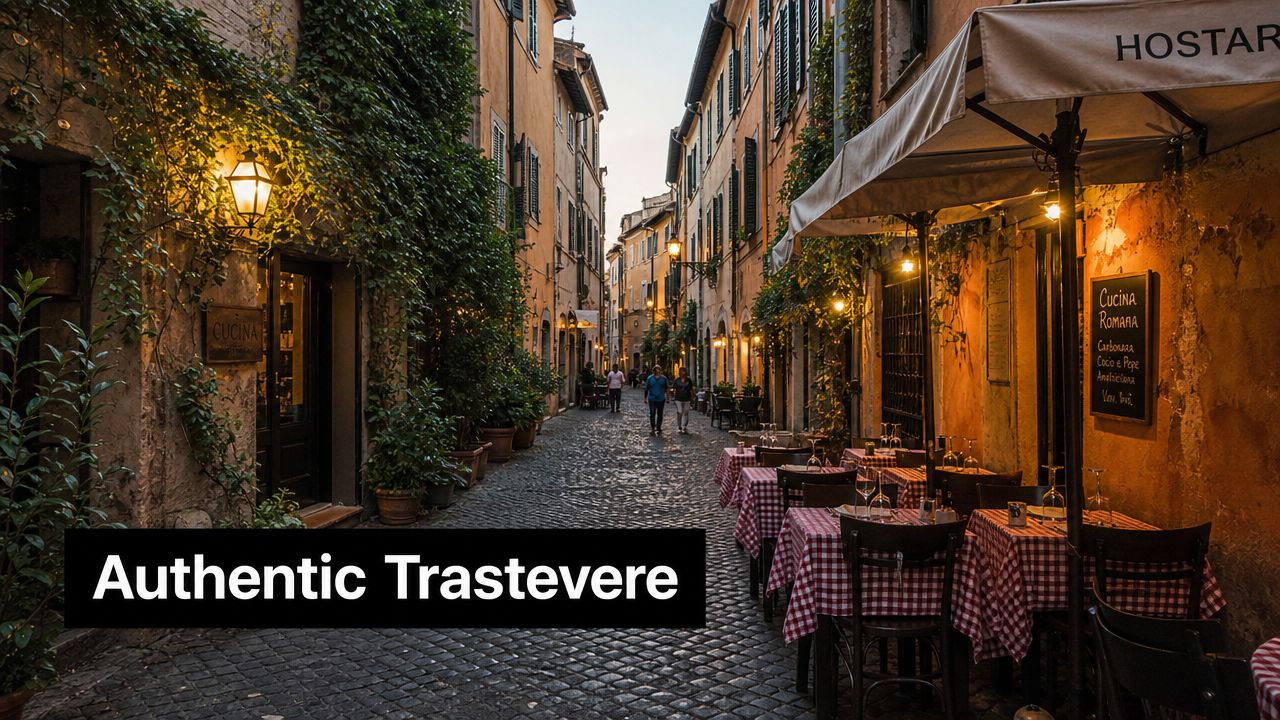
Trastevere is where a packed Rome itinerary breathes out. After ruins, domes, and timed entries, this neighbourhood gives you something different. Narrow streets, evening light, slower wandering, and a better chance of ending the day with food you enjoy rather than food you settled for near a landmark.
That matters because a lot of standard three-day itineraries front-load icons and leave too little room for the part of Rome people often remember most. The atmosphere between formal sights.
When Trastevere earns its place
Go in the early evening if you want the district before dinner crowds peak. That window works especially well after a lighter afternoon, or after a river walk from the Vatican side. You get enough movement to feel the area, then enough time to settle into dinner without rushing.
For Trastevere, I'd be more flexible. Unlike the Colosseum or Vatican, Trastevere doesn't need you to schedule every minute. It rewards a looser approach once the rest of the trip has been tightly managed.
A few grounded rules help:
- Book dinner if there's a specific place you want
- Use offline maps because the lanes can get disorienting
- Keep the return simple if you're tired or travelling solo late
- Avoid forcing too many “must-see” pins into the neighbourhood
A practical use of your final evening
For many international travellers, this is the right place to end Day 3. It's social without requiring formal planning and memorable without demanding another queue. If your trip is extending beyond three days, a broader Rome itinerary for four days with extra pacing options can help you decide what to leave for later rather than cramming it in here.
There's also a bigger travel trend behind this choice. VisitBritain projects continued growth in leisure travel in 2025, and with airport pressure and concentrated tourism affecting how people plan city breaks, off-peak timing and crowd-aware choices matter more than generic landmark lists (travel trend context for smarter itinerary planning).
Trastevere fits that reality well. It gives you a strong finish without forcing you back into the worst of Rome's daytime crowd pattern.
9. Day Trips & Extended Experiences (Pompeii, Amalfi Coast, Villa d'Este)
A day trip after only 3 days in Rome is rarely the best use of time. That's the honest answer. Rome itself has enough density that most first-time visitors are better off staying put.
Still, international travellers often build Rome into a wider journey. Cruise passengers may add pre- or post-cruise nights. Long-haul visitors sometimes want one major extension outside the city. In that case, a day trip can make sense, but only after you've accepted the trade-off. You're not adding a “bonus”. You're replacing Rome time.
Which extensions are worth considering
Pompeii appeals to travellers who want a second major ancient site and don't mind a long day built around archaeology. Villa d'Este suits visitors who want a softer historical contrast with gardens and a less urban pace. The Amalfi Coast is the least sensible as a single-day add-on if your priority is efficiency, but some travellers choose it for scenery over logistics.
The rule is simple. Pick one type of experience:
- Ancient history: Pompeii
- Gardens and villa culture: Villa d'Este
- Coastal scenery: Amalfi Coast
Trying to combine multiple ambitions into one extension usually turns into too much transit and not enough presence.
The logistics question that matters most
Transfer planning begins to matter as much as destination choice. If your Rome stay already connects to Heathrow, central London, or a cruise route, don't leave your final transport arrangements vague. Protect the first and last blocks of your day. That's especially important for older travellers, families, and anyone juggling luggage with a fixed departure.
For cruise passengers planning wider ground logistics around the UK side of the journey, it also helps to look at practical transfer planning such as cruise port connections through Livorno and wider pre-cruise routing.
A good extension should feel like one clear decision. If it creates three new transport worries, it probably isn't worth your only extra day.
That's the test. If the extension supports the shape of your trip, take it. If it competes with Rome for time and energy, stay in the city.
3-Day Rome: 9 Highlights Comparison
| Site | 🔄 Complexity (process/complexity) | ⚡ Resources & Time (cost & logistics) | ⭐ Expected outcome (quality/impact) | 📊 Ideal use cases | 💡 Key advantages / tips |
|---|---|---|---|---|---|
| Colosseum (Flavian Amphitheatre) | Moderate–high: timed entries, crowd control, uneven stairs | 2–3 hrs; paid entry; skip-the-line recommended; some accessibility limits | ⭐⭐⭐⭐: iconic Roman engineering & spectacle | First-time visitors, history-focused itineraries, cruise pre/post stops | Book timed tickets weeks ahead; visit early morning; combine with Forum |
| Vatican Museums & Sistine Chapel | High: strict dress code, long queues, confined spaces | 3–5 hrs; higher admission; guided tours advisable; advanced booking essential | ⭐⭐⭐⭐⭐: world-class art and spiritual significance | Art lovers, scholars, pilgrims, visitors allocating half-day+ | Buy skip-the-line tickets; early-morning entry; hire art historian guide |
| Roman Forum & Palatine Hill | Moderate: large open site, uneven terrain, limited signage | 2–3 hrs; combined ticket with Colosseum (cost-effective); physical walking required | ⭐⭐⭐⭐: deep contextual insight into ancient urban life | History buffs, combined Colosseum itineraries, panoramic views seekers | Start at Palatine, wear sturdy shoes, download offline map or hire guide |
| Trevi Fountain (Fontana di Trevi) | Low: short visit but intense crowding and pickpocket risk | 15–30 mins; free entry; very crowded; minimal facilities nearby | ⭐⭐⭐: iconic photo opportunity and cultural ritual | Quick stops, photography sessions, short sightseeing breaks | Visit at sunrise or late evening; secure valuables; toss a coin discreetly |
| Pantheon & Piazza della Rotonda | Low: straightforward visit; some interior crowding; weather-dependent | 30–45 mins; free (small donation suggested); central walking access | ⭐⭐⭐⭐: outstanding architectural and engineering achievement | Architecture enthusiasts, short itineraries, walkable historic routes | Visit midday for dramatic oculus light or early morning for quieter interior |
| Spanish Steps & Surrounding District | Low–moderate: open public space, heavy foot traffic, crowded shopping area | 30–60 mins; free; nearby premium-priced dining/shopping | ⭐⭐⭐: aesthetic/romantic atmosphere and people-watching | Shopping, photography, romantic evening outings | Go at sunrise or after sunset; secure valuables; explore side streets for better dining |
| St. Peter's Basilica, Castel Sant'Angelo & Ponte Sant'Angelo | High: security screening, dress code, optional dome climb, multiple sites | 2–4 hrs (longer with dome/castle); basilica free, dome/castle paid; potential queues | ⭐⭐⭐⭐: unparalleled spiritual, artistic, and panoramic experiences | Pilgrims, art/architecture visitors, combined Vatican-area afternoons | Enter early; consider elevator for dome; visit castle late afternoon for views |
| Trastevere District & Roman Nightlife | Low–moderate: maze-like streets, limited vehicle access, lively evenings | 2–3 hrs typical; modest dining prices; reservations advised for restaurants | ⭐⭐⭐: authentic local atmosphere, dining and nightlife | Evening dining, authentic neighborhood experiences, relaxed strolls | Reserve tables; use offline maps; visit early evening before late-night crowds |
| Day Trips & Extended Experiences (Pompeii, Amalfi, Villa d'Este) | High: long transit times, coordination of transport and guides | Full day (6–12 hrs); higher cost for guided/minibus tours; early departures required | ⭐⭐⭐⭐: high cultural, scenic, or archaeological value depending on destination | Travelers with extra days, post-cruise extensions, nature or archaeology interests | Prebook transport and guides; start early; prioritize highlights (e.g., House of the Faun, Positano, Villa fountains) |
Making Your Rome Trip Seamless from Start to Finish
Three days in Rome is enough to have a real trip, but not enough to improvise well. That's the central truth behind nearly every successful short stay here. The city is dense, layered, and rewarding, yet it punishes vague planning. If you arrive without booked priorities, without a district-based route, and without clear transfer timing, you'll still see Rome. You just won't see the best version of it.
The strongest structure is simple. Give Ancient Rome one major block. Give the Vatican its own protected window. Use the historic centre for flexible but tightly clustered stops like the Pantheon, Trevi Fountain, and the Spanish Steps. Finish with Trastevere or a riverside evening when you need atmosphere more than another museum. That mix reflects what works in practice, not just what looks good on a map.
The biggest gain usually comes from reducing friction, not adding more sights. Pre-booking matters because queues steal hours you can't replace. Staying central matters because every unnecessary transfer eats into a day that's already full. Early starts matter because Rome's most famous places are always easier before the crowd thickens. If you only remember one planning principle, make it this one. Don't measure your itinerary by the number of places pinned. Measure it by how smoothly one stop flows into the next.
For international travellers, transport choices shape that flow more than people expect. A delayed airport arrival, a badly timed hotel transfer, or an uncertain pickup on departure day can compress the exact sightseeing block you were trying to protect. That's why it pays to think about arrival and departure as sightseeing decisions too. If your first afternoon is supposed to cover the Colosseum, or your final morning is your only shot at St. Peter's, then ground transport isn't admin. It's part of the itinerary itself.
This matters even more for travellers connecting through London or heading to or from a cruise. The practical priority in those trips is predictability. Not endless flexibility. A booked, door-to-door transfer removes the need to improvise while tired, carrying bags, or watching the clock. It also helps families, couples, and older travellers conserve energy for the parts of Rome that are worth spending it on.
Rome also rewards honesty about pace. You won't see everything in three days, and trying to do so usually produces the worst version of the city. You'll queue more, walk more, and absorb less. A better trip comes from accepting the limits, choosing your priorities, and leaving room for one long lunch, one unhurried piazza, or one evening where the city unfolds without pressure.
That's the ultimate goal of a strong Rome plan. Not maximum volume. Maximum quality inside a short time frame.
If you approach 3 days in Rome with booked entries, realistic walking loads, and transfers that protect your sightseeing windows, the city stops feeling overwhelming. It starts feeling navigable, generous, and memorable in exactly the way first-time visitors hope it will.
If your Rome trip is part of a longer journey through Heathrow, Central London, or a UK cruise port, EC Minibus makes the transfer side far easier to manage. Their service is built for travellers who don't want arrival day confusion or departure day stress, especially when luggage, fixed timings, and door-to-door reliability matter just as much as the sightseeing itself.