

Southampton is about 79 to 80 miles (128 to 130 km) from central London by road. That sounds simple enough, but if you're sailing on a fixed cruise departure, the main question isn't mileage. It's how long your full door-to-door transfer will take, and how much stress you're willing to absorb on the day.
If you're reading this with flights booked, luggage piled up, and a cruise check-in window in the back of your mind, you're asking the right question. Most travellers don't need a geography lesson. They need a practical answer that helps them avoid a missed ship, a chaotic station change, or a last-minute panic outside a terminal they don't recognise.
For cruise passengers, London to Southampton is a manageable same-day trip. But manageable doesn't mean effortless. Heathrow arrivals, central London traffic, rail changes, luggage handling, and the final run from Southampton city centre to the cruise terminal all matter far more than the headline distance.
Table of Contents
- Your Journey from London to Southampton Starts Here
- The Actual Distance from London to Southampton
- Comparing Your Travel Options A Quick Guide
- Travelling by Train Speed vs Hidden Complexities
- Driving by Car or Taking a Coach
- The Private Transfer A Stress-Free Solution
- Frequently Asked Questions About Your Transfer
Your Journey from London to Southampton Starts Here
You land at Heathrow after an overnight flight. You're tired, your suitcase feels heavier than it did when you packed it, and now you need to get from one of the world's busiest travel hubs to a cruise port you may never have seen before. That's the moment when people stop asking, "How far is Southampton from London?" and start asking, "What gives me the least chance of a bad day?"
That shift in thinking matters. A straightforward map answer won't carry your luggage, guide you through Waterloo, or get you from Southampton Central to the correct cruise terminal. That's why so many travellers underestimate this transfer. They focus on the mileage and ignore the joins between each stage.
According to Rome2Rio's London and Southampton route information, the road trip can take about 1h 34m by car under normal conditions, while train journeys average about 1h 42m and still require onward transfers. That same route information makes the most important point for cruise passengers: the main issue is the final leg from Southampton city centre to the cruise terminals, plus congestion along the way.
Practical rule: If a ship departure is on the line, judge every travel option by total door-to-door time, not by the headline journey time shown in an app.
The stress points people miss
- Airport fatigue: After a long-haul flight, even simple decisions feel harder.
- Luggage friction: Rolling one case through a hotel lobby is easy. Moving several through trains, lifts, pavements, and taxi ranks isn't.
- Fixed check-in pressure: Cruise travel is unforgiving. The ship won't wait because your transfer felt awkward.
- Terminal uncertainty: Southampton isn't just "the port". You still need the right terminal, at the right time, with enough buffer.
If you want my opinion, treat this as a logistics problem, not a sightseeing day. Choose the option that removes steps.
The Actual Distance from London to Southampton
For planning purposes, treat Southampton as an 80-mile journey from central London by road. That is far enough to require proper timing, but close enough to handle comfortably on the same day if your transfer is organised well, according to distance and travel timings for London to Southampton.
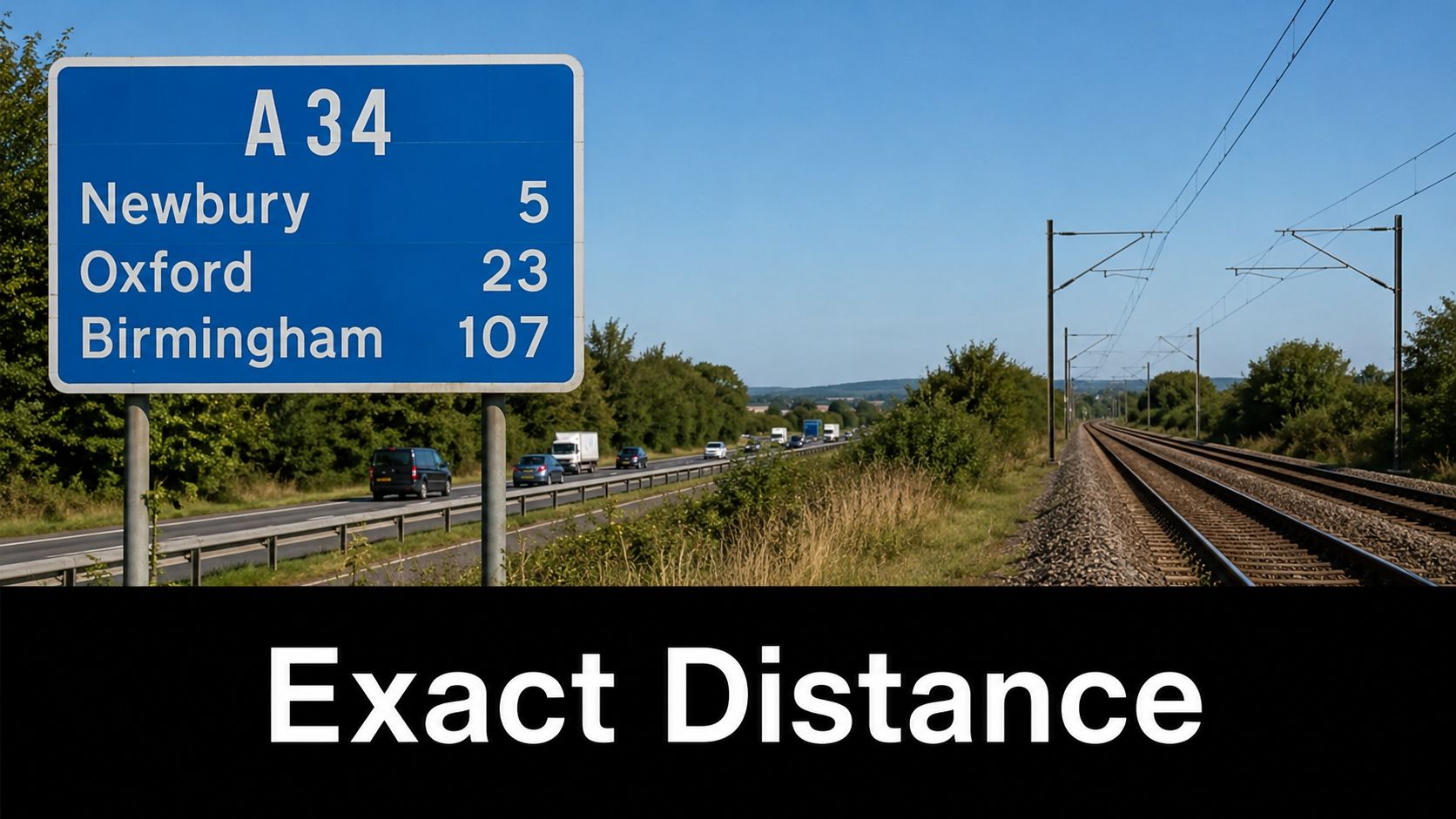
That headline distance is useful, but cruise passengers need to read it correctly. An 80-mile trip in the UK is not a casual airport shuttle. It is an intercity transfer with motorway traffic, luggage, and a fixed ship check-in deadline in the background.
Use the distance that matches the journey you are actually taking
A lot of online answers mix up straight-line distance with road distance. That is how travellers end up underestimating the day.
The straight-line gap between London and Southampton is shorter than the route you will travel. Your car, coach, or transfer follows roads. Your train follows the rail network. Neither moves in a straight line across a map, so straight-line mileage is useless for cruise-day planning.
Book and schedule using road distance and door-to-door timing. That is the number that affects whether you arrive calm or rushed.
What the figures mean in practice
Here is the practical reading of the route data already cited above:
| Travel basis | Useful figure | What it means |
|---|---|---|
| Road distance | About 79 to 80 miles | A proper transfer that needs timing, not a short local ride |
| Direct rail time | About 1h 16m to 1h 42m | Quick between stations, with extra steps at both ends |
| Typical driving time | About 1h 35m to 2h 10m | Usually manageable, but vulnerable to traffic pressure |
For an international visitor, that last column matters most. A journey can look short on paper and still feel tight once you add hotel checkout, loading bags, motorway delays, and finding the correct Southampton terminal.
A short video can help you picture the route and setting before you commit to a plan:
My advice is simple. Treat London to Southampton as an easy same-day transfer only if your plan includes buffer time for the parts before and after the main journey. That is what protects you from stress.
Comparing Your Travel Options A Quick Guide
You have four realistic choices for this route. Train, coach, self-drive car, or private transfer. The right one depends less on mileage and more on your tolerance for hassle.
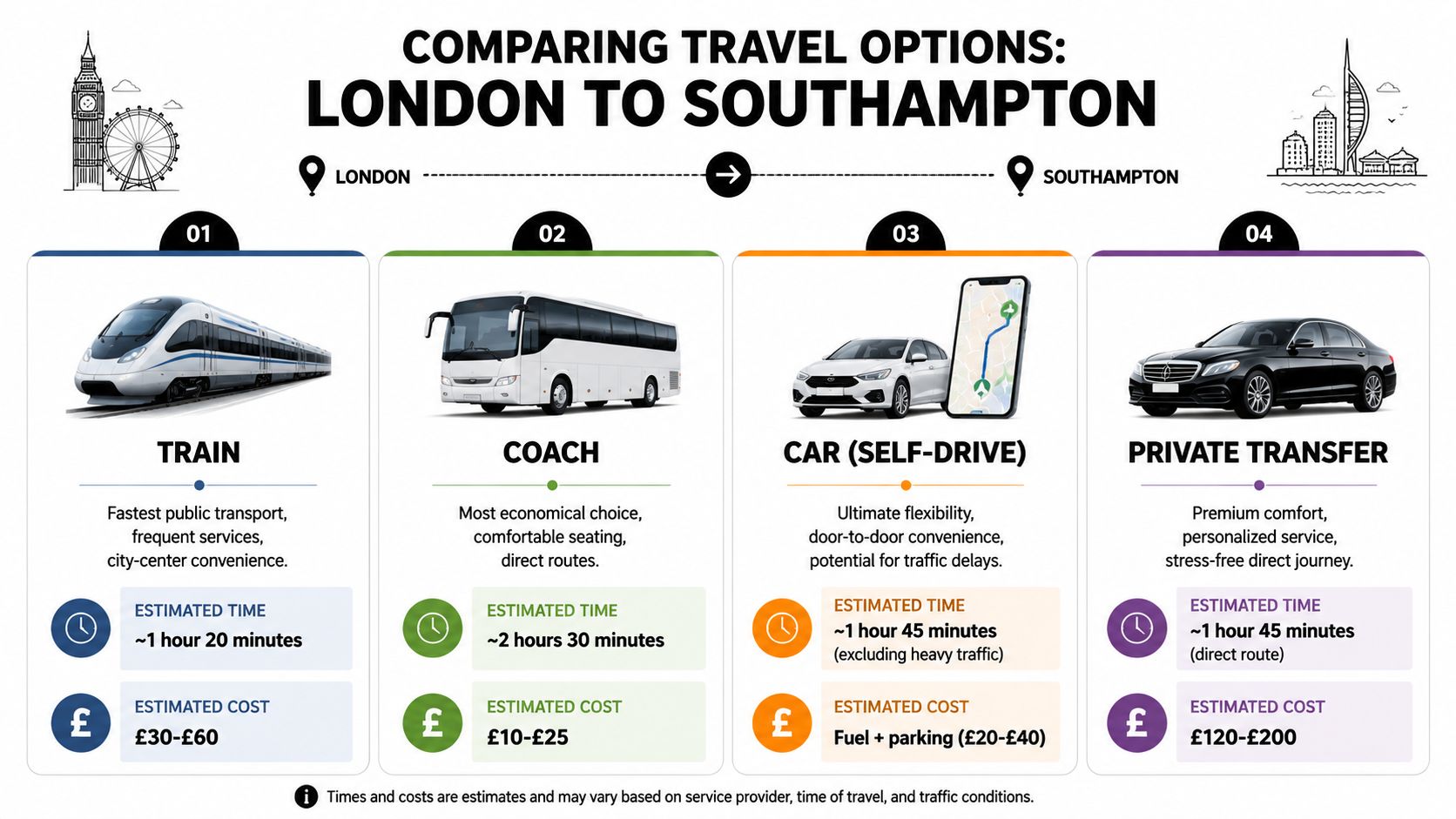
What matters most for cruise passengers
I judge these options using four filters:
- Arrival certainty: Will this mode still work smoothly if you're tired, delayed, or carrying more luggage than planned?
- Door-to-door simplicity: How many separate steps, stations, pickups, or handovers are involved?
- Luggage friendliness: Can you move your bags without turning the day into a workout?
- Stress level: If anything runs late, how exposed are you?
Here's the blunt comparison:
| Option | Main strength | Main weakness | Best fit |
|---|---|---|---|
| Train | Fast public transport | Station-to-terminal complexity | Light packers comfortable with UK rail |
| Coach | Budget-friendly | Slowest and least flexible | Travellers prioritising cost above all else |
| Self-drive car | Independence | Navigation, parking, fatigue | Confident UK drivers |
| Private transfer | Door-to-door ease | Higher upfront cost | Cruise passengers, families, heavy luggage |
My blunt recommendation by traveller type
If you're a couple with manageable bags and a hotel near Waterloo, train can work well.
If you're arriving off a long-haul flight, travelling as a family, carrying cruise luggage, or don't want to gamble on connections, don't choose the option with the most moving parts.
The cheapest journey and the easiest journey are rarely the same thing. On cruise day, I'd choose easy.
If you're still trying to answer the search query how far Southampton from London, you're asking the right first question. Just don't stop there. Distance is the least interesting part of the decision once luggage, timing, and terminal access enter the picture.
Travelling by Train Speed vs Hidden Complexities
If you're staying near Waterloo, packing lightly, and want the fastest public transport option on paper, train deserves a look. Trainline's London to Southampton timetable and fare overview shows frequent departures, advance fares that can be low, and journey times that can be very quick between London and Southampton.
That speed is only one part of the job.
Cruise passengers need to judge the full chain from hotel or airport to the correct terminal, with bags, time pressure, and very little appetite for surprises. Rail often looks simple at the booking stage and feels more complicated on the day itself.
Why the train still appeals
The attraction is obvious. You avoid motorway driving, you get a regular service pattern, and once you're on board, someone else is handling the route.
For travellers who already know the UK rail system, that is a real advantage. A straightforward hotel-to-Waterloo taxi, followed by a direct train, can work well.
If you want a clearer sense of how port-area rail planning fits together, this guide to Southampton and Portsmouth train connections is a useful reference.
Where the hidden complexity shows up
The weak point is not usually the train itself. It is everything wrapped around it.
Many international visitors are not starting their day at Waterloo. They are leaving Heathrow, changing hotels, crossing London with cruise luggage, or travelling after an overnight flight. That adds extra legs before the rail journey even begins, and each leg creates another chance to lose time.
Then comes Southampton Central. You are in the city, not at the ship. You still need a taxi or transfer to the right cruise terminal, and that final hop is exactly where tired travellers get frustrated.
The variation in journey time and fare shown on the Trainline route page is a serious factor when your cruise check-in window is fixed. A cheap fare that locks you into an awkward departure or a slower service is not always the smart choice.
Train makes sense if these points describe you:
- You have manageable luggage: One case each is realistic. Large cruise bags make station changes much harder.
- Your London starting point is simple: A nearby hotel is one thing. Heathrow plus central London plus rail is another.
- You are comfortable with one more transfer: Southampton Central to terminal still needs planning.
- You will book ahead and stick to the plan: Late changes can make rail less attractive.
My recommendation is simple. Choose the train if you want speed and you can keep the day mechanically simple. If you are arriving long-haul, travelling with family, carrying heavy luggage, or worrying about missing embarkation, rail often saves minutes on paper and adds stress where it counts.
Driving by Car or Taking a Coach
A road journey can look reassuring on cruise day. You leave when you want, keep your bags with you, and go straight to Southampton. That appeal is real. So is the extra pressure that comes with it.
Driving gives control, but it also gives you more to manage
Driving suits travellers who want full control over timing, rest stops, and pickup location. For a confident UK driver starting from a simple London hotel, that can work well.
For international visitors, I only recommend self-drive if you are comfortable handling the whole day yourself. The route follows the actual motorway and London road layout, which is longer and less forgiving than a direct line on a map. On cruise day, that matters because delays rarely arrive one at a time. Traffic leaving London, a wrong turn near the terminal, rental paperwork, fuel, and bag handling all eat into the calm margin you need.
The pressure points are easy to underestimate:
- Left-side driving: After a long-haul flight, this is a poor time to adjust to unfamiliar road rules.
- London traffic: The hard part is often getting out of London cleanly and on time.
- Terminal arrival: You need the correct cruise terminal, not just "Southampton."
- Rental follow-through: Picking up a car is one task. Returning it, parking it, or coordinating drop-off is another.
If you are weighing that option, this guide to Southampton cruise terminal car hire planning will help you spot the practical issues before they become same-day problems.
Coach is cheaper, but it costs you time and certainty
Coach works best for travellers with a tight budget, light luggage, and a flexible schedule. If that is you, it can be a perfectly acceptable choice.
I do not recommend it for nervous first-time visitors or cruise passengers arriving with large cases. The journey is slower, the timetable gives you less control, and the final part of the trip still needs attention once you reach Southampton. If your ship will not wait, saving money on the intercity leg is not always the smart saving.
Coach usually fits travellers who are:
- Travelling light
- Happy with a longer journey
- Flexible if the day runs slowly
- Staying well clear of the cruise check-in cutoff
My advice is straightforward. Drive if you know UK roads, want independence, and can handle the extra decisions without stress. Take a coach only if budget comes first and your schedule has room for delays. If reliability and a calm arrival matter more than shaving the fare, road options are often less comfortable than they first appear.
The Private Transfer A Stress-Free Solution
Private transfer solves the exact problems that train, coach, and self-drive tend to create. It doesn't make the distance shorter. It removes the awkward bits around the distance.
Why door-to-door changes everything
The biggest advantage is that you're not stitching together separate stages. No airport-to-station leg, no train platform search, no final taxi rank in Southampton, no rental paperwork, no guessing whether you're being dropped near the right terminal.
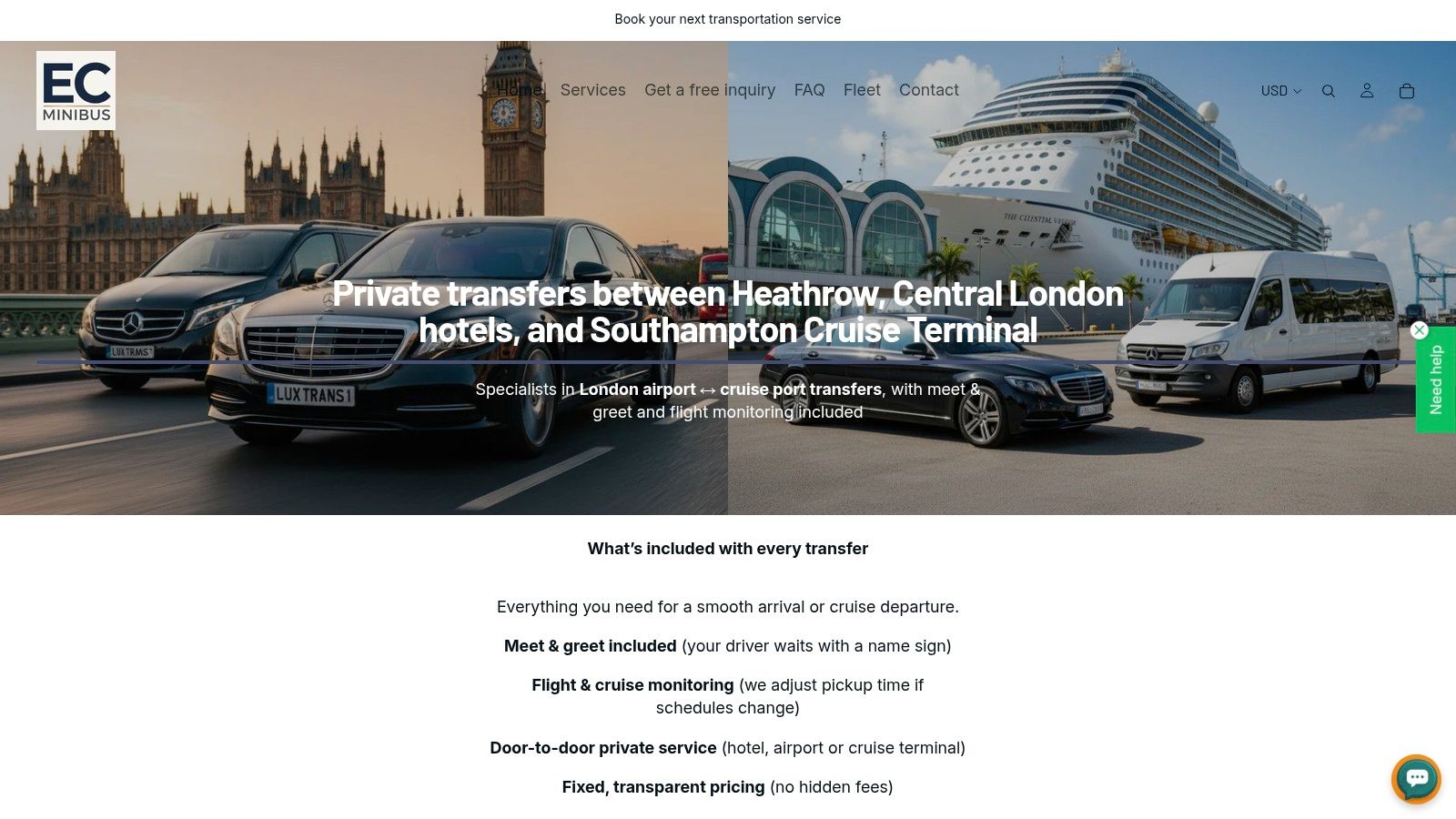
For cruise passengers, that matters more than almost anything else. Your holiday starts better when someone else handles the routing, pickup timing, and luggage loading.
A provider such as EC Minibus for Southampton cruise transfers offers door-to-door transport between London or Heathrow and Southampton Cruise Port, with meet and greet, luggage help, and transfer planning built around cruise travel. That's not magic. It's just a service model designed for the actual journey rather than the map version of the journey.
If you're travelling with cruise luggage, after a flight, on a fixed schedule, convenience isn't a luxury. It's part of making the day work.
Who should book this option
I recommend private transfer most strongly for these travellers:
- Families and small groups: Shared travel makes the convenience easier to justify.
- Older travellers: Fewer changes, less lifting, less standing around.
- Heathrow arrivals: Door-to-door service makes the biggest difference.
- Anyone sailing the same day: Reliability and simplicity matter more than shaving the headline fare.
I also like it for travellers staying in central London hotels who don't want their checkout morning dominated by transport mechanics. You get collected, loaded, and taken to the terminal. That's the whole point.
This isn't the cheapest method. It is, however, the cleanest answer to the actual problem most cruise passengers are trying to solve.
Frequently Asked Questions About Your Transfer
Is Uber or a black cab sensible for this trip
It can work, but I wouldn't call it the default choice for cruise passengers. For a long intercity journey with cruise luggage, ad hoc ride-booking adds uncertainty. You may get the ride. You may not like the vehicle size. You may also end up managing details you should have settled earlier.
How early should I leave London for a cruise
Leave earlier than you think feels necessary. Cruise travel punishes optimism. If your ship sails the same day, build in proper buffer for hotel checkout, traffic, luggage loading, and terminal processing. Don't plan to arrive "just in time". Plan to arrive calm.
What is the best way to get from Heathrow to Southampton
For most international cruise passengers, the best option is a pre-booked door-to-door transfer. Heathrow to train can be done, but it adds steps right when you're most tired. If you're determined to save money and you pack light, rail is still viable. If comfort and arrival certainty matter more, pre-book the whole journey.
If you want the simplest version of this trip, EC Minibus is a practical option for door-to-door transfers between Heathrow, central London, and Southampton Cruise Port. It suits travellers who'd rather avoid station changes, luggage juggling, and cruise-day guesswork.