

You've just landed at Heathrow after an overnight flight. You're tired, your phone is on a different network, your luggage feels heavier than it did at check-in, and you still need to get to a London hotel or a cruise terminal without making a wrong turn. That's the moment when ground transport stops being a minor detail and becomes the part of the trip that can either calm you down or unravel the day.
If you're heading to Southampton, Dover, Portsmouth, or Tilbury for a cruise, the stakes are even higher. You're not just getting from A to B. You're protecting boarding time, avoiding train changes with suitcases, and trying not to start your holiday in a state of mild panic. For most international visitors, a pre-booked shuttle bus service is the cleanest answer because it removes decisions when you're least interested in making them.
Table of Contents
- What Is a Shuttle Bus Service and Why You Need One
- Exploring Different Types of Shuttle Bus Services
- Popular Shuttle Routes for Tourists and Cruise Passengers
- Shuttle Bus vs Taxi Train or Private Car
- How to Book Your Shuttle and What to Expect
- Essential Tips for International and Cruise Passengers
- Your Shuttle Service Questions Answered
What Is a Shuttle Bus Service and Why You Need One
A shuttle bus service is a pre-arranged transfer that runs on a fixed or semi-fixed route, usually linking airports, hotels, city centres, rail hubs, and cruise terminals. The key point isn't the vehicle type. It's the fact that the journey is organised before you arrive, which means you're not standing in arrivals trying to solve transport while jet-lagged.
That matters in the UK because bus-based travel is already a normal, trusted part of how people move around. In Great Britain, buses provide 4.04 billion passenger journeys annually, and 85% of passengers outside London reported satisfaction with their journey, according to UK bus facts published by the Confederation of Passenger Transport. For a visitor, that's useful context. You're not choosing some odd fringe option. You're choosing a format people use every day because it works.
A shuttle isn't the same as a public bus, and it isn't the same as hailing a taxi.
- Public bus: Cheap and widespread, but it assumes you know the route, the stops, the ticketing, and what to do if there's a delay.
- Taxi or ride-hail: Immediate in theory, but often unpredictable in pickup location, waiting time, and total cost.
- Pre-booked shuttle: Planned in advance, built around your arrival, and designed to reduce friction.
Practical rule: If you're carrying cruise luggage, travelling with family, or arriving after a long-haul flight, don't leave your transfer to chance.
Cruise passengers need more than transport. They need reliability with luggage handling, a realistic pickup plan, and a driver who knows where the ship terminal or hotel entrance is. That's why travellers who want a calmer arrival often choose a service arranged before departure rather than trying to improvise on the day. If you want a sense of how pre-arranged transfers work in practice, this guide to airport transfer service options is a useful starting point.
Exploring Different Types of Shuttle Bus Services
The term shuttle bus service gets used loosely, which confuses people. Not every shuttle solves the same problem, and cruise passengers often book the wrong type because the names sound similar.
This breakdown is the one I give visitors who want the simplest possible answer.
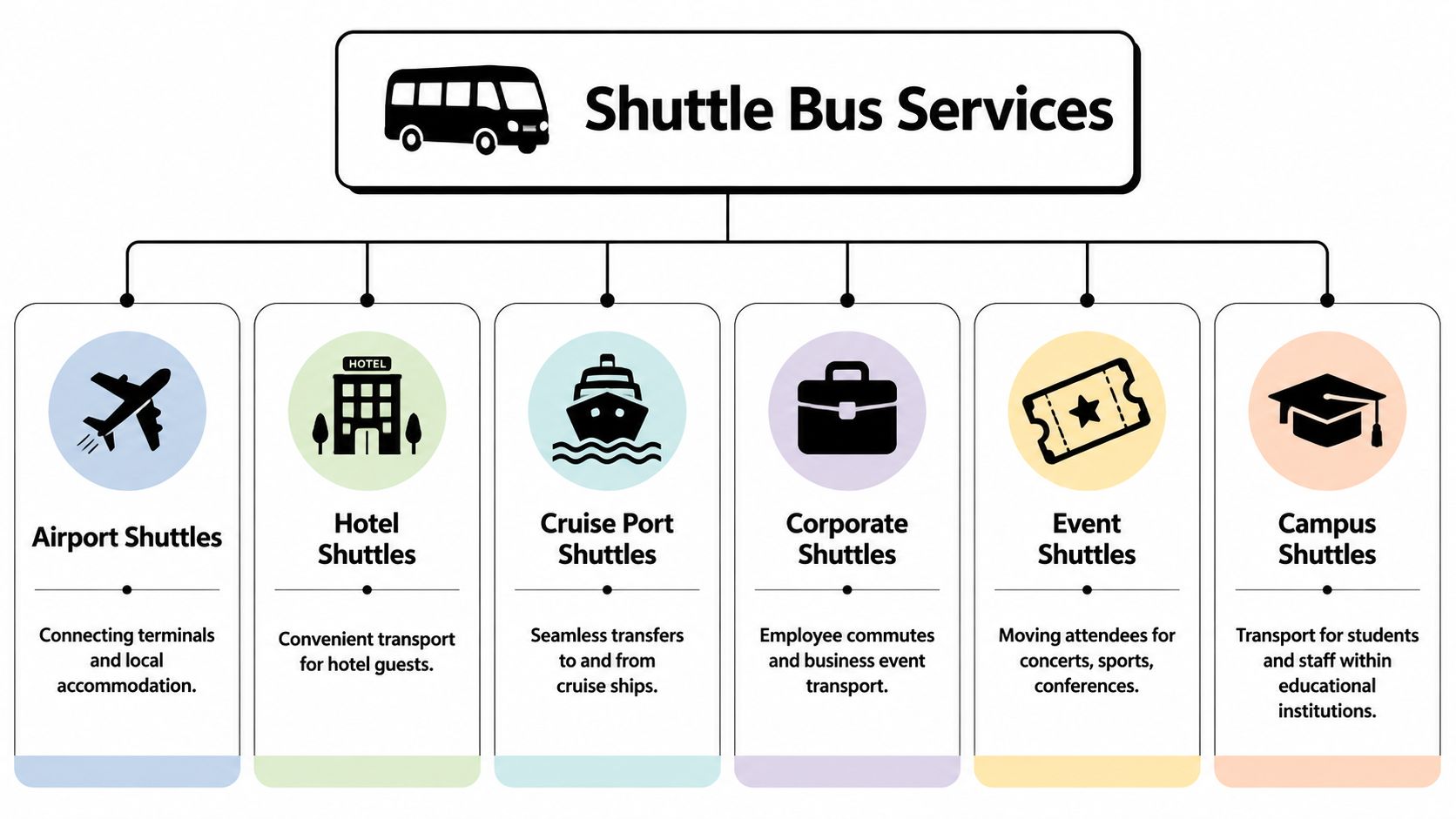
London's transport environment is busy enough that the differences matter. London accounts for 45% of all bus passenger journeys in Great Britain, as outlined in Statista's overview of public buses in the United Kingdom. In plain English, a lot of movement in and around London happens on the road, so choosing the right road-based transfer isn't a trivial detail.
Shared rides suit some travellers
A shared shuttle collects passengers heading in the same general direction. You pay for a seat or a small number of seats, not the whole vehicle.
This can work well if you're a solo traveller with one suitcase, flexible timing, and no urgent onward schedule. It usually makes less sense if you're sailing the same day, travelling with elderly relatives, or carrying the sort of luggage cruise passengers typically bring.
The trade-off is simple:
- Lower cost: You share the journey with other travellers.
- Longer trip: Extra stops are common.
- Less control: You move on the provider's sequence, not your own.
Hotel shuttles are narrow but useful
Some hotels run courtesy shuttles between the property and a nearby airport, station, or key local point. These can be helpful for a straightforward overnight stay, especially if the route is short and the hotel publishes clear instructions.
They're limited, though.
- Route restriction: They only go where the hotel says they go.
- Schedule limitation: Miss the departure and you wait.
- Poor fit for cruise travel: They rarely cover ports or complex multi-stop itineraries.
If you're arriving late, staying one night near Heathrow, and then doing something entirely separate the next morning, a hotel shuttle may be enough. If you need a direct run to Southampton Cruise Terminal, it won't be.
Private shuttles are the best fit for cruise passengers
A private shuttle is booked exclusively for your party. You're not sharing with strangers, you're not adding hotel loops, and you're not figuring out which terminal entrance matters. The driver takes your group from the pickup point to the destination you want.
That's the option I'd recommend most strongly for international cruise passengers because your pain points are specific:
- Jet lag makes simple decisions harder than they should be.
- Cruise luggage is bulky and awkward on trains.
- Port transfers punish mistakes. One wrong platform or one delayed connection turns into a real problem.
A private shuttle isn't only about comfort. It's about removing failure points from the journey.
For couples, families, small groups, and anyone starting a cruise after a long flight, private transport is usually the most sensible choice, even before you consider peace of mind.
Popular Shuttle Routes for Tourists and Cruise Passengers
Most international visitors don't need a lecture on every possible route in Britain. They need clarity on the journeys that are most likely to go wrong if handled casually.
These are the routes that deserve a proper plan.

Heathrow to Central London
This looks easy on a map. In practice, it can feel untidy after a long international flight.
You land, clear immigration, wait for bags, and then face a familiar visitor problem. London has plenty of transport, but that doesn't mean it feels simple when you're sleep-deprived and carrying luggage. If your hotel is near a major station, rail can work. If it isn't, you often end up combining train, lift, pavement, and taxi anyway.
A shuttle bus service makes more sense when:
- You're arriving with multiple cases
- You're travelling with children or older relatives
- Your hotel isn't directly beside a station
- You want a straight run without deciphering routes
The best airport arrivals are boring. You meet the driver, load the luggage, and go.
Heathrow to Southampton and other cruise ports
Travellers often make expensive emotional mistakes. They underestimate how draining the transfer will feel after a transatlantic flight, especially if they're heading to a ship the same day.
A Heathrow to Southampton journey is not the moment to experiment with British rail changes, station lifts, or platform confusion. The same goes for Dover, Portsmouth, and Tilbury. Cruise travel already has fixed timings, document checks, and embarkation windows. You don't want your ground transport adding uncertainty.
A dedicated shuttle is useful here because it handles the whole journey as one movement. You're not stitching together airport, rail, taxi, and port navigation. You're taken straight there.
For travellers specifically planning this route, this practical guide to Southampton cruise transfers covers the sort of details people usually realise they needed only after landing.
If your flight arrives the same day your cruise departs, choose the transfer option with the fewest moving parts. That usually means pre-booked private transport.
A similar logic applies in reverse when the cruise ends. After disembarkation, many passengers are tired, carrying more than they boarded with, and trying to get to Heathrow or a London hotel smoothly. That's another moment when pre-booked transport earns its keep.
Shuttle Bus vs Taxi Train or Private Car
The wrong comparison is “what's cheapest at face value?” The right comparison is “what gives me the best chance of arriving calm, on time, and without a transport puzzle halfway through?”
For international cruise passengers, that second question matters more.
What matters most after a long flight
Taxis have their place. Trains have their place. Private cars do too. But each asks something different from you.
A taxi or ride-hail works best when you're making a simple urban journey, you know exactly where you're going, and you don't mind variable pickup logistics. A train works best when you're light on luggage, comfortable navigating stations, and your origin and destination line up neatly with rail.
Cruise passengers often fit neither pattern. They're tired, carrying large cases, and heading to places that punish delays. That's why the differences matter.
The wider transport situation near cruise areas has also become less forgiving. Between 2019 and 2021, 22% of bus services vanished in areas near UK cruise ports like Southampton and Dover, according to research on changes in access to bus services during the pandemic. For visitors, the practical takeaway is straightforward. Don't assume a neat local fallback will always exist if your original plan goes wrong.
UK transfer options compared
| Feature | Private Shuttle (e.g., EC Minibus) | Taxi / Ride-Hail | Train |
|---|---|---|---|
| Booking certainty | Pre-booked in advance with a planned pickup | Usually on-demand, sometimes with queueing or app delays | Timetabled, but you must build the route yourself |
| Luggage handling | Best for multiple suitcases and cruise baggage | Varies by vehicle size | Often awkward on platforms, lifts, and connections |
| Door-to-door travel | Yes | Usually yes | No, unless combined with other transport |
| Suitability for groups | Strong option for couples, families, and small groups | Can require multiple vehicles for larger parties | Possible, but coordination gets messy |
| Stress level for visitors | Low if properly arranged | Moderate, especially at busy airports | Highest for unfamiliar travellers |
| Port transfer practicality | Strong, especially for Southampton, Dover, Portsmouth, Tilbury | Possible, but less structured | Often inconvenient with changes |
Here's my blunt advice.
- Choose train if you're a confident independent traveller with light luggage and time to spare.
- Choose taxi or ride-hail if the journey is short and local.
- Choose a private shuttle if you're going to or from a cruise terminal, travelling in a group, or don't want a transport problem at either end of a long-haul flight.
Concierge view: Peace of mind is part of the fare. People forget that until they've had a bad transfer.
A standard private car can work, but a proper shuttle-style service usually handles group size, luggage, and meeting arrangements more cleanly. For airport-to-port transfers, that difference is not cosmetic. It's operational.
How to Book Your Shuttle and What to Expect
Booking a shuttle should be easy. If the process feels vague, incomplete, or oddly complicated, take that as a warning sign. Good operators make the decision simple because they know travellers are trying to eliminate uncertainty, not add more of it.
What to prepare before booking
Before you book, have these details ready:
- Arrival information: Flight number, arrival date, and expected landing time.
- Destination details: Hotel name, full address, cruise terminal, or station.
- Passenger count: Include children and anyone needing extra space.
- Luggage summary: Large suitcases, cabin bags, mobility equipment, or oversized items.
Those basics matter because the right vehicle depends on more than passenger count. Cruise travellers often underestimate how much room their luggage needs, especially if they're carrying formalwear, pre-cruise shopping, or extended-stay baggage.
Modern shuttle vehicles used for airport and port transfers can offer flexible seating for up to 42 passengers and may include rear-mounted handicap lifts, as described in these technical specifications for shuttle vehicles. You don't need a vehicle that large for every booking, of course. The useful point is that accessibility and layout options exist, and you should ask for them if you need them.
What a good booking process should include
A proper booking flow should give you confidence before you pay. Look for these features.
-
Clear pricing
You want fixed, transparent pricing, not a setup where extras appear later for luggage, waiting time, or route adjustments. -
Defined meeting instructions
The provider should explain where the driver meets you and what happens if your flight is delayed. -
Vehicle suitability
Ask what vehicle fits your group and baggage properly. Don't assume a standard people carrier will swallow cruise luggage without compromise. -
Accessibility options
If anyone uses a wheelchair or needs assisted boarding, confirm this before booking, not on the day.
A good door-to-door transfer should feel predictable from the first click. If you want a practical sense of what that level of service looks like, this guide to door-to-door service highlights the details worth checking before you commit.
Book with the same mindset you'd use for your cruise cabin. Don't buy the cheapest label. Buy the setup that fits the trip.
You should also expect confirmation after booking, along with contact details and a summary of the route. If that information isn't supplied clearly, I'd move on.
Essential Tips for International and Cruise Passengers
A common misstep for most travellers occurs here. They focus on price first and only think about logistics after they land. That's backwards. For airport and cruise transfers, the winning move is to book the service that removes the most uncertainty.
Choose certainty over improvisation
If you're arriving from the US or Canada, there's a good chance you'll land tired, dehydrated, and less patient than usual. That's normal. It's also why airport arrivals are the wrong time to improvise.
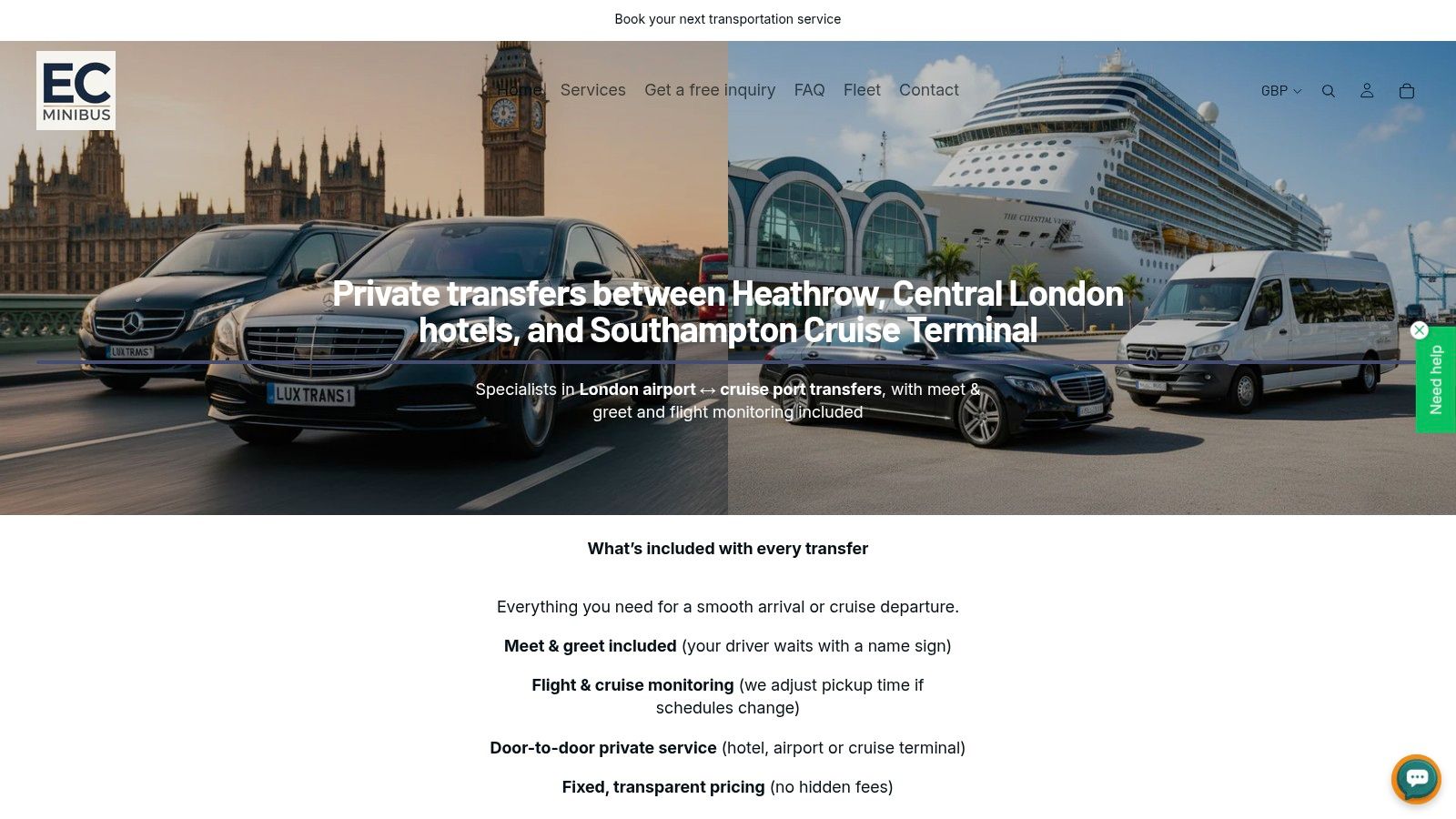
Prioritise these features when choosing a shuttle bus service:
- Meet and greet: You want a clear handoff in the terminal or a precisely defined pickup procedure.
- Flight monitoring: Delays happen. Your transfer should adapt without you needing to renegotiate the whole journey from baggage reclaim.
- Cruise awareness: Port pickups and drop-offs are not the same as hotel stops. The driver should understand terminal access and timing.
- Fixed pricing: Uncertainty about the fare creates stress before the car even moves.
A service that offers all four is worth more than a superficially cheaper option that leaves you guessing.
The real luxury for cruise passengers isn't leather seats. It's knowing someone is tracking the arrival, expecting the luggage delay, and still getting you moving without drama.
Pick the right vehicle for people and luggage
Visitors often count passengers correctly and luggage badly. Two adults can still need substantial space if they're cruising for a week or longer. Add children, mobility equipment, or post-holiday shopping and the wrong vehicle becomes a problem very quickly.
Use this rule of thumb when booking:
- Couples with cruise baggage: Ask for luggage capacity confirmation, not just seat count.
- Families: Make sure child seat needs are discussed in advance.
- Older travellers: Prioritise easy boarding and minimal transfer points.
- Groups: One larger vehicle is usually calmer than splitting across separate cars.
If you're travelling to a port, protect your energy for the ship, not the transfer. The cruise itself should be the complicated part of the holiday. Getting there shouldn't be.
Your Shuttle Service Questions Answered
What happens if my flight is delayed or cancelled
A good pre-booked provider should have a clear delay policy and a process for flight monitoring. Check this before you book. If the policy is vague, that's a warning. You want to know whether pickup times adjust automatically and what happens if the delay becomes a cancellation.
Can I request a child seat
Usually, yes, but you must request it in advance. Don't assume one will be available on the day. Mention the child's age and size when booking so the provider can confirm the correct setup.
Is tipping the driver customary in the UK
Tipping isn't as automatic in the UK as some visitors expect. If the service is professional, punctual, and helpful with luggage, a tip is appreciated but not compulsory. Think of it as a thank-you for excellent service, not an obligation.
How far in advance should I book my cruise terminal transfer
Book as early as you reasonably can, especially in busy travel periods or if you need a larger vehicle, accessibility support, or a same-day airport-to-port run. The earlier you book, the more likely you are to secure the right vehicle and a cleaner plan.
Should I book one-way or round-trip
If you already know your disembarkation and departure plans, book both legs together. It reduces admin, gives you one provider to deal with, and removes the need to scramble for transport at the end of the cruise.
If you want the simplest possible transfer between Heathrow, London hotels, and major UK cruise ports, EC Minibus is worth a serious look. They specialise in exactly the journeys international cruise passengers worry about most, with meet and greet at Heathrow, flight and cruise monitoring, fixed pricing, and door-to-door service designed to keep arrival day calm rather than chaotic.