

You've just landed at Heathrow after a long-haul flight, or you're stepping off a cruise at Southampton with Thailand already on your mind. Either way, the job is the same, turn a big, tempting country into a trip that works on the ground. What to do in Thailand depends on where you land, how many days you've got, and how much switching around you can tolerate before the holiday starts to feel like logistics.
Thailand is built for UK travellers who want a lot of variety without changing countries. Bangkok gives you temples, food, art, and nightlife in one city. Chiang Mai gives you mountain air and cultural depth. Phuket, Krabi, and Phi Phi give you sea days. Ayutthaya and Sukhothai give you history. If you want a cleaner, calmer trip, the newer under-the-radar conversation in Thailand is about quieter places and lower-friction planning, not trying to cram in every famous stop.
For UK travellers, the smart approach is simple. Start in Bangkok if you want the easiest first base. Go south if beaches matter most. Head north if you want culture and cooler weather. If you're the kind of traveller who books airport or cruise transfers before anything else, keep that same discipline for Thailand. Line up your hotel, internal transfers, and day-trip pickup points before you fly, because Thailand rewards organised travellers and punishes vague plans.
Table of Contents
- 1. Thai Temple Tours and Buddhist Cultural Experiences
- 2. Island Hopping and Beach Experiences (Phuket, Phi Phi, Krabi)
- 3. Bangkok Street Food Tours and Night Markets
- 4. Muay Thai Training and Boxing Experiences
- 5. Ancient Ruins and Historical Site Tours (Ayutthaya, Sukhothai)
- 6. Elephant Sanctuary and Ethical Wildlife Interactions
- 7. Thai Cooking Classes and Culinary Experiences
- 8. Bangkok Modern Culture
- 9. Mountain Trekking and Nature Exploration (Chiang Mai, Northern Thailand)
- 10. Wellness Retreats and Spa Experiences (Thai Massage, Yoga, Detox)
- Top 10 Thailand Activities Comparison
- Sample Itineraries, Budgeting, and Pre-Trip Essentials for UK Travellers
1. Thai Temple Tours and Buddhist Cultural Experiences
Thailand's temples are the best first stop if you want context, not just sightseeing. Bangkok's Wat Phra Kaew, Wat Arun, and Wat Saket give you three different moods in one city, from royal grandeur to riverside drama to hilltop calm. If your first day in Bangkok feels slightly overwhelming, temples are the fastest way to reset your pace and understand why the city works as both a capital and a spiritual centre.
The practical move is to go early, dress properly, and use a guide who knows the etiquette. You'll get more out of Wat Phra Kaew and the Grand Palace area if someone explains the symbolism instead of treating it like a photo stop. In Chiang Mai, add a dawn ritual or a meditation session if you want something quieter than the Bangkok circuit. If you're arranging a tight arrival schedule from the airport, sort transport before you leave the UK, because the best temple mornings start before the crowds and before the heat.
Where to go first
Bangkok works best for a short stay because the major temples are close enough to combine into one structured day. Chiang Mai suits travellers who want slower cultural experiences, including monk chat programmes, alms-giving experiences, and meditation retreats. If you've only got a few days, do Bangkok first, then pick one northern temple day rather than trying to scatter temple visits across the whole trip.
Practical rule: temple visits work best when they're treated as part of the day's rhythm, not as a spare-hour activity.
A good UK traveller's version is a half-day temple loop in Bangkok, then a relaxed lunch and a river crossing, rather than trying to bolt temple time onto a shopping day. Book a reputable guide, carry a scarf or wear clothing that already covers shoulders and knees, and keep your schedule flexible enough to avoid rushing between sites. When the transport is handled properly, temple touring feels calm instead of performative.
2. Island Hopping and Beach Experiences (Phuket, Phi Phi, Krabi)
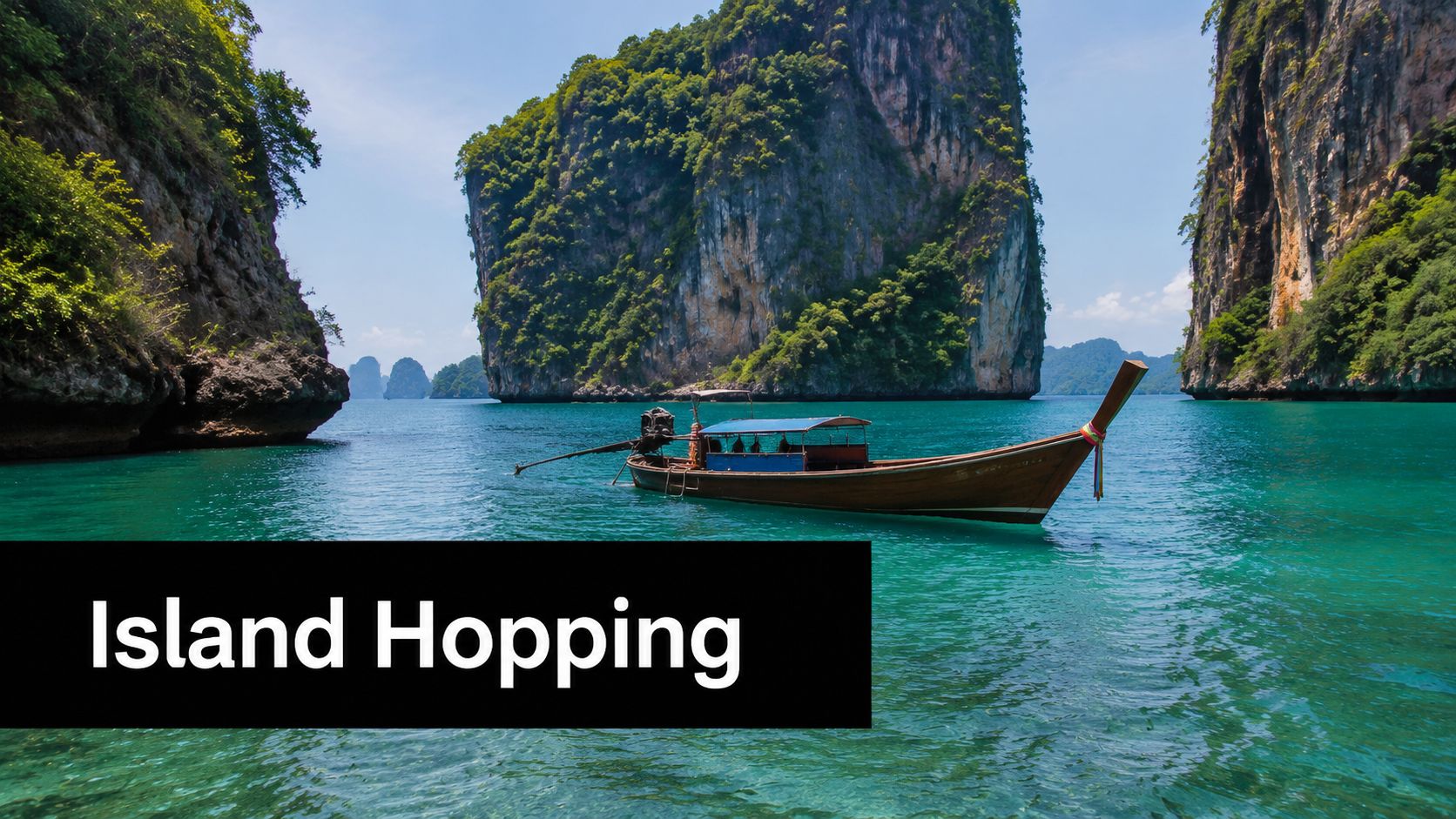
If your Thailand plan starts with sea air, limestone cliffs, and moving between beaches without wasting days, go south first. Phuket, Phi Phi, and Krabi are the names UK travellers recognise because they make island hopping straightforward, but the decision is where you base yourself. Phuket gives you the widest transport options, Krabi suits travellers who want easier access to Railay, and Phi Phi works better as a day trip or a single overnight stop than as a long base.
Build the trip around early departures and fixed transfers. A Phi Phi Islands speedboat day trip from Phuket works if you want one full sea day and a return to the same hotel. James Bond Island tours from Phang Nga Bay fit travellers who want a famous setting without signing up for a remote overnight stay. From Krabi, long-tail boats to Railay Beach are the simplest option for a classic beach day with little hassle. If you are arriving through Heathrow or stepping off at Southampton or Dover and then connecting into Thailand, sort your ground transport before you leave the UK so the holiday starts cleanly. If you are tracking your Thai Airways arrival, check the Thai Airways flight status page before you confirm any airport pickup.
How to make the beach leg worthwhile
Use operators that handle the sea properly and do not cut corners on safety or environmental care. Bring reef-safe sunscreen, a dry bag, and a realistic view of weather and boat timing. Private charters make sense if you hate waiting around with large groups, especially on a short trip where half a day lost to transfers is a bad trade.
Keep the first night simple if you are combining a beach stay with a long-haul arrival. Phuket is the easiest place to do that because it is built for arrivals and onward connections. Krabi is the better choice if you want a quieter, more scenic base. For a UK traveller with limited leave, the strongest plan is one base, one island day, and one calm beach afternoon, not a rushed island-hopping sprint.
3. Bangkok Street Food Tours and Night Markets
Bangkok street food is where Thailand stops being a checklist and starts becoming a habit. If you only do one culinary experience, make it a guided night market walk through Yaowarat, Chatuchak, or Or Tor Kor. These aren't just places to eat, they're the fastest way to understand how Bangkok moves after dark, with grills smoking, dessert stalls going late, and whole families treating dinner as an event.
The right approach is simple, arrive hungry and don't over-plan. Ask for mild spice if you're cautious, because Bangkok's best food doesn't need you to prove anything. Wear breathable clothes, carry sanitiser, and keep your pickup point fixed if the evening ends with a hotel transfer. UK travellers who've just come off a long flight usually do best with a food tour on the second night, not the first, so their body clock is less wrecked and they can taste what they're paying for.
Best market styles for different travellers
Yaowarat suits people who want energy, variety, and a classic Chinatown feel. Chatuchak is better if you want market-scale browsing alongside food stalls. Or Tor Kor is the polished choice for travellers who prefer cleaner surroundings and a more curated experience. If you want breakfast instead of dinner, Talad Noi floating-market-style visits work well for early risers who want a slower start.
The point is not to chase every famous dish. It's to choose a market that fits your pace. A couple from the UK on a first visit usually gets more from a structured tasting walk than from wandering aimlessly. For older travellers, that matters even more, because the right route avoids unnecessary standing and transport stress.
Keep the evening simple. Eat well, walk less than you think, and leave room to go back to one stall rather than chasing ten mediocre ones.
If your hotel is far from the market area, book the ride there and back in advance. Bangkok traffic can turn a good dinner plan into a late-night headache very quickly.
4. Muay Thai Training and Boxing Experiences
Muay Thai gives Thailand a harder edge, and that's exactly why it belongs on a serious list. Watching a fight at Rajadamnern Stadium or Lumphini Boxing Stadium in Bangkok is the cleanest introduction, because you get the rhythm, the music, and the crowd before you ever throw a punch. After that, a trial class at a reputable gym makes far more sense than signing up for a long package blindly.
Start with a single class if you're new. You'll learn whether you enjoy the pace, the footwork, and the physical contact before you commit days to it. Chiang Mai gyms are good for travellers who want a less hectic atmosphere, while Bangkok suits people who want the theatre of the sport itself. If you're timing this around a flight or a cruise connection, keep the training day loose, because you don't want to discover that you've boxed yourself into an impossible departure schedule.
What the experience should feel like
A good Muay Thai session should be challenging but controlled. You want qualified instructors, proper warm-ups, and a setup that values technique over bravado. If a gym feels more like a photo opportunity than a training space, walk away. That's especially important for UK travellers who haven't trained before and don't want to spend a holiday nursing avoidable injuries.
Bring water, a towel, and clothes you can move in. Keep your other plans light for the rest of the day. A fight night before training can be inspirational, because it gives the class a real reference point. A class before a domestic flight also works, as long as your transfer timing is already set.
For travellers who like clear structure, Muay Thai is one of the easiest Thailand experiences to plan well. You can make it a single evening, a half-day class, or a full training block, and it still feels authentic if you choose the right gym. The main trade-off is simple, it's better to do fewer sessions properly than to pack in a martial arts holiday that leaves you too sore to enjoy the rest of the trip.
5. Ancient Ruins and Historical Site Tours (Ayutthaya, Sukhothai)
Thailand's old capitals are the right answer if you want history with texture. Ayutthaya works as a day trip from Bangkok. Sukhothai works better as an overnight or longer stop if you care about atmosphere and slower exploration. The common mistake is to treat both as similar. They're not. Ayutthaya is about density and easy access, while Sukhothai gives you space and a calmer sense of ruin and restoration.
For UK travellers, the smartest move is to pick one based on time. If you're on a short itinerary, Ayutthaya is the practical choice because it slots neatly into a Bangkok stay. If you have more days and want a deeper historical experience, Sukhothai is the better use of time. Go early, wear proper sun protection, and rent a bicycle where the site layout makes that sensible. You'll see more, stop more often, and avoid the feeling that you're being rushed from one stone to the next.
How to avoid turning ruins into a hot slog
Hire a guide if you want context. The architecture means more when someone explains the symbolism, damage, and restoration. A private guide also helps if you're pairing the ruins with a packed arrival or departure day, because they'll keep the route tight. If you're coming from Bangkok, get your transfers sorted before you leave, because the last thing you want is a historical day that starts with a transport argument.
Choose one ruin complex and do it well. Two rushed heritage sites in a day usually feel worse than one properly absorbed site.
Sukhothai especially rewards travellers who like slower mornings and less crowd pressure. Ayutthaya works better for first-time visitors who want a classic, easy win. Both are worth doing. The mistake is trying to make them interchangeable, when the whole point is that they give you different versions of Thai history.
6. Elephant Sanctuary and Ethical Wildlife Interactions
Ethical elephant encounters are one of the few wildlife experiences in Thailand that deserve a place on a careful traveller's itinerary. The standard is clear, choose sanctuaries that focus on rescue, care, and observation, not riding or performance. Elephant Nature Park in Chiang Mai, Boon Lott's Elephant Sanctuary in Sukhothai Province, and the Thai Elephant Conservation Center in Lampang are the kinds of names you should be checking before you book anything that involves elephants.
A proper sanctuary visit takes time. Plan for a full day if you want it to feel meaningful rather than rushed. That matters for UK travellers, especially older visitors, because a half-baked encounter often means more time in a vehicle and less time understanding the animals. Wear clothes that can get wet or muddy, use closed-toe shoes, and make sure your transfer timings are fixed long before you travel.
What to insist on before booking
- No riding, ever: If an operator sells elephant riding, skip it immediately.
- Clear welfare focus: The site should explain rescue, rehabilitation, and daily care.
- Realistic time block: A rushed visit is a red flag, not a bargain.
- Transport clarity: Confirm pickup and return times before you commit.
- Weather-ready clothing: You'll enjoy the day more if you dress for mud, water, and heat.
The best sanctuary days feel calm and observational. You're there to learn what the animals need, not to force a holiday moment. That's a much better use of your money and time than any exploitative setup that tries to dress itself up as conservation.
7. Thai Cooking Classes and Culinary Experiences
A cooking class is the most useful souvenir you can buy in Thailand, because you come home with recipes instead of clutter. In Bangkok and Chiang Mai, the strongest classes are the ones that start with a market visit and finish with you making several dishes yourself. That structure matters. You're not just following instructions, you're seeing ingredients, tasting as you go, and learning how Thai flavour balance works.
Book a morning class if you want the afternoon free. That's the best rhythm for UK travellers who need room in the day for shopping, a spa booking, or a late hotel check-in. Smaller classes are usually better than big demonstration-style groups because you get actual practice. If your flight or hotel transfer needs to happen after class, keep the timing flexible so you're not carrying ingredients, bags, and stress all at once.
Where the class pays off most
Bangkok is the better choice if you want polished kitchens and easy access from the city centre. Chiang Mai works better if you want a more relaxed setting and easier market access. A home-based class can be the most memorable because it feels less scripted, while a professional school can be better if you want cleaner logistics and tighter teaching.
If you're serious about cooking, pick a class that focuses on one regional style instead of trying to teach the entire country in a few hours. Northern dishes, central favourites, and market-to-table formats each give you a different take on Thai food. The important thing is not to leave with a vague appreciation. Leave with a version of pad Thai, green curry, or soup you can repeat at home.
The included lesson is straightforward. The more organised your class booking is, the more enjoyable it becomes. If your transfer, checkout, and class timing all line up, the day feels smooth instead of overfull.
8. Bangkok Modern Culture
Bangkok isn't only temples and markets. It's a modern Asian capital with galleries, malls, rooftop bars, and neighbourhoods that feel completely different after sunset. If you want to understand the city beyond the heritage layer, spend a day around Bangkok Art and Culture Centre, MOCA, and the Siam Paragon area, then finish in Thonglor or at a rooftop spot with a view. That's the version of Bangkok that shows you how the city lives now.
This is the easiest section to overdo, so keep the structure tight. Use the morning for art and museums, the afternoon for shopping, and the evening for one good dinner instead of a random crawl. The BTS Skytrain makes this much easier, and it's exactly the sort of city transport that suits UK travellers who don't want to rely on road traffic all day. If you're planning an evening out, sort your return transport before you leave the hotel, especially if you're unfamiliar with the district.
How to make Bangkok feel modern without making it generic
Don't stay only inside the malls. Pair the polished side of Bangkok with smaller creative districts like Ari or Ekkamai so the day doesn't feel like a shopping centre loop. Book dinner early if you want one of the busier restaurants, because the best places fill quickly, especially when the city is busy with visitors and locals alike.
Bangkok works best when you treat it as several cities stitched together, not one uniform capital.
That mindset helps UK travellers a lot. It stops the day from becoming an endless back-and-forth between tourist landmarks. It also lets you decide whether you want culture, food, fashion, or nightlife, instead of trying to force all four into one evening. The result is a cleaner, more satisfying city day.
9. Mountain Trekking and Nature Exploration (Chiang Mai, Northern Thailand)
Northern Thailand is the right answer if you want green space, long views, and a slower kind of travel. Chiang Mai is the easiest base, while Doi Inthanon National Park and the wider northern routes suit travellers who want trekking without the coastal crowds. If you want a more ambitious trip, the Mae Hong Son loop and Chiang Rai region give you a deeper sense of distance and openness, but they also demand better planning.
Go with operators who have real community relationships and who pay attention to safety. That matters more than glossy marketing. Trekking is only fun when your footwear, fitness, and transport are sorted before you go. For a UK traveller, especially one used to city holidays or cruises, the biggest mistake is underestimating how much a mountain day asks of your legs and your schedule.
How to handle the practical side
Book ahead, train a little before you arrive, and pack light. Quick-dry clothing, sturdy boots, insect repellent, sun protection, and a water bottle are the difference between a memorable trek and a miserable one. If you're doing an overnight or multi-day route, tell your transfer provider the exact return date only when the trekking company has confirmed it. That's the easiest way to avoid a missed pickup or a hotel no-show.
The best trekking days are the ones that mix walking with village contact or waterfall stops, not just distance for its own sake. You want a route that gives you scenery and context, not a fitness test masquerading as a holiday. Northern Thailand has enough variation to make that possible, which is why it's one of the strongest regions on any serious Thailand itinerary.
10. Wellness Retreats and Spa Experiences (Thai Massage, Yoga, Detox)
Thailand's wellness scene is strong because it covers both city convenience and proper retreat settings. Wat Pho Traditional Massage School in Bangkok is a sensible starting point if you want the classic tradition. For a full retreat feel, Chiva-Som in Hua Hin and Kamalaya in Koh Samui are the kind of places that turn wellness from an hour-long treatment into an actual stay. Luxury spa chains such as Banyan Tree and Four Seasons Spa are good choices if you want an easier city or resort booking.
The right wellness booking depends on how intense you want the programme to be. Some travellers want a single Thai massage and a pool afternoon. Others want yoga, detox, and multi-day structure. Don't mix the two unless you're very clear about the pace you can handle. If you're coming off a long-haul flight, arrive a day early, hydrate, and keep the first day light. Your body will thank you for it.
How to choose the right retreat
Match the setting to your tolerance for quiet. Hua Hin is better if you want a resort feel without too much friction. Koh Samui works if you want island calm with a wellness focus. Bangkok is better if you want convenience and easy access before or after a city stay. If you're booking a full package, ask about therapist certification, programme intensity, and any physical limitations before you confirm.
The cleanest wellness trips are the ones where transport is handled after the retreat ends, not before it starts. If you're flying on, or connecting to another Thai region, don't make your departure day too tight. For UK travellers who like predictability, that one decision saves a lot of stress.
For booking logistics before or after a spa stay, read the practical advice in cheapest airport transfer London, then apply the same discipline to your Thailand connections.
Top 10 Thailand Activities Comparison
| Activity | Complexity 🔄 | Resource Needs ⚡ | Expected Outcomes 📊⭐ | Ideal Use Cases 💡 | Key Advantages ⭐ |
|---|---|---|---|---|---|
| Thai Temple Tours and Buddhist Cultural Experiences | Low 🔄, simple bookings; etiquette requirements | Low ⚡, minimal fees; half-day options | High 📊, authentic cultural & spiritual insight ⭐⭐⭐⭐ | Culture-seekers, families, spiritual travellers (45+ cruise pax) | Deep authenticity; low cost; family-friendly |
| Island Hopping and Beach Experiences (Phuket, Phi Phi, Krabi) | Moderate 🔄, boat logistics; weather-dependent | Moderate-High ⚡, full-day tours, boat fees, travel time | Very High 📊, spectacular scenery, marine activities ⭐⭐⭐⭐ | Beach lovers, adventure seekers, cruise pre/post-trip guests | Stunning scenery; varied activities in one day |
| Bangkok Street Food Tours and Night Markets | Low 🔄, guided walks; vendor coordination | Low ⚡, very affordable; short duration | High 📊, authentic culinary immersion ⭐⭐⭐⭐ | Foodies, social travellers, 18–75+ | Extremely affordable; wide tasting variety; social |
| Muay Thai Training and Boxing Experiences | Moderate-High 🔄, safety, progression planning | Moderate ⚡, multi-session commitment; basic gear | High 📊, fitness gains and cultural authenticity ⭐⭐⭐ | Fitness enthusiasts, martial-arts curious, 18–65 | Authentic sport experience; measurable fitness benefits |
| Ancient Ruins and Historical Site Tours (Ayutthaya, Sukhothai) | Moderate 🔄, multi-day logistics; site access | Moderate ⚡, 2–3 days, transport and guide fees | High 📊, deep historical context and photo ops ⭐⭐⭐⭐ | History buffs, photographers, educational travellers | UNESCO sites; rich archaeological value; fewer crowds |
| Elephant Sanctuary and Ethical Wildlife Interactions | Moderate 🔄, vetting sanctuaries; advance booking | High ⚡, higher cost; full-day trekking; physical demand | Very High 📊, meaningful conservation impact ⭐⭐⭐⭐ | Animal lovers, conservation-minded travellers, families | Ethical interactions; supports rehabilitation and education |
| Thai Cooking Classes and Culinary Experiences | Low 🔄, easy bookings; short sessions | Low-Moderate ⚡, half-day, class fees, ingredients | High 📊, practical skills and recipes to keep ⭐⭐⭐ | Food enthusiasts, couples, families | Hands-on learning; transferable skills; small classes |
| Bangkok Modern Culture (Art, Shopping, Nightlife) | Low 🔄, flexible planning; event bookings | Moderate ⚡, variable costs (premium venues) | High 📊, cosmopolitan entertainment and shopping ⭐⭐⭐ | Art lovers, shoppers, nightlife fans, urban explorers | World-class venues; strong infrastructure; diverse options |
| Mountain Trekking and Nature Exploration (Chiang Mai, North) | High 🔄, multi-day planning; guide coordination | High ⚡, 3–4 days, gear, fitness requirements | High 📊, immersive nature and cultural exchange ⭐⭐⭐⭐ | Adventure seekers, hikers, physically fit travellers | Pristine scenery; meaningful community engagement |
| Wellness Retreats and Spa Experiences (Thai Massage, Yoga) | Moderate 🔄, package selection; health screening | Moderate-High ⚡, multi-day packages, premium cost | High 📊, stress relief and wellbeing improvements ⭐⭐⭐⭐ | Wellness seekers, couples, 25–75+ | Professional therapists; holistic health benefits |
Sample Itineraries, Budgeting, and Pre-Trip Essentials for UK Travellers
A good Thailand trip is built around one clear question, do you want a city-first holiday, a beach-first holiday, or a split between the two? For most UK travellers, the best answer is a split, because Bangkok gives you the easiest landing and the south gives you the easiest reset. If you've only got five days, keep it tight. If you've got seven, add one region. If you've got fourteen, you can combine city, culture, and coast without making the trip feel frantic.
For a 5-day trip, do Bangkok plus one add-on. Spend two days on temples, food, and modern Bangkok, then choose either Ayutthaya for history or a short beach extension if your priority is sea time. This is the best option for travellers who want a clean first visit and don't want to spend the whole trip on internal transfers. It's also the easiest route to keep predictable for people used to cruise-style pacing.
For a 7-day trip, do Bangkok and Chiang Mai, or Bangkok and Phuket. That gives you enough time to feel the contrast without rushing. Chiang Mai suits culture, cooking, and temple experiences, while Phuket suits island days and beach time. If you're travelling from Heathrow and want to avoid overpacking the itinerary, this is the sweet spot. It gives you one big city and one clear regional identity.
For a 14-day trip, combine Bangkok, Chiang Mai, and either Krabi or Phuket, then add one historical stop if you want depth. That version lets you do temples, food, wellness, beaches, and one major cultural day without turning the holiday into a relocation exercise. It's the best structure for UK travellers who don't mind internal flights but want every stop to earn its place.
Budgeting should be practical, not heroic. Use low, mid, and comfortable spending levels rather than trying to chase a fantasy figure. A low-budget trip means simpler hotels, fewer private transfers, and more public transport. A mid-range trip means good hotels, a couple of organised tours, and comfortable airport or port transfers. A comfortable trip means private cars, better rooms, and less compromise on day trips and timing.
Booking windows matter. Secure flights and hotels first, then lock in the big-ticket experiences that need specific dates, like sanctuaries, cooking classes, or retreat programmes. Temple days, city food tours, and some beach trips are more flexible, but the best operators still fill up. If you're travelling from the UK in peak holiday periods, don't leave internal logistics to the last minute.
Visa and safety planning should stay straightforward. Check your passport validity well before departure, confirm your entry requirements before you fly, and keep digital copies of your bookings and insurance. Use common sense in crowded places, watch your bags in markets, and book reputable operators for any activity that involves boats, wildlife, or physical activity. That isn't paranoia, it's just sensible long-haul travel.
If you're connecting through Heathrow, or linking a Thailand trip to a cruise out of Southampton, Dover, Portsmouth, or Tilbury, sort your UK transfer before you leave. The best journeys start with the boring part handled properly. For families, couples, and over-45 travellers, a fixed, door-to-door transfer with luggage help and clear timing is the difference between calm and chaos.
Lock in your UK-side transfer before you travel, then focus on the fun part of Thailand. EC Minibus provides fixed-price, door-to-door transfers with licensed drivers, luggage help, and reliable timing for Heathrow, Southampton, Dover, Portsmouth, Tilbury, and St Pancras connections. If you want your Thailand plans to begin without transport stress, visit EC Minibus and book the journey that gets you to the airport, hotel, or cruise port on time.