

You've just landed at Heathrow after a long international flight. Your cases are heavy, your family is tired, and a cruise ship is waiting in Southampton. The cheapest fare on a comparison page looks tempting, but will it still be cheap after luggage charges, waiting time, child seats, traffic delays, or a missed connection?
That's the question that matters. Affordable airport transfers aren't always the ones with the lowest headline price. They're the journeys that keep the total cost, timing, comfort and risk under control. A slightly higher fixed fare can make better financial sense when several passengers share one vehicle and the price includes practical essentials.
Heathrow is a major transfer hub, and the Greater London Authority's airport data recorded 27% of Heathrow passengers as transfer passengers in 2023, compared with 37% in 2013. Many travellers aren't finishing their journey in London. They need a dependable onward connection to a hotel, railway station or cruise port.
This guide starts with the basics, then moves through pricing, comparisons and booking decisions. You'll learn how public transport, shared shuttles, taxis, rideshares and private minibuses differ, how to check a quote properly, and when paying for a direct vehicle may protect your budget rather than stretch it.
Table of Contents
- Introduction to Affordable Airport Transfers That Work
- Understanding Your Airport Transfer Options
- What Drives the Price of an Airport Transfer
- Comparing Every Affordable Transfer Option Side by Side
- Practical Tips to Find Truly Affordable Transfers
- When EC Minibus Is the Smartest Affordable Choice
- Your Booking Checklist for a Smooth Affordable Journey
Introduction to Affordable Airport Transfers That Work
Your Heathrow flight has landed, but the journey may still include passport control, luggage collection and a cruise departure from Southampton. A low fare can look attractive on a booking page, yet the final cost may change once you add waiting, extra luggage, vehicle limits or a replacement journey after a delay.
A useful comparison treats the transfer like the whole first leg of your trip, not just a seat. Affordable means keeping the total cost, timing and connection risk under control. For a family or small group, a fixed-price private minibus can cost less overall than several individual fares when it includes luggage space, direct travel and a clear pickup arrangement.
Heathrow's scale makes planning important. The airport recorded about 192,596 landside airport-related vehicle trips per day in 2019, according to the Greater London Authority's airport data pack. Queues, pickup instructions and road conditions can all affect the start of your UK visit.
A missed cruise connection can cost more than the transfer itself.
For that reason, compare what happens at each stage. A shared vehicle may wait for other passengers or stop at several hotels. A rideshare fare may change with demand, while a metered taxi can be harder to budget when traffic slows the route. These options may suit a solo traveller with an open schedule. They demand more care when several passengers have heavy cases and a ship is waiting.
Use four questions to test price:
- Who is travelling: Sharing one private vehicle can make its fixed fare more reasonable for a family or small group.
- What are you carrying: Large cases, mobility equipment and child seats influence the space and vehicle required.
- How much time is available: Waiting matters less with an open afternoon than with a cruise departure to meet.
- What if plans change: Flight delays, airport queues and road disruption make clear waiting and cancellation terms valuable.
A quote is useful only when you know what it covers. Check the vehicle, luggage allowance, pickup process, waiting policy and route before comparing prices. That simple check helps you spot a genuine saving and avoid paying twice when a headline fare cannot support the rest of your itinerary.
Understanding Your Airport Transfer Options
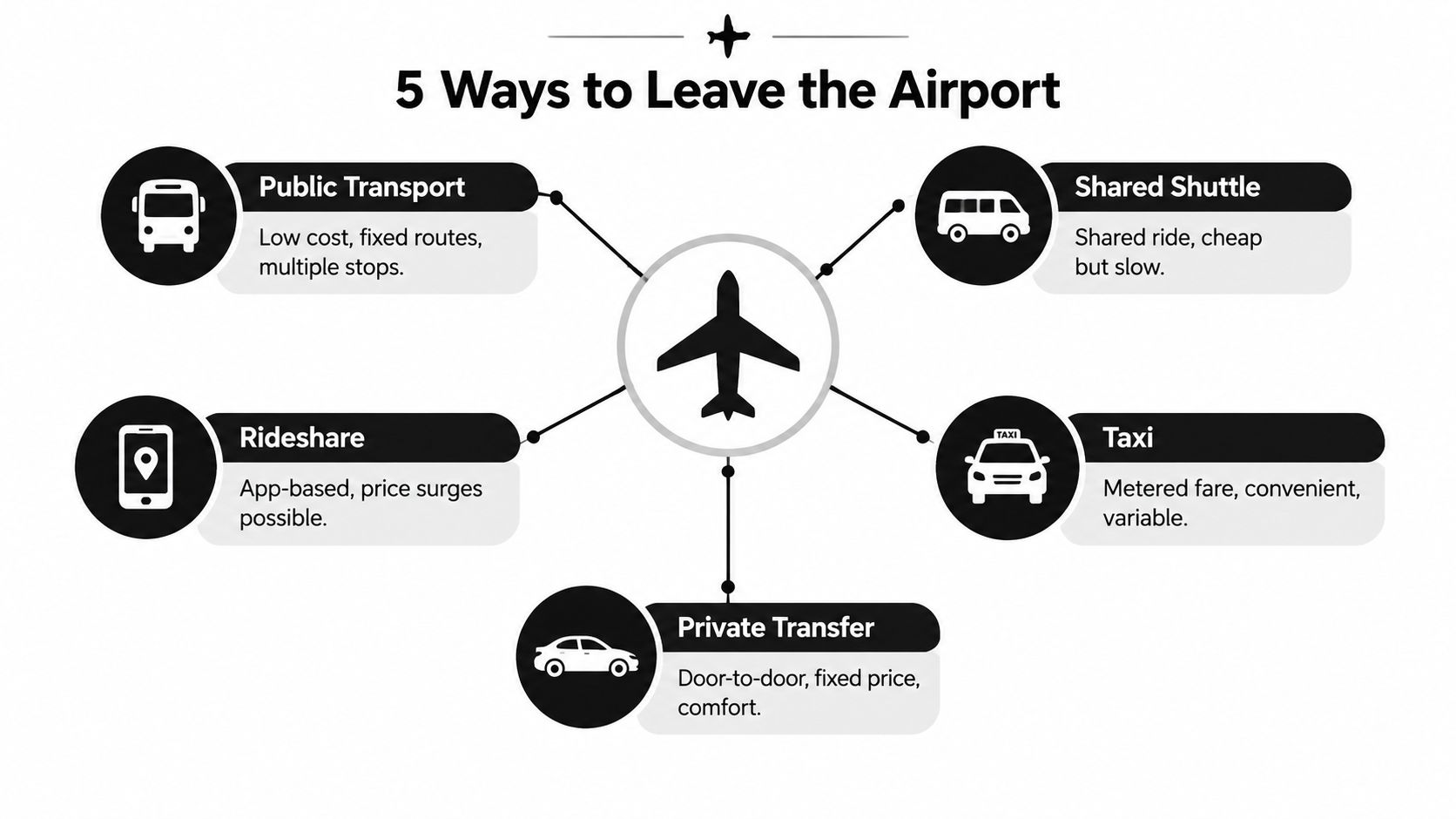
Your cheapest airport fare is not always your cheapest journey. A low headline price can grow when you add luggage charges, waiting time, extra changes, or the risk of missing a cruise connection. Compare each option by the complete trip, like comparing a small basket with a larger basket that already includes everything you need.
Public transport
Rail, Tube, bus and coach services run on established routes and timetables. They can suit travellers with light luggage, a nearby station and plenty of time. They become harder to manage when a hotel or cruise terminal requires several changes, stairs or a long walk with cases.
The Civil Aviation Authority's Heathrow surface-access table records journeys using private cars, taxi or minicab services, buses and coaches, rail, and Tube, metro, subway or tram. The range of modes reflects the different ways passengers leave an airport, rather than one solution for every itinerary.
Shared shuttle
A shared shuttle works like a minibus with passengers travelling in roughly the same direction. You pay for a seat, but the vehicle may wait for others or stop at several destinations. The fare can be attractive for flexible travellers, while the total journey takes longer when several pickups are involved.
A guide to airport shuttle services explains this shared model.
Rideshare
Rideshare apps provide app-based booking and a direct vehicle when one is available. The shown fare can change with demand, vehicle availability and pickup conditions. Follow the airport's instructions carefully, because authorised pickup areas may be separate from the terminal exit.
Taxi
A taxi usually waits at a designated rank and takes you directly to your destination. That is convenient after a long flight. A metered or variable fare is harder to predict, particularly when traffic slows a longer route.
Private transfer
A pre-booked private minibus or car is reserved for your party. It may include a planned meeting point, luggage assistance, direct travel and a fixed quotation. For a group carrying several cases, that fixed fare can cost less overall than multiple tickets, added luggage arrangements, or a delayed shared journey. It also reduces the chance that waiting or extra stops will put a cruise connection at risk. This option suits cruise passengers, older travellers and groups who want one coordinated journey.
What Drives the Price of an Airport Transfer
Two vehicles leaving the same airport can carry very different prices because the services are not identical. Distance matters, but so do vehicle size, driver time, luggage, pickup arrangements and the fare structure. Before comparing quotes, review this guide to what a car service typically costs in the UK.
The main cost ingredients
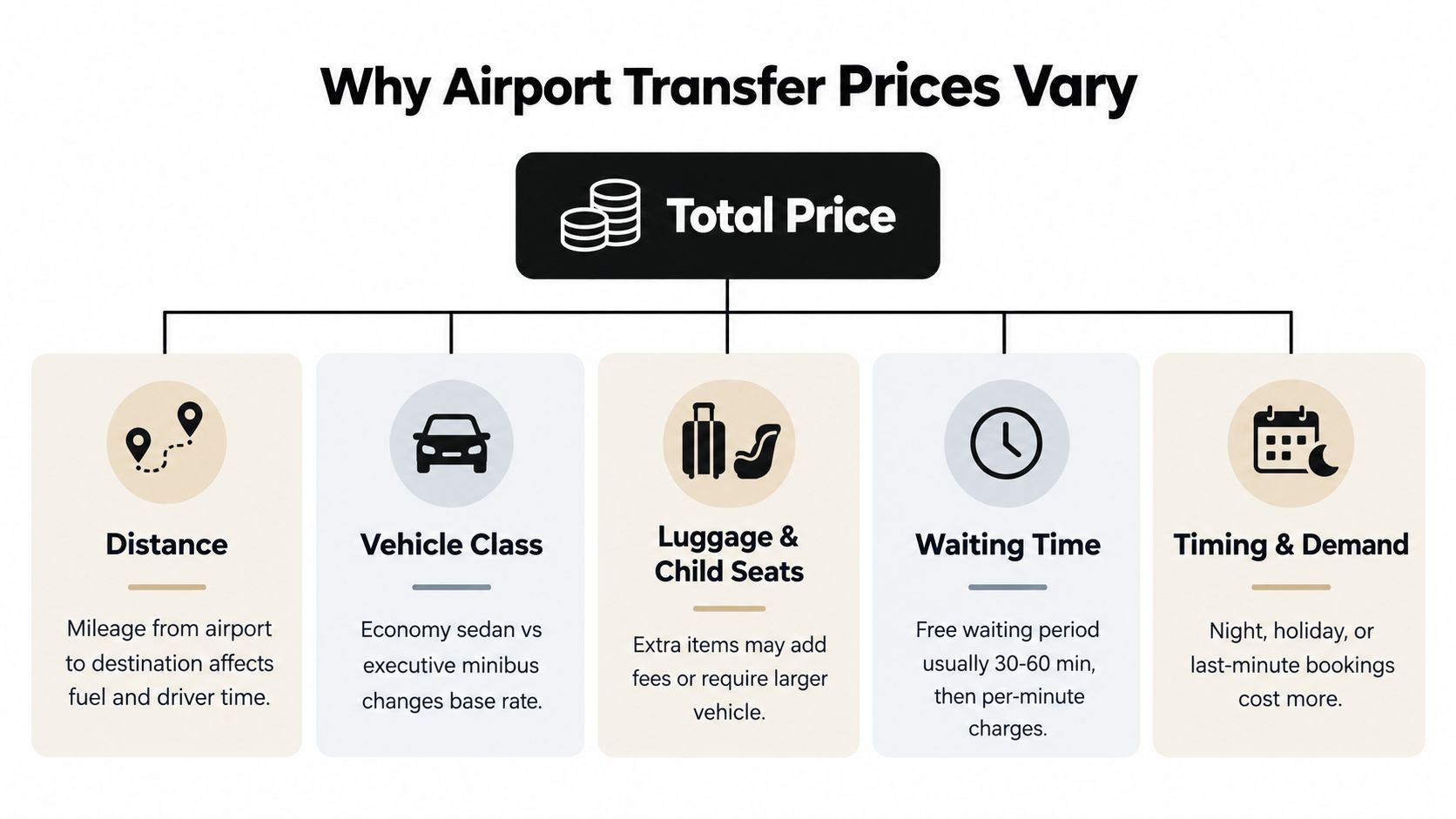
Distance and route complexity affect fuel use and working time. Heathrow to a nearby hotel is a different job from Heathrow to Central London, Southampton, Dover, Portsmouth, Tilbury or St Pancras. A cruise-terminal journey may also need extra luggage space and a pickup timed around your sailing.
Vehicle class sets much of the base fare. A standard car, executive saloon and private minibus suit different party sizes. A Heathrow transfer price guide lists Central London from £119 for an E-Class, nearby Heathrow hotel transfers from £39, and Central London journeys typically at £60 to £85, depending on the route and vehicle. The vehicle is like the size of a suitcase: choosing too small a fit can create extra problems later.
Luggage and child seats can change the practical cost. A low fare for a small car has little value if the boot cannot hold your cases. Confirm whether child seats are included, charged separately or unavailable. For a group travelling to a cruise, a fixed-price private minibus may cost less overall than several passenger fares, luggage arrangements and the risk of splitting the party.
Waiting time deserves close attention. Ask how the provider handles flight delays, baggage collection and time spent finding the meeting point. A headline fare may exclude extended waiting. A clearly quoted private service may include arrangements that protect your onward connection, so the cheaper-looking option is not always cheaper for the whole trip.
Timing and demand can affect variable fares. Last-minute bookings, busy travel periods and difficult pickup windows may reduce availability or increase the final cost. A fixed quotation gives you a clearer budget, while a variable fare can change before the journey ends.
Read the quote beyond the large number
A useful quote should answer these practical questions:
- Airport pickup: Is meet and greet included, or must you find the driver outside?
- Flight monitoring: Will the provider adjust pickup if the aircraft arrives late?
- Luggage help: Can the driver assist with cases, and is the vehicle large enough?
- Tolls and parking: Are these included or added later?
- Waiting terms: What happens if passport control or baggage collection takes longer?
- Cancellation: Can you change the booking if your plans move?
A UK airport transfer price guide places average one-way airport transfer cost at £60, while Heathrow journeys from Central London can reach about £55 to £140 depending on vehicle and route. These figures show why a “cheap transfer” label means little without checking luggage, waiting time, vehicle capacity and missed-connection risk.
Comparing Every Affordable Transfer Option Side by Side
A transfer that looks cheapest on a booking screen may cost more by the time you add luggage, waiting and extra tickets. Compare every option using the same questions: is the fare per passenger or per vehicle, does it go directly to your destination, can it carry your cases, and what happens if your flight arrives late?
| Transfer Type | Typical Cost Range | Pros | Cons | Best For |
|---|---|---|---|---|
| Public transport | Lowest-cost network option, route dependent | Fixed routes, established services, no road fare surprises | Changes, stairs, limited door-to-door service, luggage handling is your responsibility | Lightly packed travellers with flexible timing |
| Shared shuttle | Lower per-passenger fare | Can reduce the individual cost and provide an organised airport pickup | Waiting, additional stops and limited route flexibility | Solo travellers or flexible passengers |
| Rideshare | Variable app-based fare | Convenient booking and direct travel when vehicles are available | Demand-based pricing, airport pickup instructions and variable final cost | Travellers comfortable with app booking |
| Taxi | Metered or quoted vehicle fare | Immediate availability, direct journey and no shared stops | Final fare may vary, limited space for larger groups | Individuals or small parties needing a quick departure |
| Private minibus | Fixed quotation, route and vehicle dependent | Door-to-door service, shared space for the group, luggage capacity and planned timing | Higher total vehicle price than a single public transport fare | Families, cruise passengers, older travellers and groups |
When the lowest fare works
Public transport suits a traveller with a small bag, a nearby destination and spare time. The route is inexpensive, but changes, stairs and carrying luggage become part of the journey. Allow time for each connection, especially after an international flight.
A shared shuttle can work well when you are comfortable waiting for other passengers and your destination is near a common route. Its lower seat price may lose that advantage when several people in your party need separate tickets, or when an added stop leaves little time before a cruise departure.
When a private vehicle becomes affordable
A private minibus is charged for the vehicle rather than one seat. A family or group travelling from Heathrow to Southampton or Dover can divide one fixed quotation among the passengers, instead of buying separate tickets or arranging several cars. The calculation is similar to sharing a large taxi. The total vehicle price may be higher, but the cost per traveller can be lower.
The full trip cost also includes time. A missed connection may mean a replacement booking, a second taxi or a delayed arrival at the ship. A planned pickup, suitable luggage space and direct routing can reduce those risks, even when the headline fare is not the lowest.
For a solo traveller with light luggage, public transport or a shared shuttle may still make better financial sense. For families, cruise passengers and older travellers, a fixed-price private minibus can be cheaper once cases, waiting and connection risk are included.
The right choice depends on luggage, party size, destination and available time. Compare the complete journey from airport to hotel or ship, rather than judging affordability by the first fare shown.
Practical Tips to Find Truly Affordable Transfers
A good booking process prevents most unpleasant surprises. Start with the details that affect the quote, then compare providers using the same information.
Six ways to reduce the total cost
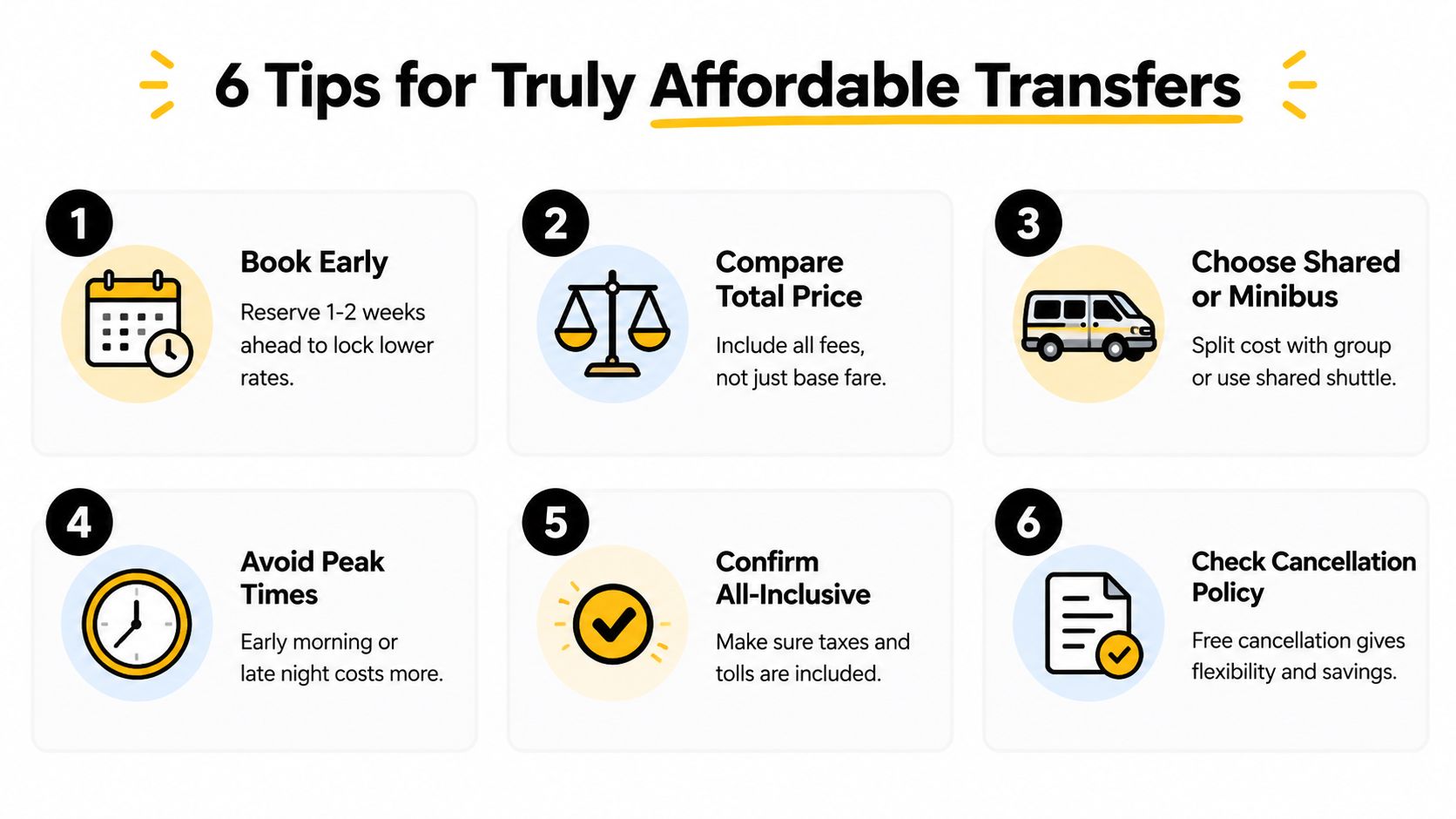
- Book with useful journey details: Give the provider your flight number, arrival date, passenger count, destination and luggage requirements. A precise request produces a more meaningful quote than a broad airport-to-city enquiry.
- Compare the complete fare: Ask whether taxes, tolls, parking, luggage, child seats, waiting time and meet and greet are included. Two base fares aren't comparable if one excludes several extras.
- Share one suitable vehicle: Families and small groups can often compare a private minibus against buying multiple seats or cars. The relevant measure is the total journey cost divided across your party.
- Choose capacity before chasing a low fare: A vehicle that can safely carry your passengers and cases prevents last-minute changes. Tell the provider about oversized luggage, mobility aids or equipment before payment.
- Check delay arrangements: Ask whether the driver monitors the flight and how long included waiting lasts after landing. This is especially important when international arrivals involve passport control and baggage collection.
- Read the cancellation terms: Flexible conditions can protect you when flight times, hotel plans or cruise arrangements change. Don't assume a booking can be amended without checking the written policy.
Ask one question before you pay
Send the same message to each provider: “What is the all-in price for our party, luggage, pickup, waiting arrangement and destination?” This simple wording shifts the conversation from a promotional starting fare to the cost of the journey you need.
Pre-booking is particularly useful for long airport-to-port routes. It gives you time to confirm the vehicle, meeting point and support process rather than making decisions while tired and unfamiliar with the airport.
A cheap quote is only useful when it describes the complete journey.
When EC Minibus Is the Smartest Affordable Choice
A private minibus makes sense when several people, several cases and a fixed destination need to be managed together. A family landing at Heathrow for Southampton may value one driver, one vehicle and one planned pickup more than a lower individual seat fare. The same applies to travellers connecting with Dover, Portsmouth or Tilbury, or passengers travelling onwards to St Pancras International.

The value comes from combining services that are easy to overlook when comparing prices. EC Minibus provides meet and greet at Heathrow, flight and cruise monitoring, professional luggage assistance and fixed, transparent pricing. It also operates with licensed and insured drivers and vehicles intended for door-to-door group travel, according to the publisher information supplied for this guide.
That arrangement can reduce uncertainty in several places. Flight monitoring helps the provider adjust the pickup when the aircraft is delayed. A planned meeting process reduces the chance of wandering around the terminal looking for a vehicle. A fixed quotation makes it easier to budget for a cruise connection, especially when the journey is shared by a family or small group.
You can also review the provider's mobile app tracking information when checking how pickup communication works.
A private transfer won't automatically be the cheapest choice for every traveller. A person travelling alone to a nearby hotel with light luggage may prefer public transport or a shared shuttle. The private minibus becomes more compelling when a group can share the vehicle, when luggage is substantial, or when the financial consequences of delay are high.
For older travellers, comfort and simplicity may also prevent extra spending. Avoiding station changes, difficult platforms and separate taxi arrangements can make the journey easier to manage from the moment you leave the terminal.
Here's a practical look at the type of coordinated service that matters on airport-to-port routes:
Your Booking Checklist for a Smooth Affordable Journey
Before paying, check these details. A cheap headline fare can become expensive after luggage fees, waiting charges, extra taxis or the cost of missing a cruise connection.
- Enter the complete route. Name the airport terminal, hotel, railway station or cruise terminal, rather than entering only “London”.
- List every traveller and bag. Include children, child seats, wheelchairs, large cases and specialist equipment.
- Ask for the total price. Confirm that the quotation is fixed and whether tolls, parking, waiting and luggage assistance are included.
- Provide the flight details. The flight number helps the operator adjust pickup plans if the aircraft is delayed.
- Confirm the meeting point. Ask where the driver waits, how to identify them and what to do if you cannot connect.
- Check vehicle capacity. Passenger seats and luggage space are separate requirements.
- Read the change policy. Check cancellation, amendments and late-flight arrangements before paying.
- Save the confirmation. Keep the booking reference, support contact and destination details available offline.
Use the final price as your comparison point, not the first fare shown. For a group with several bags, a fixed-price private minibus may cost less overall than separate tickets, baggage charges and taxis. For one traveller with light luggage and a nearby hotel, public transport or a shared shuttle may still suit the budget.
For cruise journeys, predictability is part of affordability. A direct vehicle with enough space and a planned pickup can protect the money already committed to the onward trip.
EC Minibus provides fixed-price private airport and cruise-port transfers with meet and greet, flight and cruise monitoring, licensed drivers and luggage assistance. Visit EC Minibus to request a quotation for a Heathrow, London or UK port journey.