

You've just come off a cruise in Portsmouth, or you're standing there with airport luggage, checking the time and wondering how painful the trip to London is going to be. That's the main question. Not whether the route exists, but whether it's going to be simple, affordable, and manageable when you're tired, carrying bags, and dealing with a city you don't know.
For many travellers, coaches from Portsmouth to London are the sensible middle ground. They're cheaper than most point-to-point car options and far less fiddly than piecing together local taxis, trains, and station changes. But they're not always the right answer. If you've got a flight to catch, several suitcases, children in tow, or zero tolerance for transport friction, a private transfer can be worth every penny.
Table of Contents
- Your Portsmouth to London Travel Plan
- Main Coach Operators and Schedules
- Navigating Portsmouth and London Coach Stations
- How to Book Your Coach Ticket and Get the Best Fares
- Preparing for Your Journey Comfort and Luggage Tips
- Coach vs Train vs Private Transfer A Full Comparison
- Conclusion Making the Right Choice for Your Trip
Your Portsmouth to London Travel Plan
Start with your real situation, not the timetable. Are you going to a London hotel, to Heathrow, or straight to another transport hub? Your answer decides whether a coach is a smart bargain or a false economy.
If you're travelling light and your schedule has breathing room, coaches Portsmouth to London are a practical choice. The route is established and active, with around 25 to 26 departures per day, an average journey of about 3 hours 17 minutes, and services running from just after midnight until late at night, according to Omio's Portsmouth to London coach listings. That matters because you usually won't be stuck with one awkward departure window.
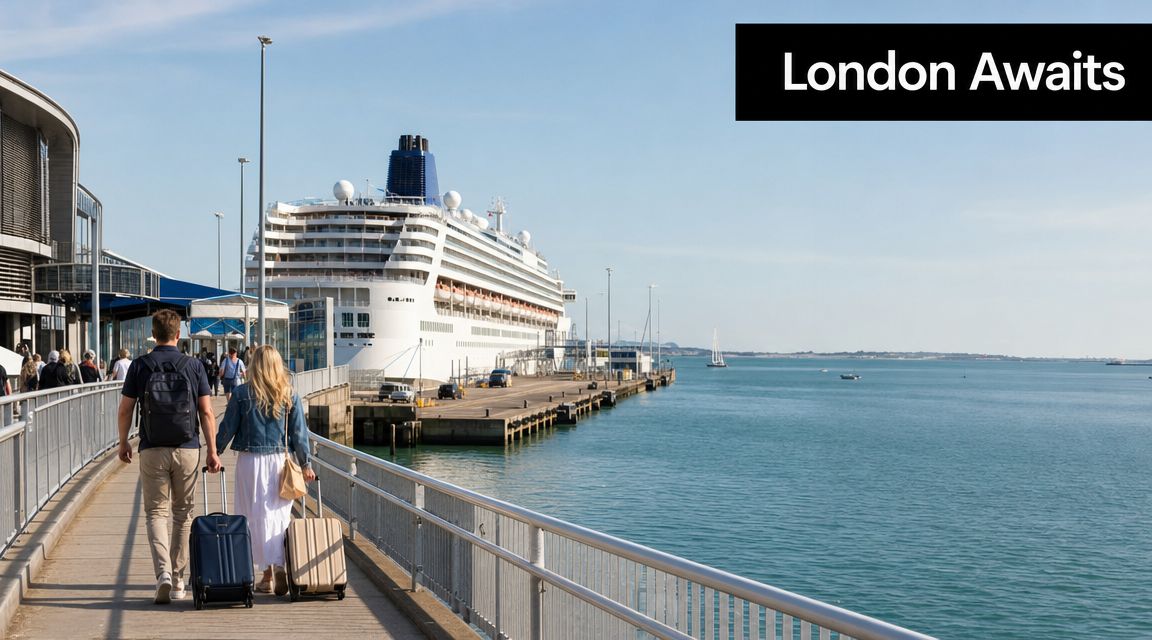
Decide based on luggage and deadlines
Cruise and airport travellers often make the same mistake. They look at the ticket price first and forget the hassle around it.
Ask yourself these questions before you book:
- Do you have large luggage? A coach can work well if you're comfortable handling bags at the stop and again on arrival.
- Are you heading to Heathrow or central London? Some routes are more convenient than others, especially if you can avoid extra changes.
- Are you under time pressure? If missing a flight, hotel check-in, or tour matters, build in margin.
- Do you want the cheapest option or the calmest one? Those aren't always the same thing.
Practical rule: If your day involves one bag, one destination, and no hard deadline, the coach is usually a good call.
If your priority is a smoother door-to-door journey, especially after a long-haul flight or cruise disembarkation, compare the coach with a private car hire option for London transfers before deciding. Price matters, but so does how much effort you want to spend getting from kerb to kerb.
Main Coach Operators and Schedules
For this route, National Express is the operator most travellers should focus on first. It's the primary scheduled coach name on Portsmouth to London, and that matters because international visitors usually need something familiar, bookable, and predictable.
The headline figures are straightforward. National Express runs the primary London to Portsmouth coach service up to 12 times daily, with the fastest journey scheduled at approximately 2 hours, and one-way fares from £8.90 when booked in advance, according to National Express route information for London to Portsmouth.
What those schedule numbers mean in real life
Up to 12 daily services is solid. It doesn't mean every departure will suit your ship disembarkation or hotel checkout time, but it gives you options. That's the key advantage of using a mature corridor rather than a thin regional route.
For most travellers, the coach works best when:
- You can book ahead: Advance fares are where the value sits.
- You don't need total flexibility: Last-minute changes are where coach travel becomes less attractive.
- You're comfortable trading speed for simplicity: One direct coach can be easier than multiple rail steps.
There's also a difference between the advertised fastest time and the journey you should plan around. The fastest run is useful as a benchmark, but road traffic, boarding delays, and stop patterns mean you should always budget extra time if you're making a connection.
The smart way to read fares
A fare “from £8.90” is exactly that. It's a starting fare, not a promise that your preferred departure will be available at that price. If you're travelling after a cruise arrival, on a busy weekend, or at a convenient mid-morning time, expect less flexibility on the cheapest seats.
Here's the blunt advice. If you see a departure that fits your plans, book it. Waiting for a better fare on a route this useful usually isn't worth the gamble.
| Booking consideration | What it means for you |
|---|---|
| Lowest advertised fare | Best chance when booking early |
| Fastest journey | Useful for planning, but don't cut connections too fine |
| Multiple daily departures | Good fallback if your first choice sells out |
| Coach operator familiarity | Easier for international travellers than mixing local operators |
The cheapest seat is only good value if it still gets you where you need to be without stress.
Navigating Portsmouth and London Coach Stations
The route itself is easy. Finding the right departure point when you're jet-lagged or carrying cruise luggage is the part that catches people out.
National Express has one major advantage here. Its Portsmouth to London route is designed with transfer passengers in mind and directly serves Portsmouth's Cruise & Ferry Terminal (C.F.T.), with a journey to London Victoria scheduled for as little as 2 hours 5 minutes, according to National Express Portsmouth to London route details. If you're coming off a ship, that direct port connection is the detail that can save your day.
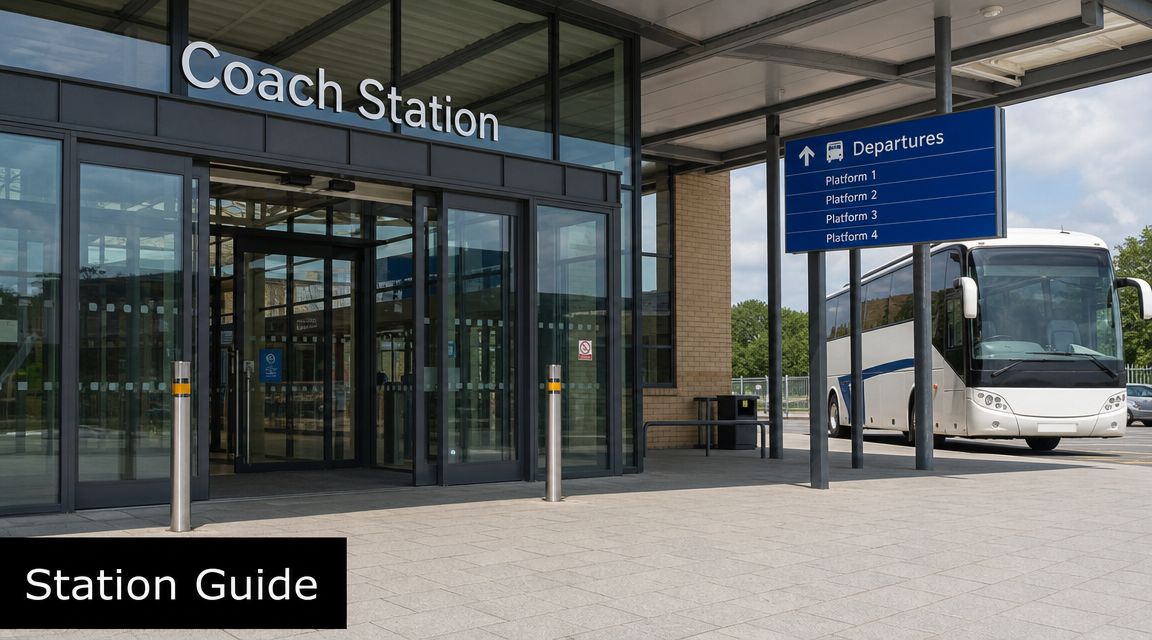
Where to board in Portsmouth
For cruise passengers, Portsmouth Port (C.F.T.) is the stop that matters most. If your service starts or calls there, it cuts out the need for a separate transfer from the terminal area.
You may also see The Hard listed. That's useful for travellers staying near the harbour, ferry links, or visitor areas around Portsmouth. It's a known interchange point, but don't assume every service uses every stop in the same order. Check the exact boarding point on your booking.
A few practical habits help:
- Arrive with time to spare: Coaches won't wait while you sort luggage or find the bay.
- Check the stop name carefully: “Port”, “The Hard”, and city-centre locations are not interchangeable.
- Keep your booking handy: Phone battery problems are common on travel days, so save a screenshot.
If you're comparing the local geography around harbour-side departures and rail links, this guide to travelling between Southampton and Portsmouth by train helps clarify how the coastal transport layout differs from what many visitors expect.
Arriving in London without losing your nerve
Most coach travellers will arrive at London Victoria Coach Station. That's a practical arrival point, not a glamorous one. Treat it as a transport hub and move on.
Once there, focus on the next leg immediately:
- Get your bags first and step clear of the platform area.
- Check whether you need a taxi, Tube, bus, or rail connection.
- If you're airport-bound, confirm whether your coach goes direct to Heathrow or whether you need to continue from Victoria.
Don't judge your whole journey by your first five minutes at Victoria. It can feel hectic, but it's manageable if you move in order and don't rush blindly.
How to Book Your Coach Ticket and Get the Best Fares
Booking a coach ticket is simple. Booking the right one is where people slip up. The wrong departure point, the wrong day, or the wrong assumption about luggage can turn a cheap trip into an annoying one.
Start with the official operator site or app when possible. For this route, that usually means National Express. Enter the exact boarding point you want, not just “Portsmouth”, and check the arrival location before you pay.
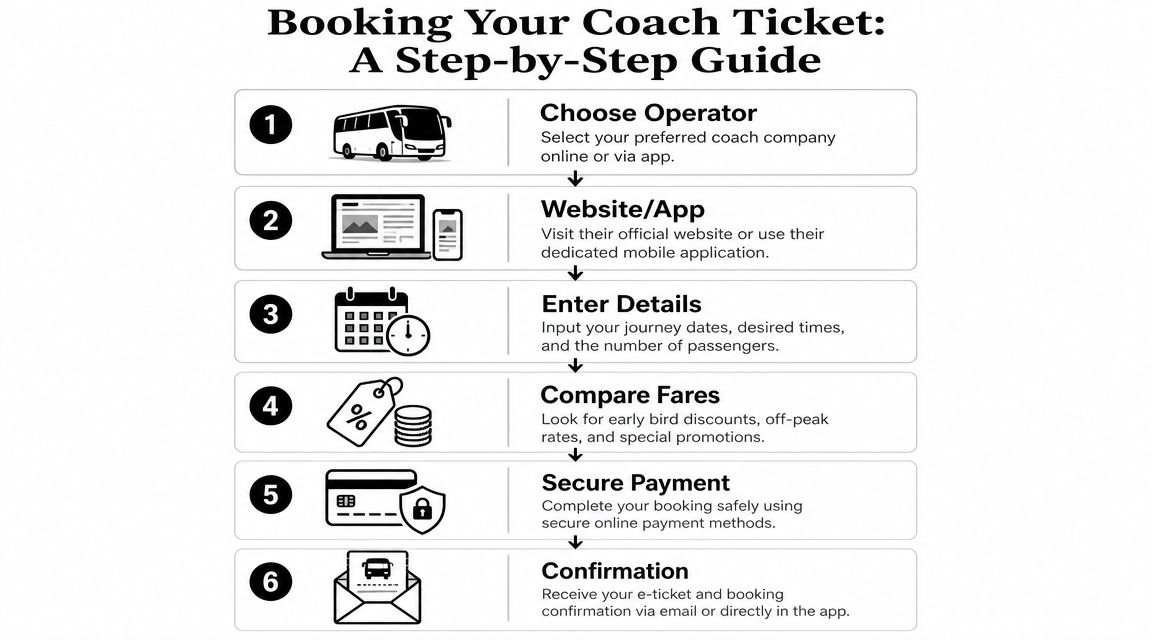
Book in this order
- Lock in your travel date first. Cruise and flight days aren't the time to stay vague.
- Choose the stop that matches your real location. Cruise terminal and city interchange are not the same thing.
- Compare departure times against your energy level. Very early travel can look efficient on paper and feel dreadful in real life.
- Pay and save the confirmation in more than one place. Email alone isn't enough.
A visual walkthrough helps if you prefer to see the process before doing it yourself:
How to get the best fare without overcomplicating it
The basic rule is easy. Book early and don't obsess over gaming the system. The cheapest seats tend to go first, and convenience usually costs more than awkward timings.
Use this quick checklist:
- Book as soon as your cruise or flight is fixed: That's when you have the strongest chance of seeing low advance fares.
- Avoid leaving it until the day: You lose choice first, then value.
- Choose a realistic departure: Saving a small amount isn't worth dragging bags across town at an hour that doesn't suit your arrival.
- Read the ticket terms: If your plans might shift, flexibility matters more than the lowest headline price.
Booking advice: A good coach fare isn't the absolute lowest one. It's the one that fits your arrival point, your luggage, and your actual tolerance for stress.
Preparing for Your Journey Comfort and Luggage Tips
This trip is short enough to be easy and long enough to be annoying if you prepare badly. That's why comfort matters. Not luxury. Just basic travel competence.
Cruise and airport passengers should think about the coach in two zones. There's the hold luggage you won't need until arrival, and there's the small bag you keep with you for the journey. Mix those up and you'll spend two or three hours wishing you hadn't.
Pack for access, not just for storage
Keep your essentials in one smaller bag that stays with you. That means passport, phone charger, medication, wallet, booking confirmation, and anything you'd be upset to lose sight of.
Don't bury key items in the large case that goes underneath. You won't want to reopen everything at the stop because you suddenly need your glasses, a power bank, or your onward hotel address.
A practical carry-on setup usually includes:
- Travel documents: Passport, tickets, and hotel or airport details.
- Basic comfort items: Water, a light snack, tissues, and a layer you can add or remove.
- Journey essentials: Phone, charging cable, headphones, and any medication.
Make the coach easier on yourself
Coach travel is rarely difficult. It's the waiting, lifting, and sitting still that wear people down.
Use these habits:
- Dress for changing temperatures: Coaches can feel warm at first and cooler later.
- Use the toilet before boarding: Don't assume the moment you want one will be the easy moment to use one.
- Download what you need in advance: Signal can drop and travel time feels longer when your entertainment plan fails.
- Keep valuables on you when boarding and alighting: That's when people get distracted.
If you're travelling after a cruise, don't try to be heroic with luggage. If the bags are heavy, ask for help lifting them. If moving them between stops already feels like too much, that's a sign you may be better off with a private transfer instead of coach or rail.
Coach vs Train vs Private Transfer A Full Comparison
Most travellers don't need every option explained. They need someone to say which option fits which problem. Here it is.
Choose the coach if price matters most and your schedule is forgiving. Choose the train if you care more about speed than simplicity. Choose a private transfer if you want the least friction, especially with luggage, family members, or airport timing.
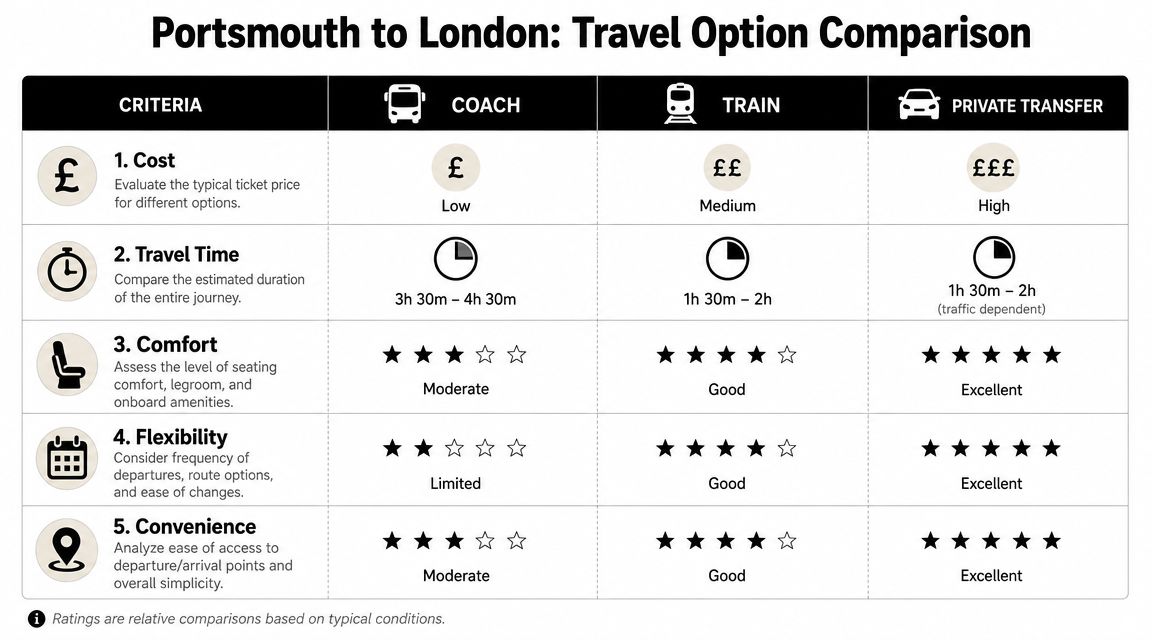
Portsmouth to London Travel Options Compared
| Factor | Coach | Train | Private Transfer |
|---|---|---|---|
| Cost | Usually the budget choice | Often higher, especially close to travel | Usually the most expensive upfront |
| Travel time | Slower overall, but can be direct and simple | Often faster station to station | Depends on traffic, but avoids changes |
| Comfort | Decent for a few hours, shared space | Good if you get a comfortable seat, less predictable with bags | Most personal space and least disruption |
| Flexibility | Good scheduled coverage, but tied to booked departures | Strong if you know the rail system | Best for custom pickup time and destination |
| Convenience | Strong when it serves the port directly | Weaker if taxis or station changes are needed | Best for door-to-door travel |
Who should choose what
Coach is the sensible option for solo travellers, couples travelling light, and anyone who wants to keep costs down without making the journey absurdly complicated. If your pickup is near the port and your destination is near Victoria or Heathrow access, it's a fair trade.
Train suits travellers who are comfortable navigating stations and want faster movement between Portsmouth and London. I wouldn't put first-time visitors with multiple large cases on a train route if they're already tired. It's not impossible. It's just often more effort than they expect.
Private transfer is the right call for families, older travellers, cruise passengers with serious luggage, and anyone landing at Heathrow who wants to avoid a chain of decisions after a long journey. One driver, one vehicle, one direct route. That simplicity is worth paying for when the day already contains enough moving parts.
If Heathrow is part of your plan, compare your route against a dedicated Portsmouth to Heathrow transfer option before defaulting to public transport. Some travellers don't need the cheapest journey. They need the one with the fewest failure points.
My blunt recommendation
If you're asking me for the default answer, here it is:
- Budget first: take the coach.
- Speed first: look at the train.
- Stress reduction first: book a private transfer.
One factual example of the private-transfer category is EC Minibus, which provides licensed, insured door-to-door transfers between London, Heathrow, and cruise ports including Portsmouth, with meet and greet and fixed pricing. That's not the only way to travel, but it fits travellers who want a pre-booked handoff instead of managing the route themselves.
Conclusion Making the Right Choice for Your Trip
For most visitors, coaches Portsmouth to London are a good, sensible option. They're established, widely used, and especially helpful when you want to keep spending under control without making the trip overly complicated. If you're travelling solo or as a couple, carrying manageable luggage, and heading into central London with some time to spare, the coach is hard to argue against.
But don't force the budget option onto the wrong kind of day.
If you've just left a cruise ship with several suitcases, if you're travelling with children, or if Heathrow is your next stop and timing matters, convenience starts to matter more than ticket price. That's where a private transfer earns its place. You avoid the stop search, the luggage shuffle, the station confusion, and the final taxi at the other end.
The train sits in the middle for some travellers. It can make sense when speed matters and you're comfortable navigating UK rail stations. I'd still steer first-time visitors away from it if they're overloaded with bags or already tired.
The smartest choice is the one that matches your energy, luggage, and deadline. Not the one that looks best in a fare search.
If you want a door-to-door option instead of managing coaches, stations, or luggage transfers yourself, EC Minibus offers private transport between Heathrow, central London hotels, and cruise ports including Portsmouth. It's a practical fit for travellers who want a pre-booked pickup, luggage help, and one direct journey rather than multiple travel steps.