

You've booked the cruise. The hotel or flight into London is sorted. Then the awkward bit lands on your plate: how to get from London to Southampton without starting the holiday tired, flustered, or worried about whether your luggage will make the same connections you do.
That question sounds simple until you add real-world details. Many international travellers arrive at Heathrow after an overnight flight, with family members running on little sleep, several large suitcases, and a boarding window that doesn't leave much room for mistakes. On paper, the route is easy. In practice, the choice between train, coach, car, and private transfer comes down to much more than the headline journey time.
If you're trying to work out the distance first, this guide on how far Southampton is from London gives a quick sense of the route. The more important question, though, is which option fits your cruise day without adding avoidable stress.
Table of Contents
- Planning Your Journey from London to Southampton
- Comparing Your Travel Options at a Glance
- Taking the Train The Classic UK Route
- Riding the Coach The Most Economical Choice
- Driving to Southampton Freedom with Hurdles
- The Stress-Free Transfer The Smart Choice for Cruise Passengers
Planning Your Journey from London to Southampton
A common starting point is the obvious comparison. Which is cheaper. Which is faster. Which has the nicest seat. Those matter, but for a Southampton cruise they aren't the whole story.
A couple arriving from North America often doesn't experience this route the way a London commuter does. They may be landing at Heathrow with two checked bags each, trying to work out signs to the Underground, wondering whether a rail platform change matters, and calculating what happens if one delay turns into two. That's why how to get from London to Southampton isn't really a transport question alone. It's a handover question. You need to move from airport or hotel to ship, with luggage, on time, and in the right place.
The options all work for someone. The train suits travellers who are comfortable handling stations and onward transfers. The coach helps if budget is the top priority and your timing is forgiving. Driving gives privacy and flexibility, but also puts the route planning and traffic stress on you. A pre-booked private transfer removes the hand-offs that usually cause trouble.
Practical rule: Cruise-day travel should be planned backwards from the terminal, not forwards from London.
That means asking a few blunt questions before you book anything:
- How much luggage are you moving: A backpack and cabin case are very different from cruise luggage for a fortnight.
- Who is travelling: A solo traveller can absorb more inconvenience than a family group or older passengers.
- What is your starting point: Central London, Heathrow, and a hotel near Victoria all create different connections.
- How much uncertainty can you tolerate: Some travellers don't mind changing trains. Others want one vehicle and one clear plan.
Those trade-offs shape the right answer more than glossy travel summaries ever do.
Comparing Your Travel Options at a Glance
A quick comparison helps, but cruise passengers should read this table with one question in mind: what happens after the main journey ends? A train to Southampton Central is not the same as arriving at your ship. The same goes for a cheap coach fare that still leaves you handling cases across town.
| Travel Method | Avg. Journey Time | Estimated Cost (per person) | Best For | Cruise Passenger Rating |
|---|---|---|---|---|
| Train | Usually the fastest public transport option from central London | Lower fares are possible if booked early, but prices often rise closer to travel | Light packers, confident rail users, travellers already near Waterloo | Good if the rail journey is only one part of a well-planned day |
| Coach | Slower, with a longer road journey and less recovery time if traffic builds | Often the lowest headline fare | Budget travellers with flexible timing and limited luggage | Fair for price, weaker for comfort and timing confidence |
| Driving or rideshare | Direct door-to-door in good traffic conditions | Can work well for couples or small groups sharing the cost | Travellers who want privacy and fewer handovers | Better than rail or coach for simplicity, but traffic matters |
| Private minibus | Direct collection and drop-off based on your pickup point and terminal | Vehicle pricing varies by provider rather than by individual rail or coach ticket | Families, groups, and cruise passengers with several cases | Strong fit when luggage, timing, and terminal access matter most |
Trainline and Rome2Rio route data, referenced in the detailed sections below, broadly support the same pattern. Rail often looks fastest on paper. Coach usually looks cheapest. Road travel cuts out the station changes that catch many first-time visitors off guard.
The hidden cost is effort.
Train works well for travellers who can manage stairs, platforms, and the last leg from Southampton Central to the port without stress. If you are arriving from Heathrow, changing hotels that morning, or travelling with large cruise cases, the published rail time stops being the whole story. The complete journey involves getting to Waterloo, finding the correct platform, boarding with luggage, and then arranging a taxi at the Southampton end.
Coach keeps costs down, but it asks for patience. A delayed departure from London or slow traffic on the motorway can turn an already longer trip into an anxious one, especially if embarkation has a firm check-in window. It is the option I suggest only when budget clearly matters more than comfort or control.
Driving or rideshare removes the station problem, which is a bigger advantage than many overseas visitors expect. It also creates a different risk. Journey times by road are much more sensitive to traffic around London and on the M3. The quoted fare can also stop looking reasonable once surge pricing, extra luggage space, or a larger vehicle becomes necessary.
Private minibus services usually make sense when the cost of one mistake is high. Families, older travellers, and groups heading straight to a cruise terminal often prefer one vehicle, one pickup, and no extra transfer at Southampton. For travellers comparing regional rail connections before or after a cruise, this guide to train travel between Southampton and Portsmouth is also useful.
The lowest fare is not always the lowest-cost option once you add taxi transfers, luggage handling, waiting time, and the stress of arriving late to a ship.
Taking the Train The Classic UK Route
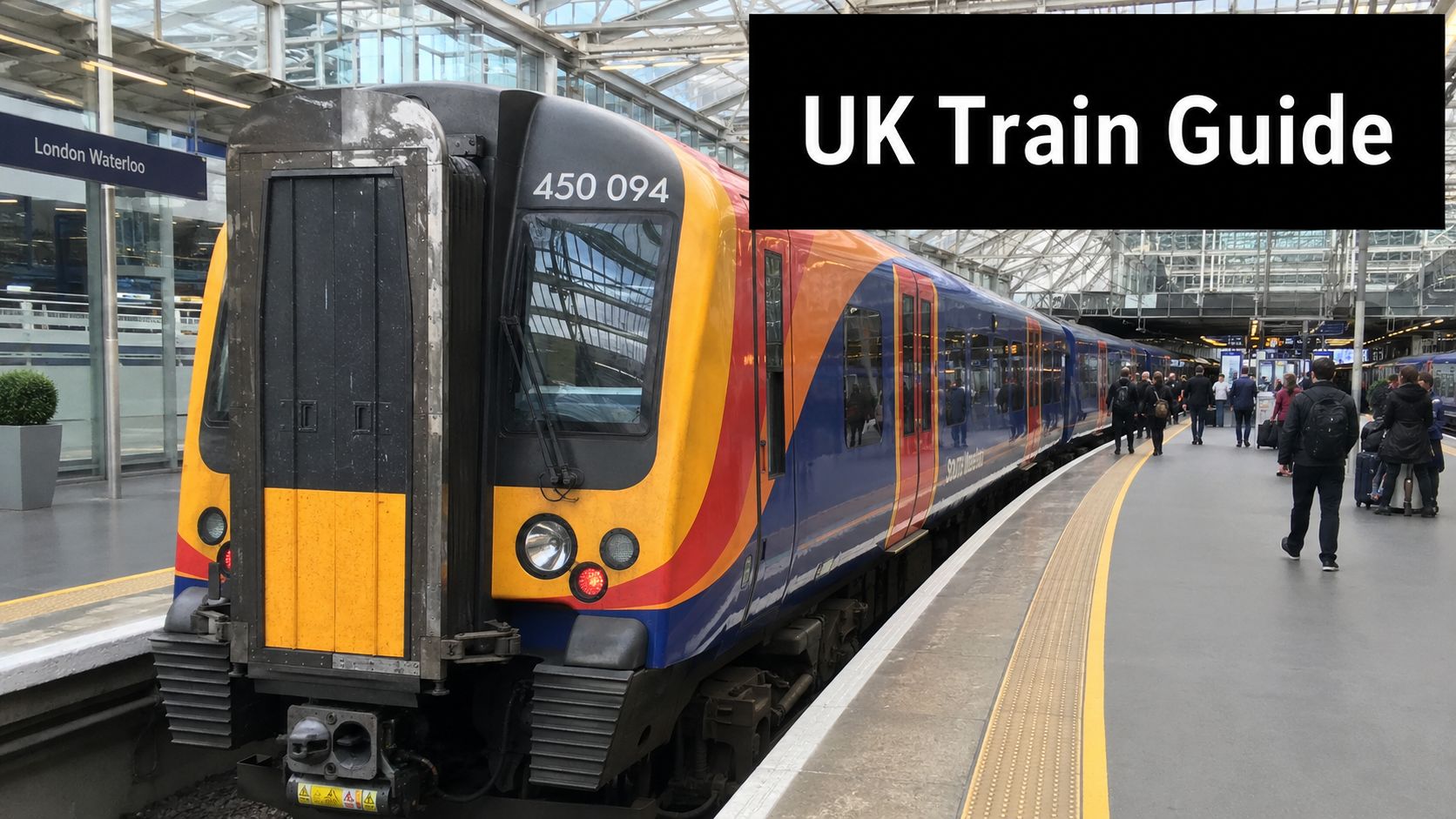
The train often looks like the obvious choice. If you are staying near Waterloo, travelling with manageable luggage, and want the quickest public transport option from central London, it can work well. For cruise passengers, though, rail is only easy when the parts around the train are easy too.
Where to start and what to book
Most visitors use London Waterloo for trains to Southampton. The practical rule is simple. Book a direct service to Southampton Central whenever you can, and avoid adding a change unless the saving is meaningful.
That matters more than first-time visitors expect. A cheap fare with a connection can stop looking cheap once you are hauling cruise cases through a busy station or worrying about a missed onward train.
A sensible rail plan usually looks like this:
- Start from Waterloo if possible. It is the main London departure point for this route.
- Choose a direct train to Southampton Central. Fewer moving parts usually means less stress.
- Book earlier if price matters. Walk-up and late-booked fares are often much higher.
- Build in proper slack before embarkation. Aim to arrive in Southampton with time to spare, not just on time on paper.
If you are also sorting out rail travel around Hampshire before or after your cruise, this guide to train travel between Southampton and Portsmouth gives useful context on how local rail connections work.
What catches first-time visitors out
The published rail time only covers the train itself. It does not include getting from Heathrow to central London, crossing London with luggage, finding the right platform at Waterloo, or waiting for a taxi once you reach Southampton.
That is the part many international cruise passengers underestimate.
Waterloo is a major London terminus, not a small tourist station. It is busy, spreads across multiple entrances and concourses, and can feel tiring after a long flight. If you have one cabin bag, that is manageable. If you have two large suitcases, hand luggage, and perhaps an older parent or children with you, the station work starts to matter almost as much as the rail segment.
Luggage changes the train experience as well:
- Boarding is slower with cruise bags. You may need extra time to get down the platform and onto the carriage.
- Storage space is limited when trains are busy. There is no guarantee that oversized luggage will sit neatly beside you.
- Standing with bags is a miserable start to a cruise. It happens more often on busy services than many guides admit.
- Southampton Central is still not the port. You need one more transfer after the train.
That final point is the hidden cost in rail planning. The train gets you to Southampton Central, not to your cruise terminal check-in point. You still need a taxi for the last stretch, and on busy sailing days there can be a queue. The extra fare is usually modest, but the wait and the uncertainty are what catch people out.
I usually tell friends visiting from overseas to ask one blunt question before booking rail: How many separate travel steps am I willing to handle with my luggage on embarkation day? If the answer is "as few as possible", train may not be your best fit even if the timetable looks attractive.
Who should choose the train
Rail suits travellers who are already set up for it:
- You are staying near Waterloo or can reach it easily
- You are travelling fairly light
- You are comfortable using big UK stations
- You do not mind arranging a taxi from Southampton Central to the terminal
- You have enough buffer that a small delay will not ruin the day
For the right traveller, the train is efficient and perfectly reasonable. For cruise passengers arriving in the UK for the first time, it is often less straightforward than it first appears. The speed is real. So are the extra steps.
Riding the Coach The Most Economical Choice
A coach looks good on paper if you are watching the budget. The fare can be low, you board once, and you avoid the station rush that catches out many first-time visitors. For some cruise passengers, that is enough.
The hidden trade-off is that coach value depends heavily on when your day starts and how much uncertainty you can tolerate. A cheap ticket feels different if you are already in central London the night before than if you are landing at Heathrow that same morning with two large suitcases and a sailing deadline.
Coach travel also solves a different problem from rail. It reduces the hassle of changing trains or dealing with the Underground, which matters if you are travelling with bulky luggage. You are usually loading your bags once, staying in one seat, and letting the driver handle the road. That can be a relief after a long flight.
When the coach makes sense
The coach is often a sensible fit for travellers in a narrow but real sweet spot:
- You are keeping costs down and are happy to spend longer travelling
- You are already staying near Victoria, or can reach it without much effort
- You have a generous time buffer before cruise check-in
- You are travelling light enough that boarding and unloading bags will not be a struggle
- You prefer one direct public transport leg over managing a rail journey
That last point matters more than many guides admit. A slower trip with fewer moving parts can be easier than a faster trip with crowded platforms, confusing signage, and one more taxi to sort out at the end.
What the low fare does not include
The drawbacks of the coach are time, comfort, and less control over delays.
Road traffic is the obvious issue. If the motorway is slow, you sit in it. There is no practical workaround once you are on board. That is manageable on a hotel day. It feels much less comfortable on embarkation day, when every delay starts eating into your margin.
Luggage is the second issue. Yes, your suitcase goes underneath rather than beside you. That is better than standing on a train with bags. But you still need to get yourself and your cases to the coach station, arrive in time for boarding, and collect everything quickly at the Southampton end. If you have multiple large cases, a pushchair, or cruise luggage tags flapping off the handles, that part can be clumsier than expected.
Then there is the final stretch. The coach gets you to Southampton, not to your ship check-in desk. You still need to work out the last mile to the terminal, and that is the point where tired travellers start losing patience.
Who should think twice
I am cautious about recommending the coach to passengers flying into London on the same day as their cruise. Too much has to go right. A late flight, a slow airport exit, or heavy road traffic can turn the cheapest option into the most stressful one.
It is also a weaker fit for:
- Families managing several bags
- Older travellers who want fewer handling points
- Anyone anxious about missing embarkation
- Passengers arriving in the UK for the first time and trying to decode London coach stations under time pressure
For a solo traveller with one suitcase and a hotel stay in London first, the coach can be a fair, practical choice. For international cruise passengers trying to keep costs low without adding timing anxiety, it only works if the schedule gives you real breathing room.
Driving to Southampton Freedom with Hurdles
A car journey can feel like the obvious fix after wrestling with train times and coach baggage rules. You leave when you want, your bags stay with you, and you arrive much closer to the port than public transport usually allows.
For cruise passengers, that control is real. So are the catches.
Hiring a car versus booking a ride
Road travel between London and Southampton is usually straightforward in principle. In practice, the experience depends on whether you are driving yourself or sitting in the back while someone else handles the route, the traffic, and the drop-off.
A self-drive rental gives you the most independence. It suits travellers who are spending a few days outside London, want flexibility for hotel stops, or prefer keeping the whole family together in one vehicle. It also avoids the usual station problem of dragging large cases through crowds.
A pre-booked car removes the hardest part of the road option. You still get direct, door-to-door travel, but you do not have to adjust to left-side driving, work out fuel policies, or figure out where to return the vehicle. For many first-time UK visitors, that trade-off is worth paying for. If you are comparing the total cost across two or three passengers, the gap often looks smaller than expected once you add rail tickets, London taxis, and the final transfer to the terminal.
Where driving becomes harder than it first appears
The main risk with self-drive is not the motorway itself. It is everything wrapped around it.
Picking up a rental car takes time. There is paperwork, the vehicle check, luggage loading, phone charging, sat-nav setup, and the small but important moment of getting comfortable in an unfamiliar car on unfamiliar roads. After a long-haul flight, that can feel like one task too many.
Then there is the cruise-specific problem. You are not just driving to Southampton. You are driving to the right terminal, with enough margin for embarkation, while keeping passports, cruise documents, and tagged luggage organised. That is manageable, but it is different from an ordinary leisure drive.
Parking and return planning can also turn "freedom" into admin. Some travellers need port parking for the duration of the cruise. Others need a one-way rental, which is not always simple or cost-effective. If your plan for after the cruise is vague, a rental car can create work at both ends of the trip.
A hired car solves much of that, but only if it is booked properly. Vehicle size matters more than visitors expect. Two adults with cruise luggage may fit comfortably in one car category. Add children, extra cases, or mobility equipment and a standard saloon can become a poor fit very quickly. This is why many passengers look at Southampton cruise transfer options before deciding whether road travel is simpler with a dedicated pre-booked vehicle.
The realistic verdict on driving
Driving works best for travellers who want privacy, direct routing, and fewer handovers with their luggage. It is less attractive if you are tired, nervous about UK roads, or do not want one person in the group carrying all the responsibility for timing and directions.
For some cruise passengers, self-drive is the easiest answer. For others, the better road option is not driving at all. It is booking a direct ride and keeping the benefits of a car journey without adding rental desks, parking decisions, and driver fatigue to embarkation day.
The Stress-Free Transfer The Smart Choice for Cruise Passengers
You land in London after an overnight flight, collect two large cases, clear passport control, and still have to reach the right cruise terminal in Southampton. That is the point where many international passengers stop comparing fares and start paying for certainty.
A private transfer solves a different problem from train or coach travel. Public transport can work perfectly well on paper, but cruise day is rarely just one clean journey. It often includes an airport pickup, a rail connection, a wait on a platform, a taxi queue in Southampton, and one final handoff at the port. Each step is manageable on its own. Taken together, they create the timing anxiety, luggage effort, and last-mile uncertainty that visitors often underestimate.
Why cruise travellers pay for less friction
The actual destination is not Southampton in general. It is your ship, at the correct terminal, with your luggage still under control and enough margin left in the day that a small delay does not feel disastrous.
That distinction matters. Southampton station is not the port gate, and the final stretch can feel more awkward than guidebooks suggest when you are carrying cruise luggage, travelling with children, or arriving during a busy embarkation window. For first-time UK visitors, this is often the hidden cost of the cheaper options. The ticket price may be lower, but the journey asks more of you at exactly the point when you are most tired.
A direct transfer reduces those weak points:
- Pickup from the place you start. Heathrow, a London hotel, or a private address.
- One vehicle for the full journey. No repeated loading and unloading.
- Arrival at the cruise terminal. Not a station nearby.
- Less dependence on local know-how. No need to work out taxi ranks, station exits, lifts, or platform changes with cases.
What door-to-door service changes in practice
I usually tell cruise passengers to count handovers, not just miles. Every time you change vehicle or location, you add a chance for delay, confusion, or simple fatigue. That is easy to ignore while planning. It feels very different after a long-haul flight or on a wet morning with heavy bags.
This is why door-to-door transfer suits some travellers especially well. Families avoid splitting attention between children and luggage. Older passengers avoid stairs, crowded platforms, and the scramble for a local cab at the end. Groups often find that once individual rail or coach tickets, taxis, and baggage hassle are added up, a pre-booked vehicle becomes easier to justify.
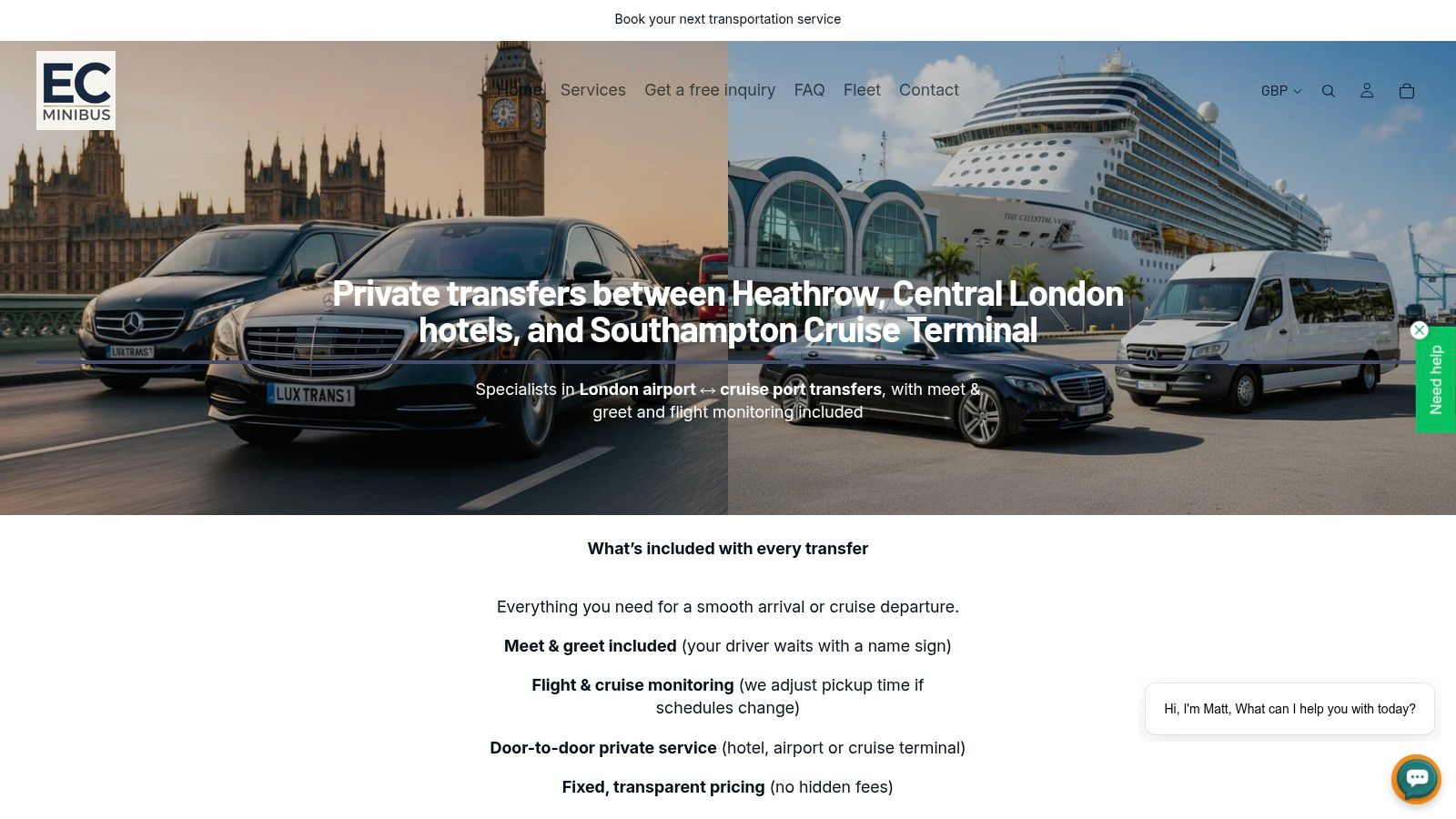
One example is door-to-door Southampton cruise transfers. Based on the published service information, the offering includes meet and greet, luggage help, and fixed-price transfers between Heathrow, central London, and Southampton cruise terminals. The practical advantage is simple. The service is built around embarkation day rather than a single transport leg.
Here's a closer look at what this kind of transfer aims to solve:
When private transfer is the sensible choice
This option will not suit every traveller. If you are travelling light, staying near the right station, and feel comfortable handling the UK rail system, the train may still be the better buy.
Private transfer makes more sense when the risks of a multi-step journey are expensive in time or energy:
- You are arriving at Heathrow and going straight to the ship.
- You have several large cases or mobility equipment.
- You are travelling as a family or small group.
- You want a fixed plan, not a chain of smaller decisions.
- You care more about arriving calm than saving the last part of the budget.
The value is not luxury. It is fewer things to manage on a day that already has enough moving parts.
The practical conclusion
For cruise passengers, the smartest option is often the one with the fewest points of failure. Train, coach, and self-drive all have their place. But if your priority is getting from London to the terminal with minimal lifting, minimal guesswork, and less pressure at the final stage, a pre-booked transfer is usually the easiest road option.