

The IATA code for Milan Linate Airport is LIN, and the ICAO code is LIML. If you're booking a flight to Milan, checking cruise transfer plans, or comparing airport options, those are the two codes you need to recognise straight away.
That matters more than many first-time visitors realise. You might be staring at a booking screen showing Milan airports, wondering whether LIN is the one near the city, whether it's the right choice for a cruise connection, or whether “Linate” is somehow in the UK because of a mistaken search result. It isn't. Linate is in Italy, serving Milan, and once you know that, the rest of your planning gets much easier.
For UK travellers in particular, LIN often looks appealing because it's the city airport. But airport code knowledge on its own won't help if you land during a busy period and still need to reach central Milan, Genoa, or Venice on time. The practical side is what makes the difference.
Table of Contents
- Your Quick Guide to the Linate Airport Code
- Decoding LIN and LIML Airport Identifiers
- Milan Linate Airport at a Glance
- Getting from Linate Airport to Central Milan
- Essential Traveller Tips for Arriving at LIN
- Your Milan Trip Starts with the Right Code
Your Quick Guide to the Linate Airport Code
If your booking confirmation says LIN, you're flying into Milan Linate Airport. If you see LIML, that's the airport's ICAO identifier, the version used in operational and aviation systems rather than everyday passenger booking tools.
The easiest way to think about the Linate airport code is this. LIN is the code travellers use, while LIML is the code aviation professionals use. LIN is the code that matters on tickets, baggage tags, and flight searches.
A common point of confusion is geography. Some searches mix Linate into UK travel planning, but Linate is not a UK airport. It's in Milan, Italy. If you're travelling from Britain for a city break or heading onward to a Mediterranean cruise, that distinction matters because your transfer planning needs to focus on Italy, not UK airport logistics.
Practical rule: If you're comparing Milan airports for a short stay or a quick city arrival, LIN usually signals the most central-feeling airport option.
Decoding LIN and LIML Airport Identifiers
Airport codes look technical, but the difference is simple once you see how each one is used.
IATA codes are the short three-letter codes passengers deal with. They appear when you search flights, print boarding passes, read baggage tags, or check departure screens. For Milan Linate, that code is LIN.
ICAO codes are the four-letter versions used in flight operations. Pilots, dispatch teams, and air traffic control rely on them for route planning and airport identification. For Linate, that code is LIML.
A good analogy is a nickname versus a full formal name. LIN is the version you use at the travel desk. LIML is the one used behind the scenes to run the flight safely and accurately.
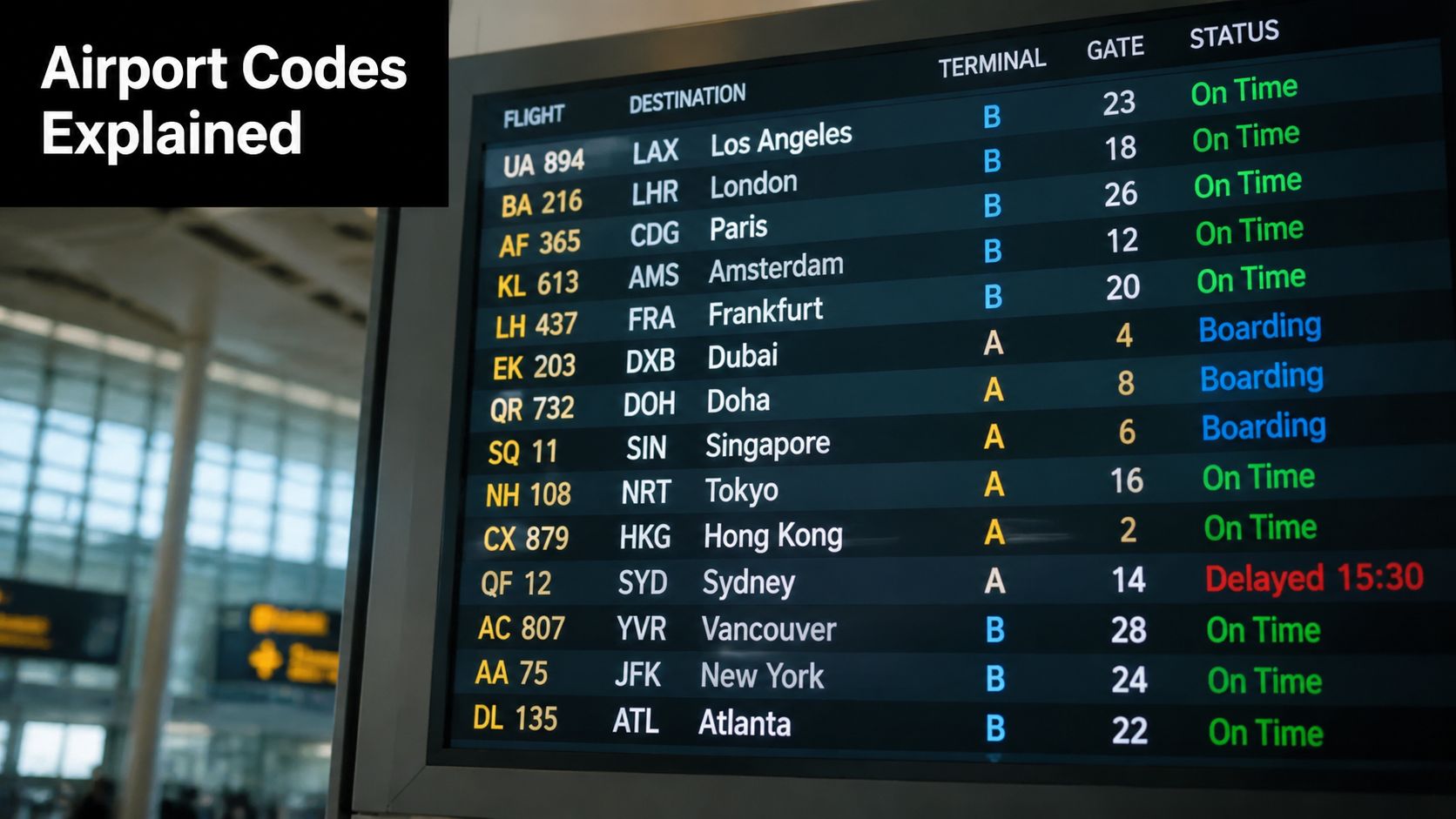
Linate isn't a minor airfield. According to Milan Linate Airport's official overview on Wikipedia, the airport is located 7km east of the city centre, served 10.6 million passengers in 2024, and recorded 118,060 aircraft movements in 2024. The same source notes that it acts as a key European hub for ITA Airways and is widely used for domestic and short-haul flights.
That helps explain why the code matters. In a busy airport handling millions of passengers and a high volume of aircraft movements, these identifiers prevent confusion. “Milan” alone isn't precise enough, because the city is served by more than one airport.
Knowing the code also helps you avoid the classic booking mistake of choosing the wrong Milan airport and only noticing after you've planned your hotel or onward train.
Milan Linate Airport at a Glance
Linate works best when you understand what kind of airport it is. It's often described as Milan's city airport, and that gives you a useful mental picture before you land. It's geared towards travellers who want a relatively direct arrival for Milan itself, especially on domestic and short European routes.
That makes LIN different in feel from Milan's other airport choices. Malpensa usually enters the picture for broader international networks, while Orio al Serio is often associated with low-cost travel. Linate sits closer to the city experience. If you're visiting Milan for a short break, a meeting, or the first leg of a cruise itinerary through Italy, that can be very appealing.
What first-time visitors usually notice
The terminal experience is generally more straightforward than what people expect from a major airport serving a large city. You're not dealing with the same sense of scale you might associate with a huge long-haul gateway.
That said, “compact” doesn't mean “instant.” A smaller airport can still feel pressured when many flights bunch together, especially if lots of passengers are arriving or departing in a narrow time window.
Who should choose Linate
Linate often suits travellers who value:
- A more city-focused arrival rather than a longer transfer from a more distant airport
- Short-haul convenience for European routes
- Simpler navigation after landing, especially if they don't want a complicated first hour in Milan
If your priority is getting into Milan efficiently, LIN often makes sense. If your priority is the widest range of long-haul flight options, another Milan airport may fit better.
Getting from Linate Airport to Central Milan
For most travellers, the question isn't just “What is the Linate airport code?” It's “Once I land at LIN, what's the smartest way into the city?”
The main options are straightforward. Your best choice depends on luggage, budget, and how tight your schedule is.
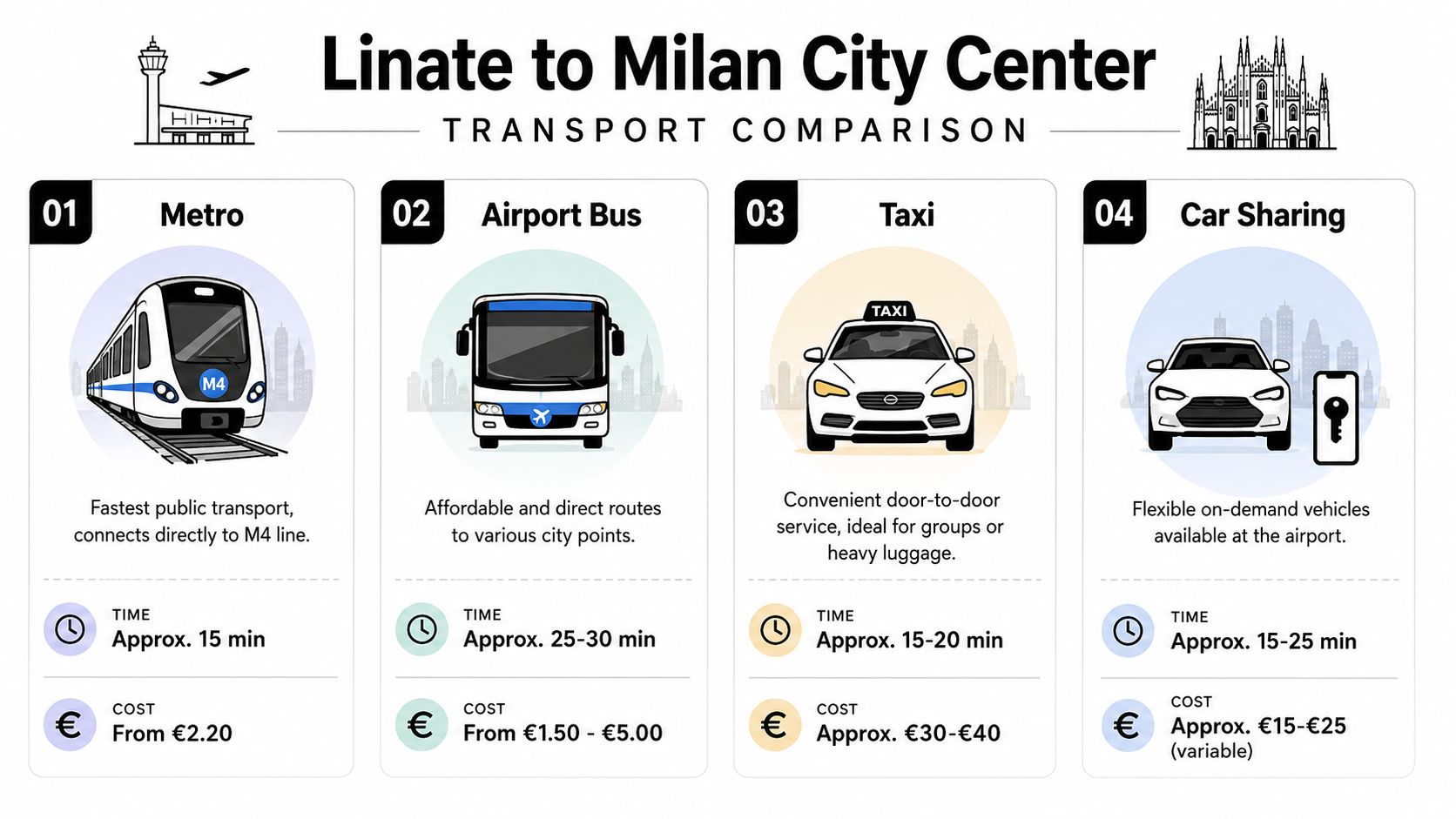
| Transport option | Typical use case | What to expect |
|---|---|---|
| Metro | Best for most visitors | Direct public transport link into the city and easy to understand once you're following signs |
| Airport bus | Good for budget-minded travellers | Useful if your destination suits the route and you don't mind a road journey |
| Official taxi | Best for door-to-door convenience | Easier with heavy luggage, families, or late arrivals |
| Car sharing | Useful for confident app-based travellers | Flexible, but less ideal if you want the simplest arrival after a flight |
Which option suits most travellers
The M4 Metro is often the easiest balance of speed, cost control, and predictability. It avoids some of the uncertainty that road traffic can introduce and gives first-time visitors a clear route into the city transport network.
Buses can be perfectly workable, especially if you're not in a rush and your accommodation sits near a convenient stop. Taxis are the least complicated if you want to walk out, get in, and head directly to your hotel.
A useful way to decide is to ask one practical question. Are you travelling for a flexible city stay, or are you trying to make a timed connection such as a train, a port transfer, or a cruise embarkation?
Why cruise passengers should build in extra time
For UK travellers using Linate as a gateway to Mediterranean cruises, timing deserves more attention than most travel guides give it. According to the Airport Car Hub guide to Milan Linate Airport, LIN handled 118,060 annual aircraft movements, and peak-hour terminal processing times can sometimes exceed 40 minutes.
If your ship sails the same day, don't treat landing time as arrival time. Your real journey starts after you clear the terminal and begin the transfer.
That matters if you're landing in Milan and continuing onwards to Genoa or Venice. A short urban airport transfer can still become stressful if arrivals are congested, baggage takes time, or ground transport queues build up.
If you usually prefer pre-booked ground travel for time-sensitive journeys, it's worth reading about airport shuttle services for smoother transfer planning, especially if you like to remove guesswork before travel day.
Essential Traveller Tips for Arriving at LIN
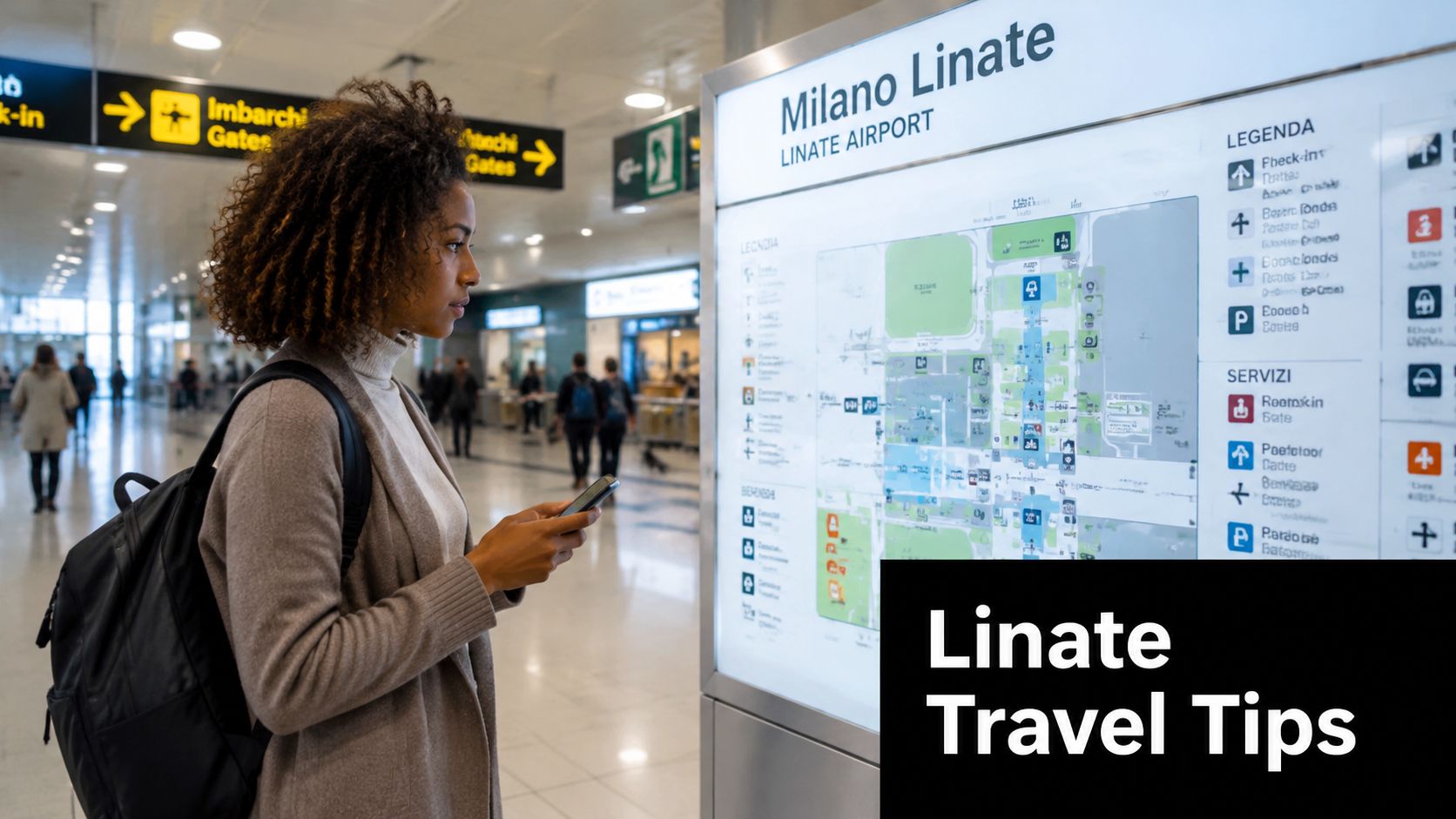
First-time arrivals at Linate usually do well when they keep things simple. Don't overcomplicate the airport. Focus on signs, confirm your onward route before you leave the terminal, and decide early whether you're taking the metro, a bus, or a taxi.
What to do as soon as you land
A smooth arrival usually comes down to a few habits:
- Check the airport code on your documents: Make sure your booking says LIN, not another Milan airport.
- Decide your transport before exiting: It's easier to follow signs with a plan than to stop in a crowded arrivals area and start comparing options.
- Allow for queues during busy periods: Even a convenient airport can slow down when many passengers land close together.
- Keep your cruise or rail timing realistic: Tight connections are where small delays become expensive.
If you like seeing the terminal environment before you travel, this video gives useful visual context:
Another good habit is to separate airport tasks from shopping or browsing. If you enjoy airport retail, save that for departures when your schedule allows. For a useful comparison of how travellers think about airside shopping time, this guide to duty-free at Schiphol Airport shows why it helps to know your airport flow before you arrive.
Choosing Linate versus Milan's other airports
If you've already booked LIN, the main advantage is convenience for Milan itself. If you haven't booked yet, think in terms of journey type:
- Choose Linate if you want a city-oriented arrival and a simpler start.
- Choose Malpensa if your flight options matter more than proximity.
- Choose Orio al Serio if fare choice is driving the decision.
A first trip to Milan feels easier when the airport matches the trip. Linate usually suits travellers who want the least friction after landing.
Your Milan Trip Starts with the Right Code
The key fact is simple. The Linate airport code is LIN, and LIML is the airport's ICAO identifier. Once you know that, booking screens, boarding documents, and transfer plans become much easier to read.
For many travellers, LIN is attractive because it gives you a more direct Milan arrival than the city's other airport options. That's especially useful if you're heading into central Milan quickly or starting a wider Italy itinerary.
If you're travelling from the UK for a Mediterranean cruise, don't stop at the code. Think about the whole chain. Flight arrival, terminal processing, ground transfer, and final check-in all affect whether the day stays calm or turns rushed.
For travellers extending their Italian trip beyond Milan, this guide to 3 days in Rome can help you plan the next leg with the same kind of clarity.
If you need dependable ground transport for the UK side of your journey, EC Minibus provides private transfers between Heathrow, London hotels, rail hubs, and major cruise ports. It's a practical option for travellers who want fixed pricing, meet and greet service, and a calmer connection on busy travel days.