

You've just landed at Heathrow with tired children, several suitcases and a hotel check-in or cruise embarkation deadline ahead. London's transport network may be unfamiliar, traffic can change the journey, and the route from the airport to a hotel, then onward to Southampton, Dover, Portsmouth or Tilbury, involves more than just finding a taxi rank.
The most useful tips for international travelers are connected decisions made before departure. Your documents affect check-in, your luggage affects the vehicle you need, your arrival time affects your transfer options, and your payment and communication plans determine how easily you can respond when schedules change. The ten steps below cover the complete journey, from passports and insurance to packing, timing, money, communication, etiquette and jet lag. For travellers who prefer a private, pre-arranged connection, EC Minibus is an optional door-to-door service between Heathrow, Central London and major UK cruise ports.
Table of Contents
- 1. Book and Arrange Reliable Airport and Port Transfers
- 2. Understand Currency Exchange and Payment Methods
- 3. Arrive Early at Airports and Departure Points
- 4. Pack Strategically and Know Baggage Allowances
- 5. Obtain Travel Documents and Verify Passport Validity
- 6. Understand UK Travel Etiquette and Local Customs
- 7. Purchase Comprehensive Travel Insurance
- 8. Monitor Flight and Cruise Schedules and Stay Informed
- 9. Prepare for Jet Lag and Plan Rest Accordingly
- 10. Verify Pre-Arranged Services and Confirm Bookings Before Travel
- 10 Essential International Travel Tips Comparison
- Turn Your UK Itinerary Into a Smoother Journey
1. Book and Arrange Reliable Airport and Port Transfers
A pre-booked transfer gives your arrival a defined next step. Instead of joining an unfamiliar taxi queue after a long flight, you'll have a confirmed pickup point, a planned destination and a provider expecting you. That matters when you're carrying cruise luggage or travelling with family members who need extra assistance.
For a Heathrow arrival, provide the airline, flight number, arrival date and destination hotel or port. For a return journey from Southampton, Dover or Portsmouth to Heathrow, provide the cruise details and flight departure information. Accurate information helps the operator plan around your itinerary, while the right vehicle size prevents a frustrating luggage problem at the kerb.
EC Minibus describes its Heathrow service in its airport transfer service guide, including meet and greet, flight monitoring, luggage assistance and door-to-door journeys. Those features suit passengers who value a fixed arrangement more than finding the cheapest transport at the last minute.
Match the service to your journey
Before paying, confirm:
- Vehicle capacity: Count passengers and large cases, not just seats.
- Pickup procedure: Check whether the driver meets you inside the terminal or waits at a designated collection point.
- Accessibility needs: Request suitable access and luggage support in advance.
- Contact details: Save the booking reference and driver or provider number offline.
- Review quality: Look for verified feedback on platforms such as Trustpilot and Tripadvisor, while checking that reviews relate to the service you're booking.
A pre-booked transfer won't remove every delay. It can, however, reduce the number of decisions you must make immediately after landing.

2. Understand Currency Exchange and Payment Methods
Arriving in Britain with only one payment method is an avoidable risk. A sensible arrangement combines a primary debit or credit card, a backup card stored separately and a small amount of pound sterling for situations where a terminal, vending machine or small establishment doesn't accept your preferred method.
Tell your bank and card provider about the trip before departure, particularly if you're travelling from the United States or Canada. A foreign transaction can trigger a security block if the provider doesn't recognise the location. You should also check whether your card charges foreign transaction fees, whether your bank offers favourable ATM terms and whether contactless payments are enabled.
Airport exchange desks are convenient, but convenience can come with a less attractive rate or additional fees. Compare the total cost rather than focusing only on the advertised exchange rate. If you use an ATM, choose one connected to a recognised bank where possible, read the on-screen conversion choices carefully and keep the receipt.
Build a payment backup
Use a simple three-part system:
- Primary card: Use a card with low or no foreign transaction fees for hotels, attractions and transport.
- Reserve card: Keep a second card separate from your wallet in case the first is lost or blocked.
- Emergency cash: Carry enough pounds for small purchases, but avoid carrying your entire travel budget.
If you're paying a transfer provider before arrival, confirm the currency, payment status and cancellation terms. EC Minibus explains relevant considerations in its guide to international payment methods. Save payment confirmations with your other travel documents, because a clear record can resolve confusion faster than a bank statement searched on a phone.
3. Arrive Early at Airports and Departure Points
A connection that looks efficient on a map can fail after one immigration queue, baggage delay, traffic hold-up or slow check-in. Build a clear buffer for every international departure. A missed cruise sailing is usually harder to recover from than a missed train, so the hotel-to-port journey needs more planning than the distance alone suggests.
For a Heathrow departure, work backwards from the airline's check-in and boarding requirements, then allow time for London traffic. Roads can take longer during 7am and 10am or 4pm and 7pm, even when the same route is usually quick. If the itinerary runs from an overseas flight to a London hotel and then Southampton, account for each handover rather than treating transport as one simple journey.
Cruise passengers should treat the terminal deadline as firm. Southampton is an important UK cruise gateway, but the port's overall scale does not predict your queue time. Check the cruise line's arrival instructions, confirm where luggage must be left and choose a transfer that leaves room for traffic and delays. A direct vehicle may cost more than public transport, while a cheaper route can involve extra changes and less flexibility if the first connection runs late.
Use a backward plan
Write down:
- Departure deadline: The time you must be at the airport or terminal.
- Transfer departure: When your vehicle should leave the hotel or home.
- Contingency: Extra time for traffic, wrong turns, luggage and check-in.
- Status check: Review flight, cruise and road conditions before setting off.
Keep the plan visible with your booking details and driver contact information. Early arrival may mean waiting, but waiting at the terminal is easier than trying to repair a missed international connection.
4. Pack Strategically and Know Baggage Allowances
Packing for a UK hotel stay and a cruise is different from packing for a short city break. You may need clothing for changing weather, formal or special onboard events, shore excursions and the flight home. Start with the policies that can charge or reject the bag, then build the contents around your actual itinerary.
Check the airline's allowance for every flight, including the return journey. Cruise lines may apply separate rules for checked bags, cabin luggage, prohibited items and delivery procedures at the terminal. Policies can differ even when two airlines appear to offer similar tickets. A suitcase that meets one carrier's requirements may exceed another's weight or dimensions.
Keep the items you can't replace easily in your cabin bag. That includes passports, medication, travel insurance information, valuables, chargers and a change of clothes. Don't place all essential medication in checked luggage, and keep prescriptions in their original packaging where practical.
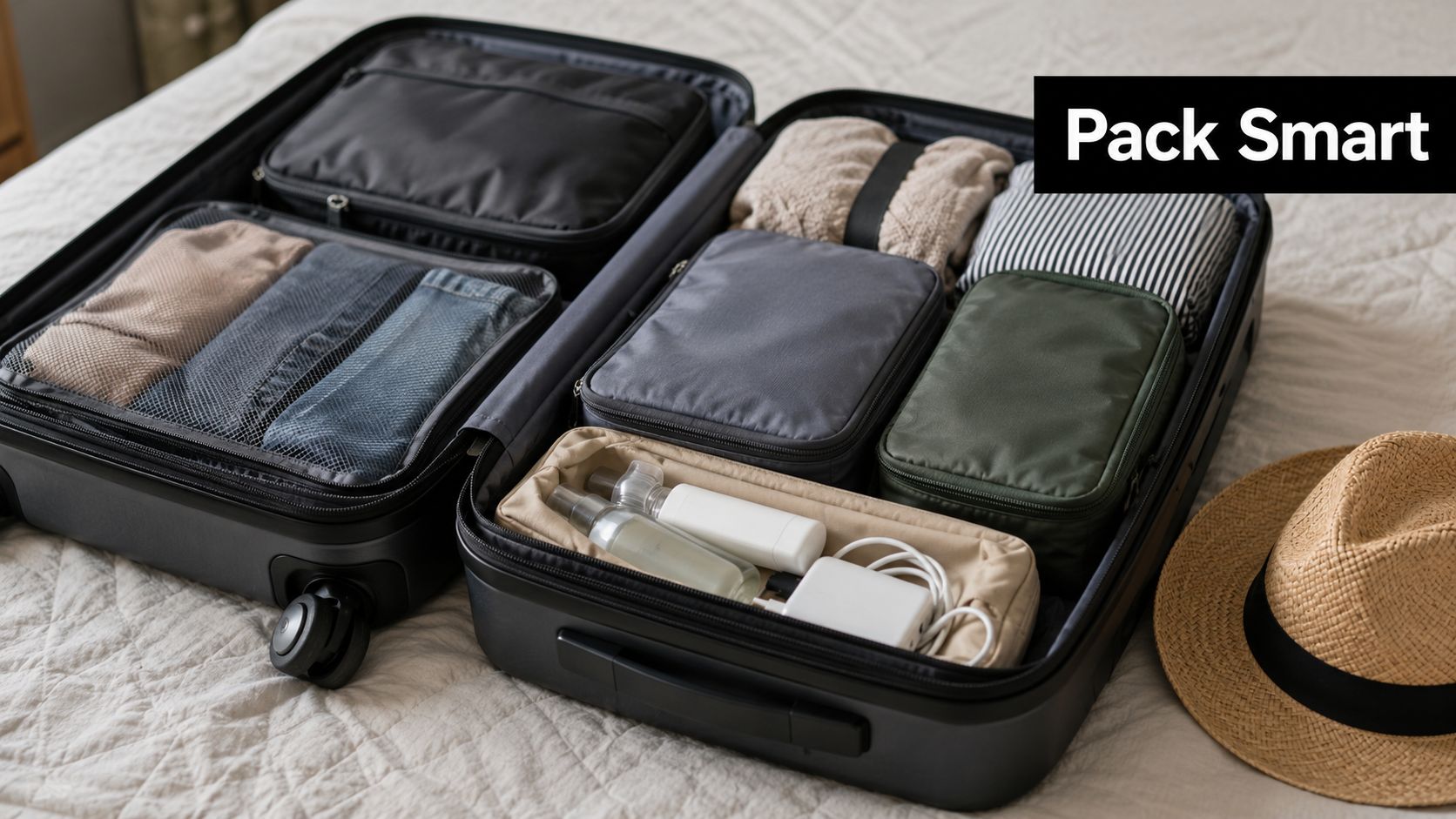
Reduce friction at every handover
Packing cubes and rolled clothing make it easier to find items without emptying a case. Weigh each checked bag at home, label the inside and outside, and photograph the contents before departure. Leave some space for purchases rather than filling every compartment.
A transfer is easier when luggage is grouped, labelled and ready to move. Tell the provider in advance if you have mobility equipment, unusually large cases or a group with more luggage than a standard family journey.
A visual packing demonstration can help you compare folding, rolling and compartmentalising methods before you pack.
5. Obtain Travel Documents and Verify Passport Validity
Your journey can fail before the aircraft leaves if your documents don't meet the requirements for the route. Check the passport rules for the UK, every country visited during the cruise and any country used for a connecting flight. A cruise itinerary can cross several immigration systems, so don't check only the embarkation country.
Confirm whether you need a visa, electronic travel authorisation or other registration. Use official government and carrier guidance, because rules can depend on nationality, passport type, transit arrangements and the purpose of travel. If the cruise returns to Britain, check the re-entry requirements as well as the outbound ones.
Make paper and digital copies of your passport identification page, insurance policy, cruise booking, hotel reservations and emergency contacts. Store the copies separately from the originals. A secure cloud folder can help, but keep offline screenshots or printed copies in case your phone loses power or connectivity.
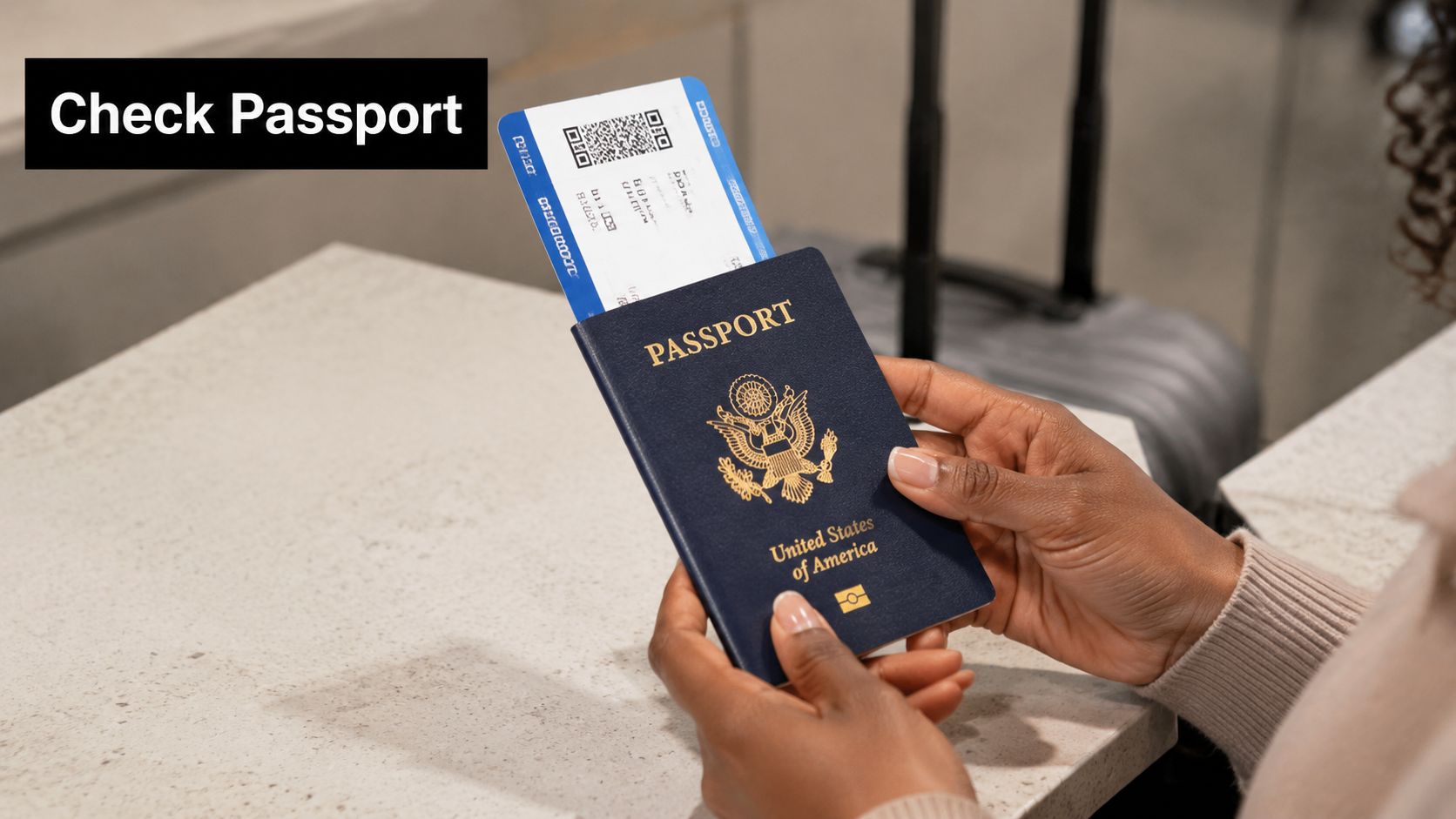
Check every traveller individually
Families should verify each passport separately, including children's documents. Names must match booking records, and a recently renewed passport may require an airline or cruise booking to be updated. Contact the cruise line if a document change affects the details attached to your reservation.
Don't assume a passport that works for entry into the UK automatically works for all cruise destinations. Requirements can vary by port, nationality and itinerary. Check early enough to renew or apply without turning the final days before departure into an administrative emergency.
6. Understand UK Travel Etiquette and Local Customs
After a long flight, a simple choice can affect the rest of the journey. If you collect a hire car at Heathrow, unfamiliar roads may add stress before a transfer to Southampton or Dover. A professional driver can cost more than self-driving, but it avoids adjusting to left-side traffic while tired and keeps the airport-to-hotel or port connection predictable.
In Britain, join the end of a queue and wait your turn at stations, attractions, airport desks and cafés. If the starting point is unclear, ask before entering the service area. Keep personal space, use “please” and “thank you”, and avoid treating a brief exchange as an invitation to become familiar. British communication can sound understated compared with more expressive styles, so a calm, courteous approach usually works well.
If you hire a car, remember that vehicles travel on the left. Roundabouts may operate differently from those in your home country, and pedestrians may look in an unexpected direction before crossing. Review the route and road rules before collecting the vehicle, particularly if you are travelling directly from the airport to a hotel or cruise port.
Check service charges before tipping
UK tipping practices differ from those in the United States. HMRC guidance on tips, gratuities and service charges distinguishes a spontaneous customer tip from a service charge added before the bill is presented. An optional charge falls outside VAT, while a compulsory charge forms part of the sale and is standard-rated for VAT.
Since 1 October 2024, UK employers must pass 100% of tips and service charges to staff without deductions. In London restaurants, a discretionary 10% to 12.5% service charge may already appear on the receipt, so inspect the bill before adding another tip. This check prevents paying twice while still letting you reward service when no charge has been included.
7. Purchase Comprehensive Travel Insurance
Travel insurance should match the trip you've paid for, not just the flight. A cruise can involve non-refundable deposits, hotel nights before embarkation, excursions and a return flight that depends on reaching the port. Review cover for medical treatment, cancellation, interruption, baggage loss and repatriation, then read the exclusions rather than relying on the product name.
Declare relevant medical conditions accurately. Check whether the policy covers the activities you plan to undertake ashore and whether it imposes rules about alcohol, medication or missed transport. If you're travelling with family, confirm that every person is named and that the cancellation terms work if one traveller becomes unable to go.
Policy check: Don't compare insurance by the headline price alone. Compare the events it covers, the exclusions, the excess and the evidence required for a claim.
Keep receipts, medical correspondence, cancellation notices and transport confirmations. If a bag disappears or a provider cancels a service, report it promptly and follow the insurer's process. A claim is easier to assess when you can show what happened, what you paid and which supplier you contacted.
Insure the connections, not only the cruise
A policy that protects the cruise but excludes an independently booked hotel or transfer may leave a gap in the itinerary. List every major prepaid element, including flights, accommodation, transfers and excursions, then ask the insurer how each is treated.
For older travellers, families and passengers with complex itineraries, medical and cancellation terms deserve particular attention. The right policy won't prevent disruption, but it can make the financial consequences more manageable when a serious problem occurs.
8. Monitor Flight and Cruise Schedules and Stay Informed
Your travel plan should remain active until you reach the terminal. Turn on airline notifications, cruise communications and hotel messages before departure. Check the flight status on the day of travel and again before leaving for the airport or port, because a schedule change can alter your transfer timing.
Traffic deserves the same attention as flight status. A vehicle leaving Heathrow on time can still encounter congestion on the route to Central London, Southampton, Dover, Portsmouth or Tilbury. Keep the provider's contact information available, and tell them promptly if your flight is delayed or your luggage situation changes.
The estimated arrival time guidance from EC Minibus is relevant when coordinating an airport pickup. A provider that receives the correct flight details can use the arrival information to manage the meeting time more effectively than a booking with no flight reference.
Use one live itinerary
Put these details in one note or travel app:
- Flight number: Include the arrival and departure flights.
- Cruise information: Save the ship, port and embarkation details.
- Hotel address: Include the exact property name and postcode.
- Transfer reference: Keep the booking number and contact channel.
- Emergency alternatives: Note the cruise line, airline and insurer contacts.
If a flight is delayed, contact the transfer provider as soon as you know. Don't wait until the original pickup time has passed. A timely message gives the operator more options, particularly when another passenger or vehicle is scheduled afterwards.
9. Prepare for Jet Lag and Plan Rest Accordingly
Jet lag affects decisions as much as sleep. A tired traveller is more likely to misread a platform sign, forget a document, underestimate a transfer or book an unrealistic first day. Treat rest as part of the itinerary, especially when a Heathrow arrival leads directly to a hotel, rail connection or Southampton embarkation.
Start shifting your sleep routine gradually before departure if your schedule allows. On the flight, drink water regularly, limit alcohol and use caffeine deliberately rather than continuously. After landing, spend time in natural light and keep the first day manageable. A gentle hotel check-in and simple meal may be more useful than an ambitious sightseeing plan.
Medication requires care. Melatonin and other sleep aids aren't suitable for everyone, and dosage or interactions should be discussed with a pharmacist or clinician. Don't try an unfamiliar product for the first time during a long flight or immediately before a critical cruise connection.
Protect the first night
Build recovery into the route:
- Choose a realistic arrival plan: Avoid scheduling demanding activities straight after landing.
- Keep essentials accessible: Put water, medication and documents in your carry-on.
- Use light strategically: Follow a routine suited to the direction of travel and your normal sleep pattern.
- Allow an overnight stay when sensible: A hotel near Heathrow or the port can reduce pressure before an early embarkation.
A same-day airport-to-ship connection may work when the flight arrives reliably and the transfer has ample contingency. An overnight stay costs more and uses time, but it can protect the cruise from a late flight or difficult road journey. Choose based on the consequences of delay, not just the shortest itinerary.
10. Verify Pre-Arranged Services and Confirm Bookings Before Travel
Multi-leg travel creates opportunities for small errors. A transfer may be booked for the wrong date, a hotel may have an outdated arrival time, or a rail connection may leave from a different London station than expected. Review the entire sequence while changes are still easy to make.
Check passenger names, dates, pickup locations, destination addresses, payment status, luggage requirements and accessibility notes. For Heathrow, confirm the terminal and meeting instructions. For a cruise, verify the terminal, embarkation window and the time your transfer is due to leave the hotel.
Create a final travel file
Keep both digital and printed copies of:
- Transport confirmations: Flights, rail tickets and private transfers.
- Accommodation details: Hotel addresses, check-in information and contact numbers.
- Cruise records: Booking references, embarkation instructions and port details.
- Identity and insurance: Passports, authorisations, policy documents and emergency contacts.
- Companion information: Share the folder with the people travelling with you.
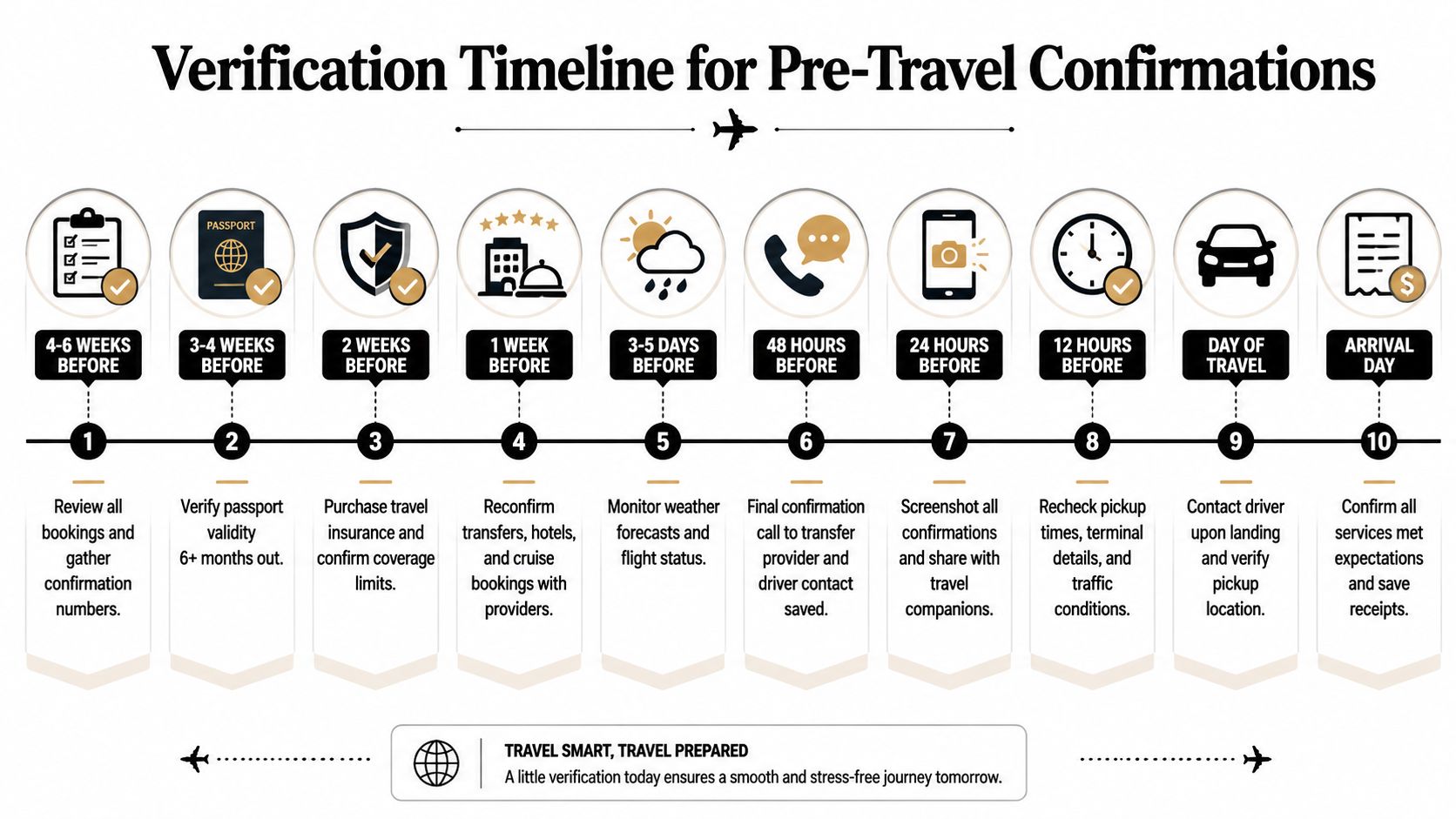
Review bookings about a week before departure, then confirm transfers again during the final day or two. Screenshot confirmations so they remain available without a data connection.
The sequence matters. Your flight arrival affects the airport pickup, the pickup affects the hotel arrival, the hotel location affects the port journey, and the port timing affects whether the cruise connection is comfortable or risky.
10 Essential International Travel Tips Comparison
| Item | 🔄 Complexity | ⚡ Resources | ⭐ Expected outcomes | 📊 Ideal use cases | 💡 Key advantages |
|---|---|---|---|---|---|
| Book and Arrange Reliable Airport & Port Transfers | Moderate, advance booking, flight/cruise monitoring, coordination | High, vehicles, licensed drivers, reservation system | ⭐⭐⭐⭐, smooth, well-coordinated door-to-door connections | International air & cruise travelers needing reliable transfers | Fixed pricing, meet & greet, luggage & accessibility support |
| Understand Currency Exchange and Payment Methods | Low, pre-trip planning and bank notifications | Low, multiple cards, some cash, digital wallet setup | ⭐⭐⭐, lower fees, fewer blocked cards | Travelers managing finances across currencies (North Americans in UK) | Better ATM rates, backup payment methods, avoid poor exchange desks |
| Arrive Early at Airports and Departure Points | Low, schedule extra buffer time | Low, more time, possibly earlier pickups | ⭐⭐⭐, reduced risk of missed departures | International flights, cruise embarkations, tight connections | Buffer for security/check-in, flexibility for delays |
| Pack Strategically and Know Baggage Allowances | Moderate, check policies and optimize packing | Low, packing cubes, luggage scale, knowledge of allowances | ⭐⭐⭐, fewer fees and faster processing | Travelers with checked bags or multi-leg journeys | Avoid overweight charges, easier movement, luggage organization |
| Obtain Travel Documents and Verify Passport Validity | Moderate–High, renewals/visas may take weeks | Low–Moderate, renewal/visa fees, insurance purchase | ⭐⭐⭐⭐, prevents travel denial; legal compliance | Travelers needing visas/ETIAS or passport validity checks | Peace of mind, emergency documentation, insurance coverage |
| Understand UK Travel Etiquette and Local Customs | Low, learning local norms and tips | Minimal, time to read guides/resources | ⭐⭐⭐, smoother social interactions | First-time visitors to the UK or business travelers | Avoid offense, improved service interactions, respectful behavior |
| Purchase Suitable Travel Insurance | Low, select and buy policy (timing matters) | Moderate, premium cost (~5–10% of trip) | ⭐⭐⭐⭐, financial and medical protection | High-cost trips, older travelers, prepaid cruise/flight bookings | Covers medical, cancellation, baggage, evacuation |
| Monitor Flight and Cruise Schedules and Stay Informed | Moderate, active tracking and alerts | Low, apps, notifications, time to monitor | ⭐⭐⭐⭐, early warnings; chance to replan | Time-sensitive multi-leg itineraries and transfers | Real-time alerts, coordinate last-minute adjustments |
| Prepare for Jet Lag and Plan Rest Accordingly | Moderate, sleep/light schedule adjustments | Low, hydration, melatonin, planning time | ⭐⭐⭐, faster adaptation; less fatigue | Transatlantic travelers and older adults | Improved cognition, better enjoyment, reduced fatigue |
| Verify Pre-Arranged Services and Confirm Bookings Before Travel | Moderate, organized checks and follow-ups | Low, time, documents, contact info management | ⭐⭐⭐⭐, prevents missed services and errors | Complex multi-leg journeys with time-sensitive connections | Confirmation trail, accommodation of special requirements, quick issue resolution |
A successful international trip depends on how these choices connect. The airport pickup affects hotel arrival, the hotel location affects the port journey, and the port schedule determines how much delay you can absorb. Booking each leg separately may appear cheaper, but a door-to-door transfer can reduce coordination work when flights, luggage and cruise check-in must align.
Payment planning supports the same chain. Carry multiple cards, notify banks before departure and keep some local cash available. Digital wallets are useful, but a second payment method protects you if a card is blocked or a device loses power. Compare exchange options before relying on an airport desk.
Timing requires a deliberate buffer. Arriving early allows for check-in, security queues and unexpected delays, while an early hotel pickup may be preferable to a cheaper connection with little recovery time. For cruise embarkation, check the terminal and required arrival window rather than planning around the ship's departure time alone.
Luggage affects every transfer. Check airline and cruise allowances, weigh cases before leaving home, and keep documents, medication, valuables and essential chargers in carry-on luggage. Packing within the allowance reduces charges and makes movement between terminal, vehicle and hotel easier.
Documentation comes first. Verify passport validity, entry permissions and the names on flight, hotel and cruise reservations. Choose insurance that covers the risks relevant to the itinerary, including medical care, cancellation, baggage and evacuation. Keep confirmations, policy details and transfer contacts both online and offline.
Local customs, flight alerts and rest planning also influence the journey. Learn basic UK etiquette, monitor schedule changes and adjust sleep and light exposure for the time difference. Confirm pickup points, terminal details, passenger names and special requirements before departure, then recheck the transfer near travel day. These small checks can prevent one missing detail from disrupting the airport-to-hotel-to-cruise sequence.
Turn Your UK Itinerary Into a Smoother Journey
A missed pickup after a long flight can affect the hotel check-in and leave little time to reach a cruise terminal. The strongest international travel plans therefore work as one chain. A valid passport supports entry, accurate booking details put you in the right vehicle, suitable luggage keeps transfers manageable, and a realistic buffer protects the connection from airport to hotel or ship.
Begin with the documents. Check passport validity, entry permissions for every destination, and the names on your flight, hotel and cruise reservations. Review insurance for medical care, cancellation, baggage and interruption cover. Store the policy number, claims instructions and booking confirmations where you can access them without an internet connection.
Then check the physical demands of the route. Confirm both airline and cruise baggage allowances, weigh each case, and place medication, valuables, documents and essential chargers in carry-on luggage. Travelling with children, older relatives or a passenger with mobility needs requires planning for the slowest member of the group, not the quickest.
Payment and communication can fail at inconvenient points. Notify card providers, carry a backup payment method and keep some sterling available. Turn on airline and cruise notifications, save the transfer provider's contact details, and check the flight status before leaving for Heathrow or your hotel.
Timing needs a route-specific decision. Official UK travel statistics recorded 258.5 million international air passengers and 18.4 million international sea passengers in 2025, while the government source notes that it does not collect data on cruise calls and destinations, as described in the UK international travel statistics. The missing cruise detail is one reason generic airport guidance does not suit every passenger. A journey from Heathrow to London, then Southampton, Dover, Portsmouth or Tilbury, needs its own timing and transfer plan.
The ONS travel and tourism release says it does not ask GB residents how they travel to join a cruise. It also notes that spending estimates for “Fly, Cruise stay on board” are underestimated because the transport method is not captured. Heathrow handled a record 84.5 million passengers in 2025, according to the same release, so allow recovery time for queues, traffic and a delayed flight rather than relying on a general instruction to arrive early.
Use this final sequence before leaving home:
- Documents: Check passports, travel authorisations, cruise records and insurance.
- Luggage: Verify airline and cruise allowances, weigh cases, and place essentials in hand luggage.
- Payments: Notify the bank, pack a backup card and arrange sterling.
- Bookings: Match hotel, transfer, rail and cruise details against the itinerary.
- Schedules: Monitor flight, traffic and cruise updates.
- Transfers: Confirm vehicle capacity, accessibility, meeting point and luggage support.
- Rest: Keep arrival-day plans realistic, and consider an overnight stay when the cruise deadline allows little recovery time.
Choose transport based on group size, luggage volume, accessibility requirements and tolerance for changes. Rail can suit light luggage and confident travellers who are comfortable in stations. A taxi may be practical for a short local journey. A pre-arranged private vehicle can reduce handling when several passengers, heavy cases and a fixed cruise deadline coincide.
EC Minibus can be considered for pre-arranged journeys connecting Heathrow, Central London hotels, Southampton, Dover, Portsmouth, Tilbury and St Pancras International. Its stated service includes Heathrow meet and greet, flight and cruise monitoring, fixed pricing, luggage assistance and door-to-door travel. Confirm the vehicle type and passenger requirements before booking, especially for specialist luggage or accessibility needs.
Share the checklist with your travelling companions and complete it before the final rush. It cannot remove every delay, but it gives the group clear actions when one occurs.
EC Minibus provides pre-arranged door-to-door transfers between Heathrow, Central London hotels, St Pancras International and UK cruise ports, with meet and greet, monitored pickups, fixed pricing and luggage assistance. For an airport-to-hotel or airport-to-cruise journey, visit EC Minibus and review the route and vehicle options for your trip.