

You're standing in arrivals at Heathrow Terminal 5, the driver board has gone quiet, and the passenger on the phone is already past frustration and into disbelief. Their flight was late, your dispatcher has three other cars moving, and the cruise terminal cut-off is still hard in the background. At that moment, customer complaint resolution is not a polite support function, it's an operational decision under pressure.
For transfer operators, a complaint can turn from a missed meet into a lost rebooking, a chargeback dispute, or a public review that shapes the next booking decision. The right response has to be fast, fair, documented, and realistic about what you can fix and what you can only explain. That's especially true in UK transport, where regulated complaint handling is already a measurable performance issue, not just a courtesy, as shown by the FCA's complaint data and the rise in formal escalation at the Financial Ombudsman Service, which received 252,000 new complaints in 2023/24, the highest in its history (PwC summary of FCA complaint handling data, Urban Institute summary of Financial Ombudsman data).
Table of Contents
- Why Transfer Complaints Are Different from Other Service Complaints
- Setting Up Intake Channels That Catch Complaints Early
- The Investigation Workflow from First Hello to Confirmed Fix
- Remedy Options When Refunds Are Not the Right Answer
- Front-Line Scripts That Hold Up When the Customer Is Stressed
- Escalation Paths and the KPIs That Tell You If It Is Working
- Your 30-60-90 Day Complaint Resolution Rollout
Why Transfer Complaints Are Different from Other Service Complaints
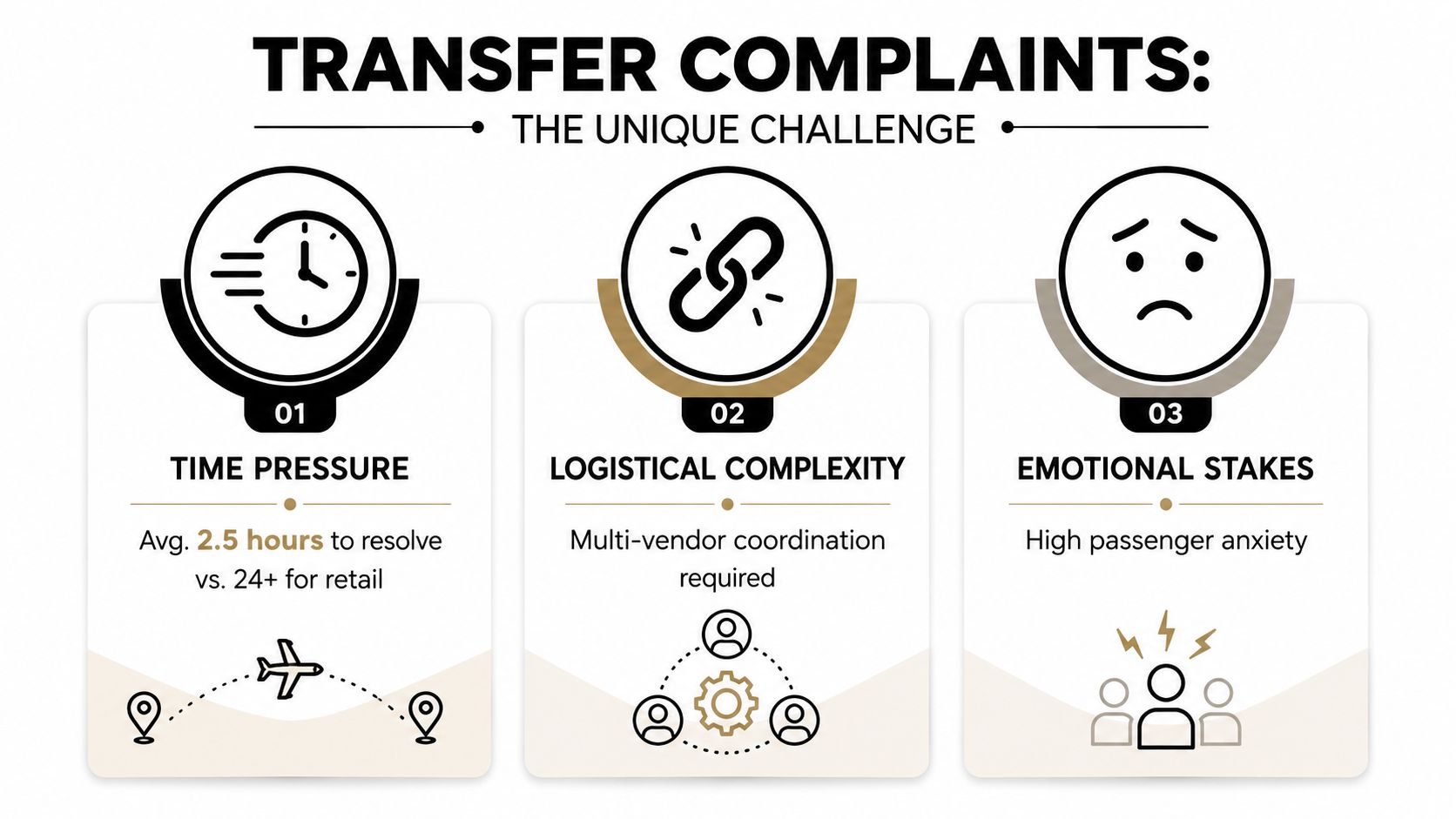
A missed pickup at Heathrow Terminal 5 doesn't feel like a normal service issue. The customer is standing outside, luggage in hand, watching minutes disappear before a ship check-in, hotel arrival, or onward flight, and they don't care that your driver is ten minutes away or that the road outside the terminal is a mess. They care that they were told the transfer would be there.
That's why generic empathy scripts fall apart. In retail or hospitality, you can sometimes buy time with a follow-up email or a same-day callback. In airport and cruise transfers, the customer's window is usually measured in minutes, not hours, and the complaint often arrives while the problem is still unfolding. If the operator misses that early window, the customer starts making a new plan without you.
What makes the conversation harder
Transfer complaints also carry more emotional weight than most support cases. Travellers are often tired, carrying luggage, and coordinating family members, cruise tickets, or hotel check-ins, so even a small miss feels personal. A refund may be part of the answer, but it rarely solves the core problem on its own.
Practical rule: if the customer is already late for another fixed commitment, the complaint is no longer about service quality alone. It becomes a recovery decision, and the first useful response is usually to solve the next move, not to debate the last one.
There's also no visible storefront to rescue trust. The customer evaluates the business through the driver, the dispatcher, the message thread, and whatever review platform they use later. If the resolution is clumsy, the story is retold in public terms, and the business gets judged there rather than at the point of failure.
That's the core difference for transfer operators. The complaint doesn't end when someone says sorry, it ends when the traveller is moving again, understands what happened, and decides the operator is still worth rebooking.
Setting Up Intake Channels That Catch Complaints Early
A transfer business needs more than one place for complaints to land. If every unhappy customer is forced into the same inbox, the team sees the problem too late and starts losing the thread between a live disruption, a formal complaint, and a simple follow-up question.
Run five intake paths in parallel
The cleanest setup is a small, controlled set of channels, each with a job. Live chat on the booking site catches pre-travel anxiety and pre-departure changes. A dedicated complaints email handles anything that needs a written record, especially refund requests or missed-service claims. WhatsApp or SMS is best for in-trip issues, because customers often reach for the phone they already have in hand. A post-trip survey sent after drop-off catches softer dissatisfaction before it turns into a public review. A callback queue handles customers who prefer a person and are often the most frustrated by the time they call.
The point isn't to create five isolated inboxes. It's to centralise all of them into one shared case view, then route by issue type. That is where a CRM or ticketing system earns its keep. The frontline team sees the complaint history, the dispatcher sees whether the driver already updated the customer, and the manager can tell when a simple delay has become a compensation discussion.
For operators running mobile-first communications, the booking and tracking app setup shows the sort of customer-facing visibility that helps reduce “where is my car?” escalations before they become formal complaints.
Know the escalation signs early
Certain phrases should trigger immediate attention. If the message includes refund, review, Chargeback, Trustpilot, or Tripadvisor, the complaint is already moving beyond a routine service query. That doesn't mean the customer is unreasonable, it means the relationship is at risk and the response needs ownership, not a generic acknowledgement.
A single shared inbox beats five separate inboxes because the team can see the whole story, not just the last angry message.
A small team can still move quickly if the intake is disciplined. The complaint should be logged once, tagged once, and assigned once. After that, every update belongs on the same case record, so nobody has to reconstruct the timeline from screenshots and forwarded emails.
The Investigation Workflow from First Hello to Confirmed Fix
A strong complaint process is staged, not improvised. The moment a case is logged, the manager should move it through a sequence that protects the customer, protects the record, and gives the business a fair chance to correct what it can.
Start with a six-stage control process
- Log and categorise the complaint. Use clear operational buckets, such as pickup delay, meet-and-greet failure, luggage handling, routing error, and communication breakdown.
- Acknowledge promptly. The first reply should confirm receipt, name the issue, and say who owns it next.
- Assign an owner. One person is accountable for the case, even if several teams contribute evidence.
- Investigate root cause. Check flight tracking, driver GPS logs, dispatch notes, timestamps, and message history.
- Agree the corrective action. Decide whether the right fix is operational, financial, or both.
- Close the loop. Confirm the customer's view after the fix, because closure is not real until the customer accepts the outcome.
The Financial Ombudsman's guidance on fair complaint handling and clear recordkeeping, together with UK operational guidance that stresses categorisation, investigation, follow-up, and continuous improvement, lines up with this structure. The point is not paperwork for its own sake, it's making sure the reasoning behind the decision is visible if the case reappears later.
A Heathrow to Southampton missed-meet case
A passenger lands at Heathrow, waits at the agreed point, and messages that no driver is there. Dispatch checks the flight, sees it arrived on time, then pulls the driver log and finds the driver was delayed by a previous job that ran long because of road congestion. At that point, the case isn't just “sorry for the wait”, it's a question of whether the booking was mishandled or whether the service failure came from poor scheduling.
| Complaint categories for private transfer operations | Typical owner | Typical evidence |
|---|---|---|
| Pickup delay | Dispatch manager | Flight time, driver GPS, dispatch timestamps |
| Meet-and-greet failure | Duty manager | Arrival note, meet point instructions, driver contact logs |
| Luggage handling | Operations lead | Driver report, customer message, vehicle capacity check |
| Routing error | Route planner or duty manager | Journey logs, navigation record, booking notes |
| Communication breakdown | Frontline supervisor | Call logs, WhatsApp thread, email trail |
A manager then decides the remedy. If the transfer delay caused a missed cruise check-in, a partial refund may be justified. If the customer still completed the journey but felt badly let down, a future transfer credit or priority rebooking may fit better. The decision should follow the evidence, not the loudest voice in the conversation.
Remedy Options When Refunds Are Not the Right Answer
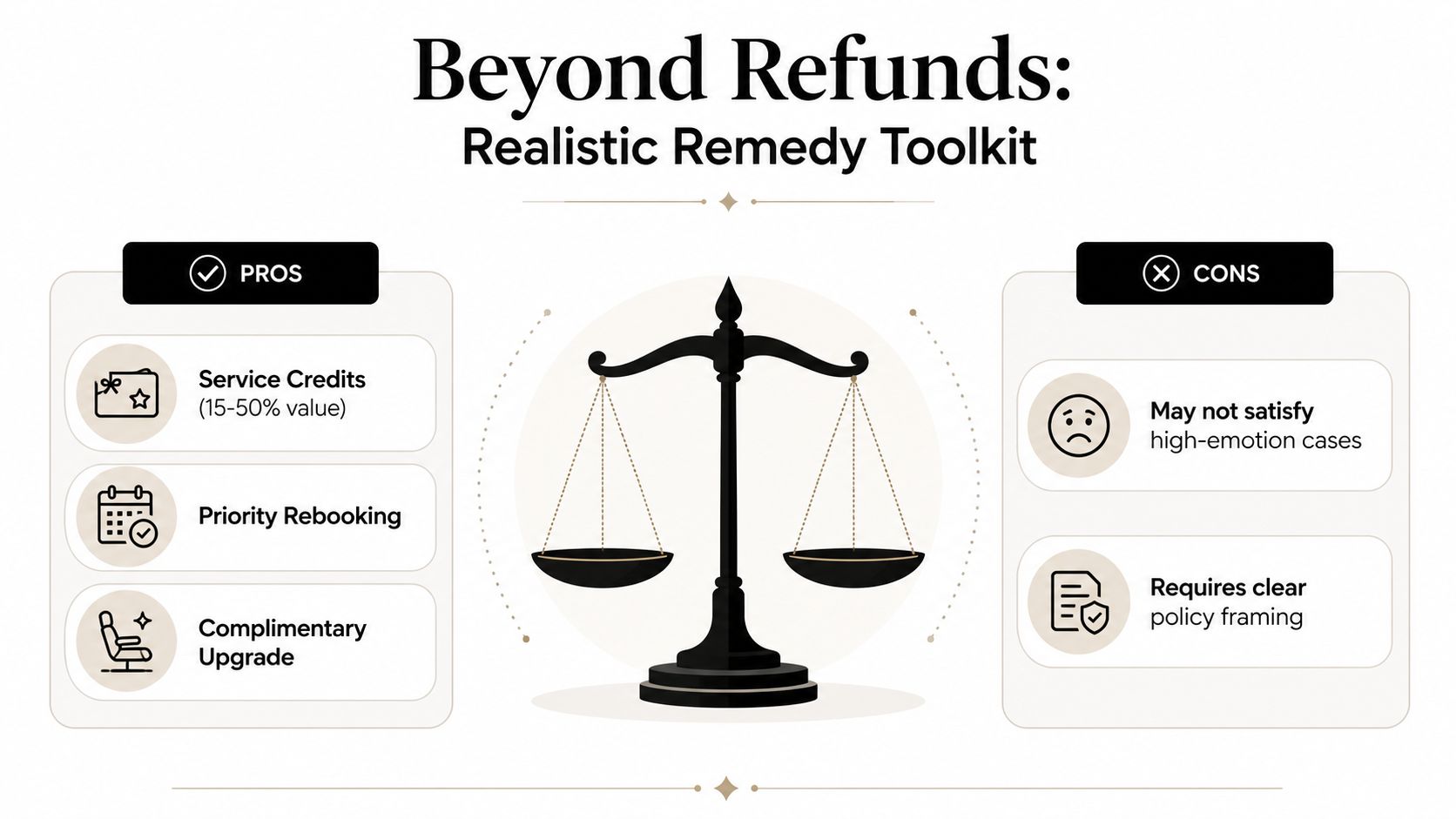
A common complaint trap is assuming that every unhappy customer wants the same thing, and that the right answer is always to hand money back. In transfer work, that's often too blunt. The customer may be right about the service failure, while the operator is still constrained by licensing, route commitments, fare policy, or the fact that one delay can knock another family's pickup off schedule.
Build a remedy toolkit, not a reflex
A partial refund works when the failure is material and clearly within the operator's control, but the full booking still delivered part of the service. A future booking credit is useful when the customer needs a practical reason to rebook without forcing a precedent on the current fare. A complimentary upgrade can repair goodwill if the disruption was modest and the next journey is likely to happen soon. Priority meet-and-greet on the next trip is especially relevant for airport arrivals, because certainty often matters more than a small price concession. A written apology with a clear explanation matters in every case, because customers want to know whether the miss was a one-off or a sign of a broken process.
For a worked example, take a Dover port drop-off delayed by 40 minutes because the incoming cruise ship was cleared late. The operator did not create the delay, but the passenger still experienced stress and lost time. A partial credit or future booking credit can acknowledge the inconvenience without setting a blanket refund precedent for events outside direct control.
Choose the remedy by severity and controllability
The decision should turn on three questions. How badly was the journey affected? Could the operator have prevented the failure? Has this customer already had similar issues? If the answer is “high impact, controllable, repeat history”, the response should be firmer. If the answer is “real inconvenience, but outside control and isolated”, the remedy can be more measured.
UK complaint guidance from Xero is useful here because it stresses honesty about limitations, offering alternatives, documenting the decision, and escalating when needed. That's exactly the discipline a transfer operator needs when the right answer is not a cash refund. The goal is to settle the complaint fairly without creating a policy that punishes the business every time a port, plane, or road throws a delay into the day.
Front-Line Scripts That Hold Up When the Customer Is Stressed
When a passenger is angry, the first few lines matter more than a long explanation. The script has to do three things at once. It should show that you've heard the complaint, confirm the facts you already know, and tell the customer what happens next without sounding defensive.
Use scripts that reflect the timeline
For the first acknowledgement, keep it short and concrete.
“I've logged your complaint about [issue] under booking [reference]. I'm checking the driver record and the live journey data now, and I'll update you by [time].”
That line works because it names the problem, assigns ownership, and gives a next step. It doesn't overpromise a fix before the facts are in, and it avoids the empty language customers hear all the time.
Around the investigation update stage, be direct about what has been confirmed.
“We've checked the booking, the live location data, and the driver notes. The delay came from [cause], and I'm now confirming the right remedy for you.”
That keeps the customer inside the process instead of making them chase the update. It also shows that the case is being handled through evidence, not guesswork.
Know the escalation line
If the customer asks for a supervisor, or mentions legal action, the wording should change from reassurance to controlled escalation. The front line shouldn't argue policy or defend the driver. They should move the case to the next level and preserve the record.
“I'm passing this to the duty manager now, and the full timeline will stay attached to your case.”
The one sentence staff should not say is: “That's not my problem.” It shuts down the conversation and almost always makes the complaint worse.
For operators tightening front-line consistency, the driver training guide is a good reminder that complaint handling starts with the way staff communicate during the journey, not only after it.
A resolution call should end with a clear choice, a timeline, and a follow-up path. If the remedy is a credit or refund, say when it will be processed. If the issue needs more time, say exactly what is still being checked and when the next update will land.
Escalation Paths and the KPIs That Tell You If It Is Working
A complaint process fails fast when nobody knows who takes the next step. In transfer operations, that usually shows up after a missed meet, a late pickup, or a vehicle swap that was never explained well enough. Every operator needs a clear escalation ladder, from dispatcher to duty manager to director, with plain triggers for when the case moves up.
Who owns what
The frontline dispatcher handles routine service issues, especially cases caught early and resolved through a call, a message, or an immediate operational correction. The duty manager takes complaints that need evidence review, compensation judgement, or customer reassurance after a poor initial experience. The director should see anything involving safety, legal risk, regulator language, or a case that is still open after a long delay.
The trigger matters more than the title. If a customer references a regulator, the case is no longer a standard service recovery. If the complaint involves safety, it should go straight to senior oversight. If the case stays open beyond the first day, the operator is probably dealing with either a root-cause problem or a communication problem, and both need higher attention.
Escalation also needs a clear handoff note. The next person should know what was promised, what evidence has already been checked, and what the customer is waiting to hear. That is how you avoid two managers asking the same questions while the passenger sits in a terminal or at a hotel.
Track the metrics that predict repeat complaints
A useful KPI stack is simple enough to review weekly and specific enough to drive action. Use complaint volume per booking, first-contact resolution rate, median time to acknowledge, median time to resolve, and re-open rate. Those measures show whether the business is getting faster, cleaner, and more durable in how it handles issues, instead of just closing tickets.
The point is not to chase a pretty dashboard. If acknowledgement is quick but re-open rate stays high, staff may be closing cases before the remedy is accepted. If resolution time looks good but complaint volume per booking keeps rising, the operator may have a recurring service fault that the current script is masking.
The financial-services sector is a reminder that complaint volume can rise quickly when processes are weak. The PwC summary of FCA complaint handling data shows how quickly firms can be dealing with large complaint volumes, and how many are resolved within a short window. In transfer operations, the exact target will differ, but the principle is the same. Fast acknowledgement and real closure are separate disciplines.
Don't confuse closure with recovery
Post-resolution confirmation is the metric many teams underuse. A case marked closed in the CRM may still be unresolved in the customer's mind, especially if the remedy was a partial refund, a goodwill credit, or a rebook after a disrupted arrival. A 48-hour satisfaction check separates a paper fix from a real one, and it catches the complaints that need a second pass before they show up in a review or return in a different form.
That follow-up also tells you whether the remedy matched the problem. If the customer asked for a refund but the better outcome was a rebook or a service credit, the close-out note should explain why that route was taken and who approved it. That matters for fairness as much as for record keeping.
For teams building the review cadence, the corporate responsibility note is a useful reminder that complaint handling also shapes trust, not just operations.
Your 30-60-90 Day Complaint Resolution Rollout
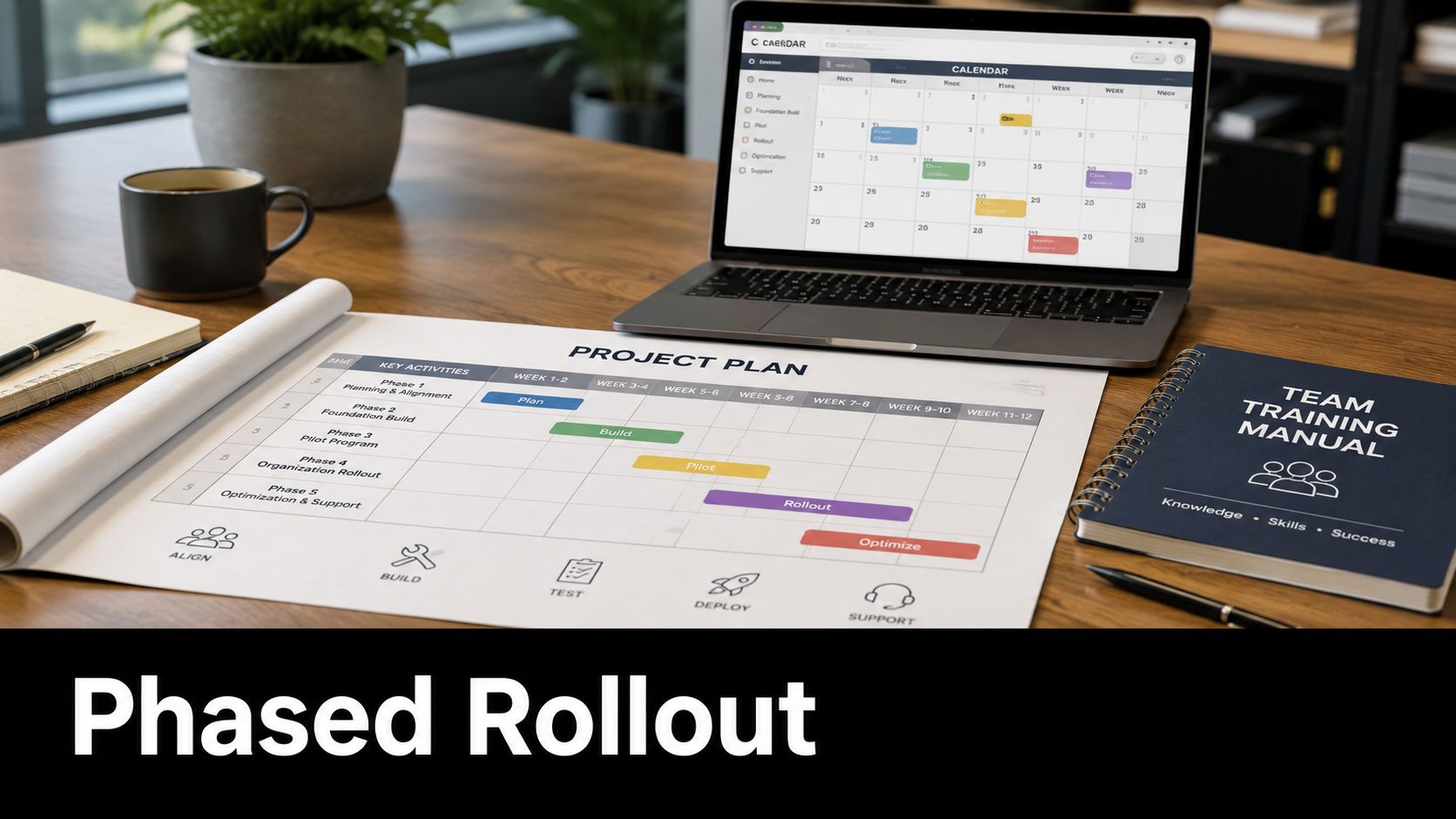
The rollout needs to start with structure, not enthusiasm. In the first 30 days, write the complaint policy, define the intake channels, train the front line on the scripts, and configure the CRM categories so every case lands in the same place. That gives the team a shared language before the first busy week hits.
In days 31 to 60, switch on the KPI dashboard and hold a weekly review. Every complaint should carry a root-cause note, even if the fix is still in progress, because the value starts to appear only when patterns are visible. That's also the right time to tighten ownership, since the weakest systems usually fail at handoffs rather than at first contact.
Days 61 to 90 are for improvement. Look at the first month of data, pick the two most common complaint types, and fix the underlying process or training gap. If meet-and-greet misses keep appearing, the answer might be better arrival instructions, not a louder apology. If communication breakdowns dominate, the fix may be a tighter message template and a manager review of response times.
Frontline FAQ
What if a complaint arrives after office hours? Log it immediately, send an acknowledgement, and assign the case to the next available owner with a clear timestamp.
What if the customer only wants a full refund? Check what failed, then explain the remedy options that fit the evidence and the policy. Don't promise a cash outcome before the case is reviewed.
When should the duty manager step in? Any safety issue, any regulator mention, any repeat complaint, or any case that's still open after 48 hours.
EC Minibus builds its service around Heathrow, London hotels, and UK cruise port transfers, so the same discipline applies whether the issue starts with a missed meet, a delayed flight, or a schedule change at the port. If you need a transfer provider that handles direct contact, monitoring, and documented follow-up with the same seriousness as the journey itself, visit EC Minibus and use it as a practical benchmark for how complaint handling can fit into private transport operations.